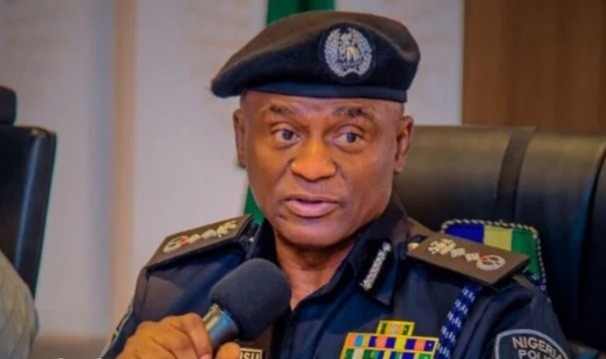
The appearance of Inspector-General of Police (IGP) Tunji Disu before the Senate Committee on Constitutional Review on Thursday carried more weight than a routine policy submission.
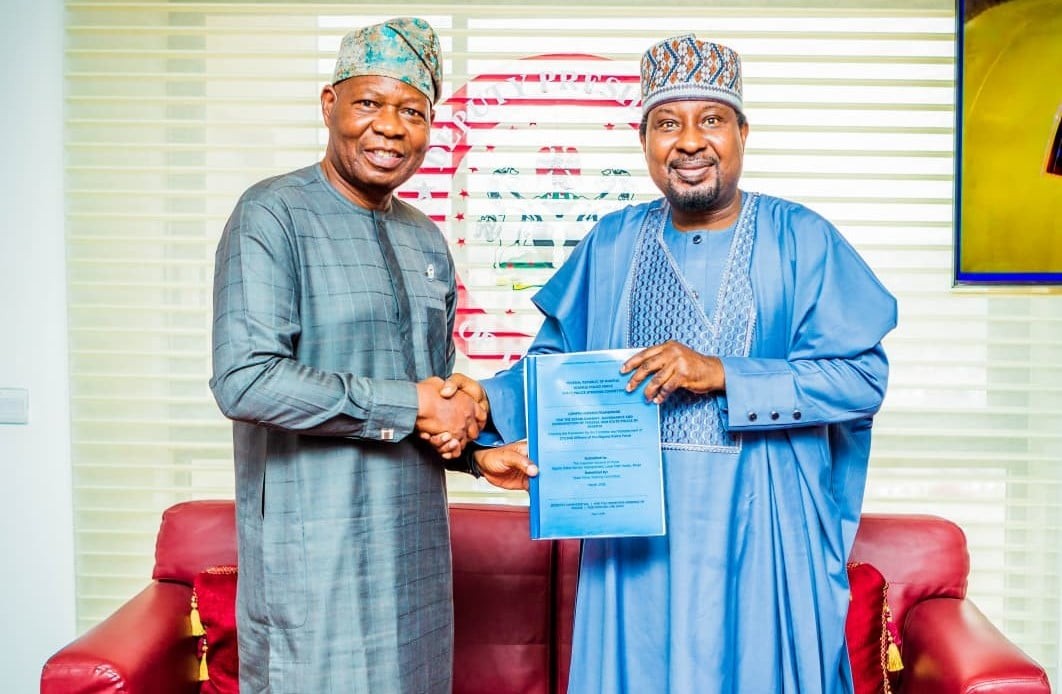
The 75-page document his representative, Olu Ogunsakin, laid before Deputy Senate President Barau Jibrin’s committee — titled A Comprehensive Framework for the Establishment, Governance and Coordination of Federal and State Police — was the Nigeria Police Force’s formal contribution to the constitutional amendment process.
EDITOR’S PICKS
But it was also, in effect, a statement of purpose: a reminder of why Disu now occupies the office his predecessor, Kayode Egbetokun, no longer does.
The framework, submitted on behalf of the Inspector-General, contains what Ogunsakin described as the force’s “considered views, professional insights and strategic recommendations,” drawn from extensive consultations and an assessment of the operational, legal and administrative implications of state policing.
Barau, who chairs the review committee, welcomed the submission as consistent with President Bola Tinubu’s security agenda, and said it would be reviewed alongside other memoranda received during the constitutional amendment process.
The Ghost of His Predecessor
The subtext of Thursday’s submission is impossible to separate from the circumstances of Disu’s appointment.
Egbetokun, who resigned in February, reportedly clashed with the Presidency over multiple issues, but among the most consequential was his resistance to state police.
The former police chief, who was represented by AIG Ben Okolo during a security chiefs meeting in 2024, argued that Nigeria was not yet mature enough for a state police system and warned that it could be weaponised by governors for political ends.
His hesitation had operational consequences. With all state governors having endorsed the state police bill by April 2025, the legislation was reportedly stalled at police headquarters, which was expected to supply the technical and operational inputs required for its drafting. The policy did not move. Egbetokun’s exit followed.
Disu’s arrival produced an immediate contrast. He declared that state police had “come to stay,” set up a seven-member steering committee under Ogunsakin in March, and within weeks delivered a framework to the Senate.
Why It Cannot Wait
The administrative drama, however, should not overshadow the substance of what is being proposed. Nigeria’s security situation makes the case for state police more powerfully than any framework document can.
Borno State is experiencing a fresh escalation of the Boko Haram and ISWAP insurgency. Banditry continues to hollow out the North-West. Kidnapping has become routine along major highways.
The centralised policing model, in which a single IGP in Abuja controls deployments across 923,769 square kilometres, has demonstrably failed to meet the security needs of a country this large and this varied.
State police, if properly constituted, would allow governors to build law enforcement institutions attuned to local terrain, local languages, and local threats.
The risks Egbetokun raised — of governors turning state police into personal militias — are real and deserve to be addressed in law. Accountability structures, judicial oversight, and operational independence from the executive will be essential. But those are design problems, solvable through legislation. They are not arguments for inaction.
FURTHER READING
The 75-page framework now before the Senate committee is, at minimum, a serious attempt to move from years of rhetoric to operational planning. That it was delivered by an IGP appointed partly because his predecessor refused to do the same work makes it no less necessary.
Philip Ibitoye is a Special Correspondent with EKO HOT BLOG. Click here to find daily analysis and critical insight on trending issues in Lagos and other parts of Nigeria.
Click to watch the video of the week below: