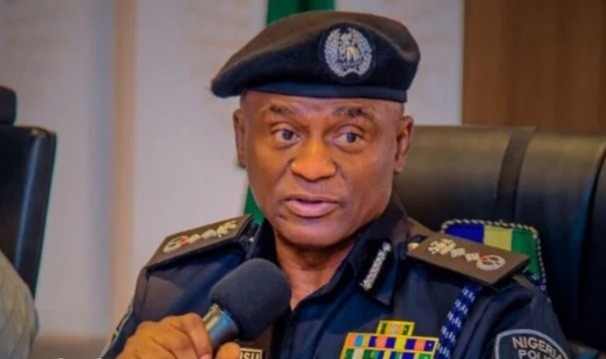
When Inspector-General of Police (IGP)Olatunji Disu assumed office, he made accountability and a people-friendly force the twin pillars of his agenda.
His latest directive — ordering a sharp reduction in the number of police tactical teams across state commands — is the clearest signal yet that he intends to follow through on that promise.
EDITOR’S PICKS
But the policy also arrived wrapped in confusion, requiring his office to clarify what the order actually says and what it does not. EKO HOT BLOG breaks down the real meaning of the directive.
What the Order Actually Says
The directive has been widely misreported as a wholesale disbandment of all police tactical units. The Force Public Relations Officer, DCP Anthony Okon Placid, moved swiftly to correct that impression in a statement on Sunday, describing the reports as a misrepresentation of the IGP’s actual instructions.
RE: BREAKING: INSPECTOR-GENERAL DISU DISBANDS ALL POLICE UNITS, SQUADS AT STATE COMMANDS, ORDERS IMMEDIATE RESTRUCTURING.
The attention of the Inspector-General of Police has been drawn to the above-captioned story recently circulated by some online media outlets. The… pic.twitter.com/PBLrWO41Ml
— Nigeria Police Force (@PoliceNG) March 22, 2026
What Disu ordered is a cap, not an abolition. Tactical teams at zonal and state command levels are to be reduced to a maximum of five, while those at area command and divisional levels are to be capped at three.
Commissioners of Police and heads of formations retain the discretion to achieve these ceilings by either merging existing teams or disbanding them outright. Essentially, the IGP has not prescribed which path they must take.
Critically, the directive exempts state government-created outfits.
Lagos’ Rapid Response Squad, Oyo’s SRS, and Bayelsa’s Operation DOO-AKPOR are explicitly excluded from the scope of the order, along with similar outfits across the country. These are not Nigeria Police Force creations and therefore fall outside the IGP’s administrative reach in this instance.
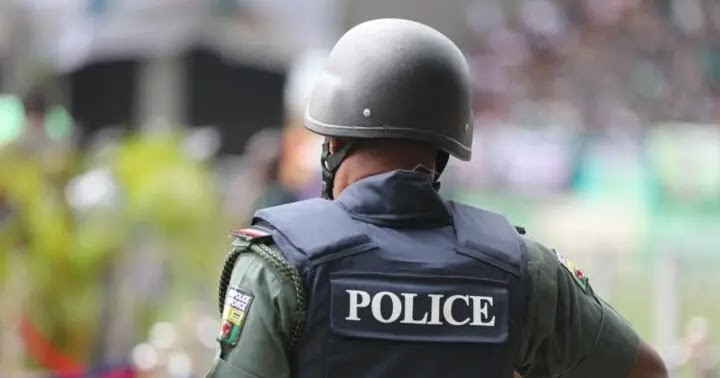
The Problem the IGP Is Trying to Solve
The rationale behind the directive points to a structural dysfunction that has quietly undermined policing at the grassroots level.
Over time, individual Commissioners of Police and formation heads have established multiple tactical teams, each operating with varying degrees of supervision. The cumulative effect has been twofold: it has stripped police divisions and posts of the manpower they need to function, and it has created a breeding ground for the kind of abuses that erode public trust in the force.
Disu’s office acknowledged that tactical teams have made genuine contributions to crime-fighting, a concession that reflects the IGP’s own background as an officer who has held command positions across the country and observed these units in the field.
The problem, as his office framed it, is not the existence of the teams but their proliferation. Poorly supervised, under-scrutinised units operating in grey areas of accountability are not assets to law enforcement; they become liabilities.
The directive is therefore less about reducing police capacity than about concentrating it. By forcing a consolidation, Disu is, in theory, ensuring that fewer teams operate under tighter supervision, with clearer lines of command responsibility.
What It Means Going Forward
The practical success of this policy will depend almost entirely on implementation.
Giving formation heads the discretion to merge or disband teams is pragmatic, but discretion has historically been the space in which police reform initiatives in Nigeria quietly die. Whether individual commanders will genuinely restructure their tactical units, or simply reclassify them on paper while preserving their operational footprint, is a question that deserves scrutiny in the weeks ahead.
The IGP’s stated goal is to return officers to police stations, thereby strengthening community-level policing. If personnel liberated from consolidated tactical teams are instead absorbed into other specialised units, the reform will have moved numbers around without changing the reality on the ground.
FURTHER READING
For now, the directive reflects an IGP who is willing to use administrative authority to confront internal practices that fuel public grievance. Whether that willingness translates into measurable change is the next test and it is one that neither press releases nor clarifications alone can answer.
Philip Ibitoye is a Special Correspondent with EKO HOT BLOG. Click here to find daily analysis and critical insight on trending issues in Lagos and other parts of Nigeria.
Click to watch the video of the week below: