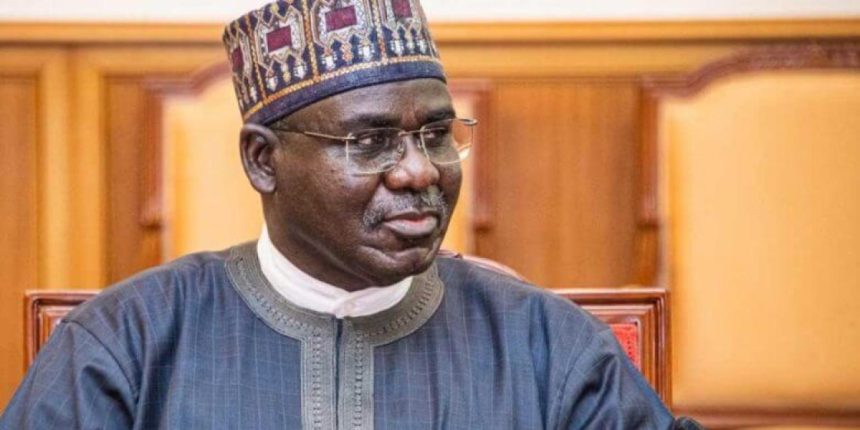
When Tukur Buratai, Nigeria’s former Chief of Army Staff, appeared on Channels Television’s Politics Today on Friday to call on the federal government to prosecute terrorism financiers, he was not breaking new ground. He was, in fact, stating the obvious and that is precisely the problem.
The demand should not need to come from a retired general on a television programme.
EDITOR’S PICKS
It should have been the default position of a government that, in March 2024, announced the identification of 15 entities allegedly involved in terrorism financing — nine individuals and six bureau de change operators. Two years later, no prosecution has followed. No conviction. No publicly verified asset freeze. Just a list, and then silence.
Buratai’s frustration, carefully worded as it was, exposed a structural failure that goes beyond the military’s operational mandate.
When Naming Names Is Not Enough
“It is not just about mentioning names; action should be taken,” Buratai said. The statement is almost disarming in its simplicity, yet it captures a recurring pattern in Nigeria’s counterterrorism architecture: intelligence gathering that produces announcements, not consequences.
The agencies responsible for financial intelligence — the Nigerian Financial Intelligence Unit, the Economic and Financial Crimes Commission, the Department of State Services, and the office of the National Security Adviser — each carry a mandate that should, in theory, translate identified suspects into prosecuted ones. That this has not happened, despite the public disclosure of names and entities, suggests either a coordination failure between agencies, a deliberate lack of political will, or both.
Buratai was careful not to name the failure directly, but the implication of his remarks was clear: the military cannot be held responsible for what prosecutors, financial regulators, and policy makers are constitutionally required to do. “We over-rely on the military and the army,” he said. “Everybody has its own responsibility.”
This is a point worth dwelling on. For much of the last decade, public discourse on Nigeria’s north-east insurgency has been dominated by battlefield metrics: territories recovered, commanders neutralised, camps destroyed.
These are legitimate measures of progress, but they obscure the parallel failure to dismantle the financial architecture that sustains the violence. Insurgencies do not persist on ideology alone. They require logistics, weapons, and salaries. Someone funds that. When those funders are identified and then shielded from consequence, the military’s battlefield gains become, at best, temporary.
An Embedded Problem, Not a Military One
Buratai also pushed back against the expectation that the army can deliver a total and permanent defeat.
“It is more or less an embedded problem within society, and it requires everyone’s effort,” he said, adding that it would be “wishful thinking” to expect such an insurgency to be cleared overnight.
This is consistent with the broader academic and policy consensus on asymmetric conflict. Groups operating with ideological conviction — as Boko Haram and its ISWAP offshoot do — do not dissolve under military pressure alone. They adapt, fragment, and reconstitute. The army can, and has, degraded their capacity significantly. Buratai himself noted that by late 2016, attacks that had spread from Maiduguri to Abuja had largely subsided, and occupied local government areas were recovered.
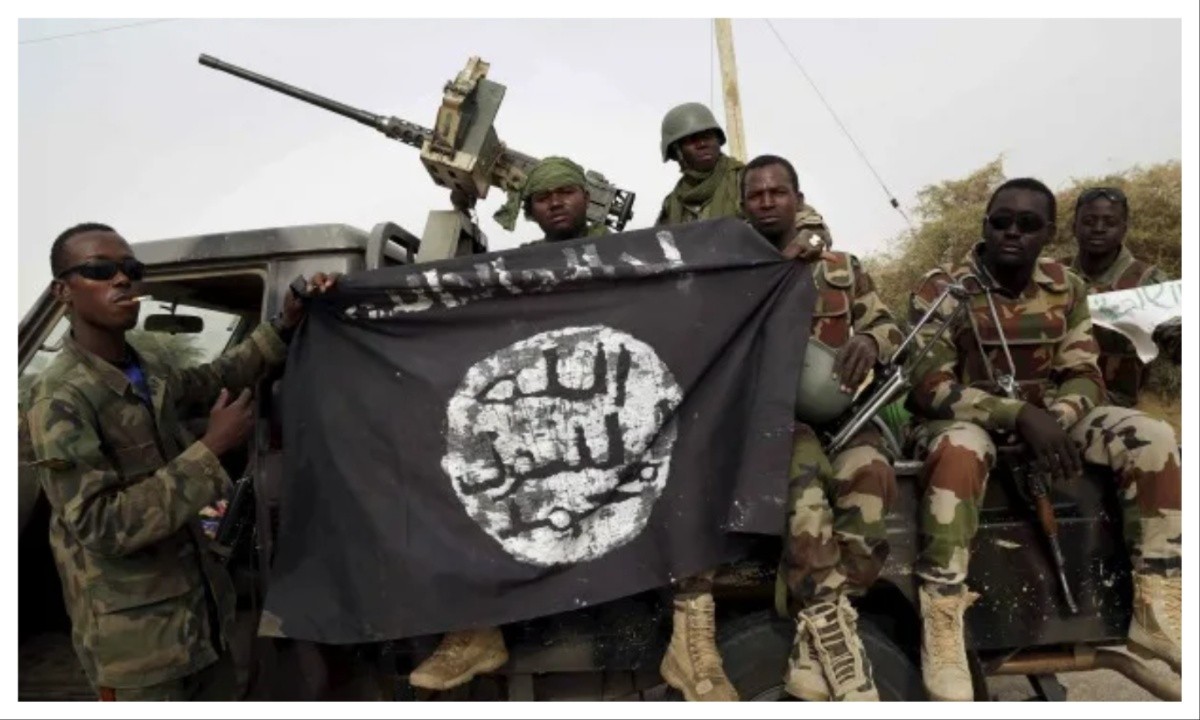
But degrading capacity is not the same as addressing causation.
The north-east’s combination of ungoverned spaces, poor infrastructure, unemployment, and historical marginalisation provides fertile ground for recruitment regardless of what happens on the battlefield.
The Accountability Gap
What Buratai’s intervention ultimately illustrates is not a military problem. It is an accountability problem. The government announced the names of terror financiers to the public — presumably to signal seriousness — and then allowed the matter to drift into administrative obscurity. No official has been made to answer for the absence of follow-through.
That a former army chief must go on television to remind the government to act on its own disclosures says something troubling about the state of institutional coordination in Nigeria’s security ecosystem. The demand is not complicated. It is, as the headline suggests, a no-brainer.
FURTHER READING
The harder question is why no-brainers keep requiring someone to say them out loud.
Philip Ibitoye is a Special Correspondent with EKO HOT BLOG. Click here to find daily analysis and critical insight on trending issues in Lagos and other parts of Nigeria.
Click to watch the video of the week below: