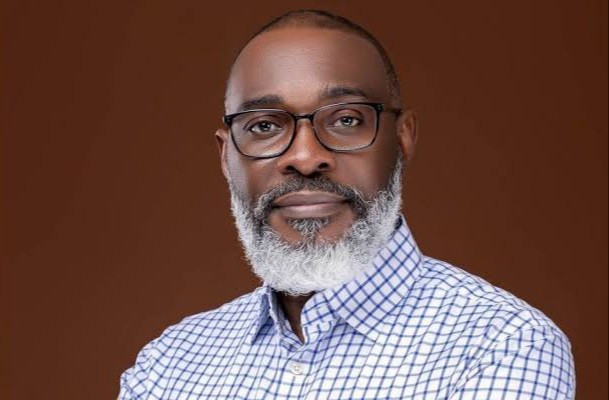
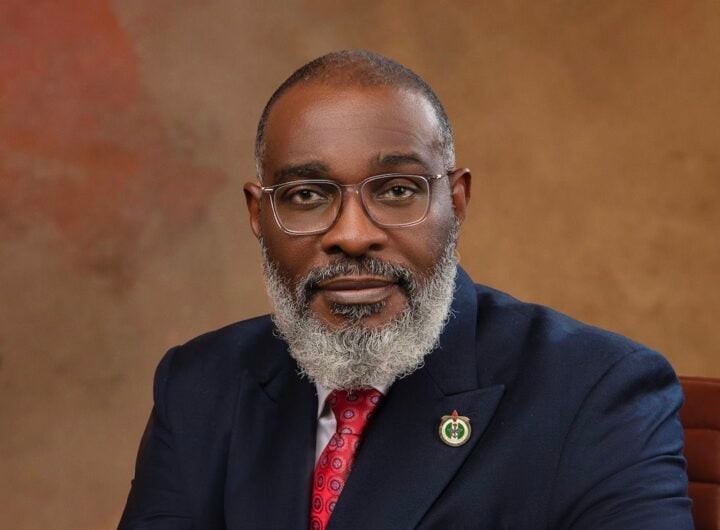
President Bola Tinubu on Monday appointed retired Major General Adeyinka Famadewa as his Special Adviser on Homeland Security.
Two years before that appointment, Famadewa had written a detailed argument about why Nigeria’s approach to insecurity was fundamentally broken and what needed to change.
EDITOR’S PICKS
Security is not a military problem
Writing in Premium Times in 2023, Famadewa’s central argument was direct: Nigeria has spent years treating insecurity as a military problem when it is not.
He drew on former United States Secretary of Defence Robert McNamara to make the point. Security, McNamara argued, is development, not hardware, not force. Famadewa built on this to draw a distinction that Nigerian policy has consistently blurred: security and defence are not the same thing. Defence may be one component of security, but it is not security itself.
His diagnosis was that decades of military rule had hardwired a dangerous assumption into the national consciousness, that the army is the answer to every crisis. The consequence is that military commanders absorb blame whenever insecurity rises, even when the roots of that insecurity are economic, social, or political.
The wrong tool for the job
To illustrate his point, Famadewa pointed to the 2013 Boston Marathon bombing.
The case was cracked not by soldiers but by the FBI, working alongside intelligence and law enforcement agencies. He argued that a similar incident in Nigeria would likely have produced a different response: the army cordoning off a city, mass arrests, inter-agency clashes, and service chiefs summoned to the National Assembly.
He also cited a concrete African example: an Interpol operation called Tripartite Spider, involving police, customs, border forces, and counter-terrorism experts across five countries: the Democratic Republic of Congo, Kenya, Somalia, Tanzania, and Uganda. The operation targeted terror financing networks and led to 14 arrests. The military was not the lead. Law enforcement and intelligence were.
His point was deliberate: a multi-agency, whole-of-society approach to security is not a Western luxury. It is already working on the continent.
What he said needed to change
Famadewa’s prescription centred on clarity and coordination. He called for Nigeria to formally define what national security means in its own context, a foundational step he argued had not been taken despite the existence of a National Security Strategy.
He noted that the NSS 2019, signed under former President Muhammadu Buhari, already identified terrorism, banditry, kidnapping, cybercrime, fake news, public health, and economic instability as security threats. That is a comprehensive framing. But the government’s operational response remained overwhelmingly military, creating a gap between declared policy and actual practice.
The fix, in his view, was building a genuine multi-stakeholder security architecture, one that draws on law enforcement, intelligence agencies, civil society, and the public, not just the armed forces.
The question his appointment raises
Famadewa enters Aso Rock with a philosophy that, on paper, is exactly what security analysts have long advocated for Nigeria. The ideas he expressed in 2023 were not new, they were largely a restatement of what Nigeria’s own policy documents already say.
Notably, the new SA on Homeland Security himself was recently in government as Principal General Staff Officer to the National Security Adviser at the Office of the National Security Adviser (ONSA) from 2015 to 2021.
FURTHER READING
The gap has always been implementation. Whether Tinubu’s administration gives him the institutional backing to close that gap is now the only question that matters.
Philip Ibitoye is a Special Correspondent with EKO HOT BLOG. Click here to find daily analysis and critical insight on trending issues in Lagos and other parts of Nigeria.
Click to watch the video of the week below: