Femi Gbajabiamila, President Bola Tinubu’s chief of staff, was blunt on Thursday. State police, he said, cannot be established “with the snap of the fingers.”
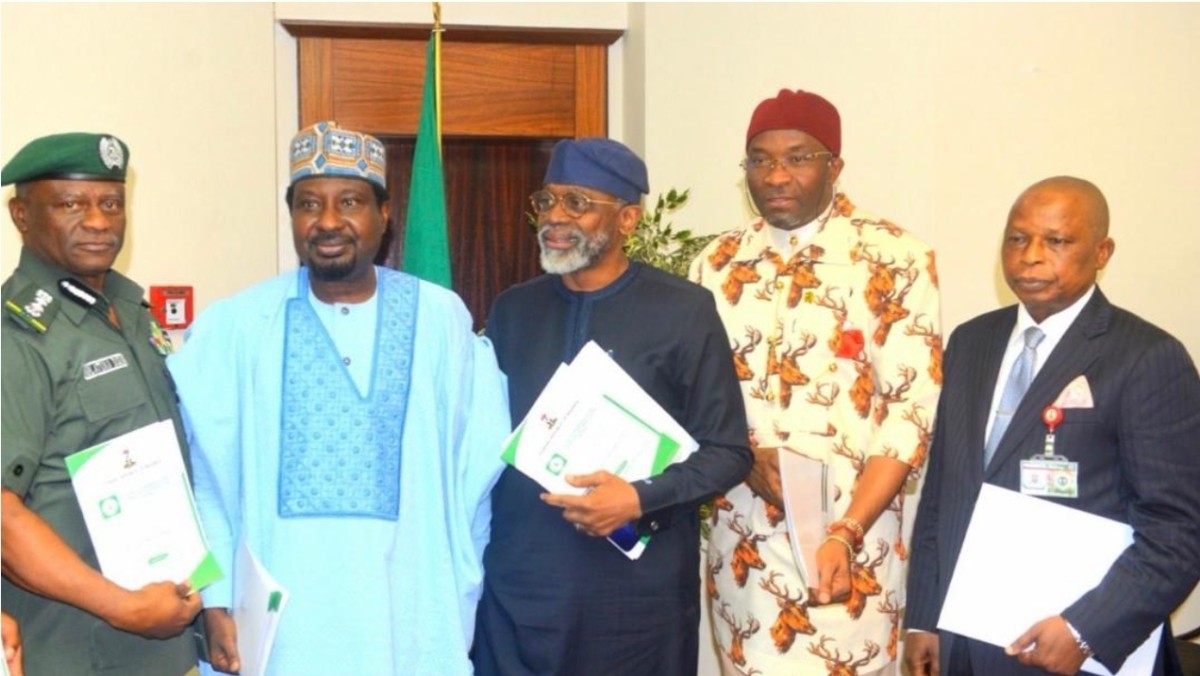
He was speaking after a consultative meeting at the State House in Abuja, attended by the deputy senate president, the deputy speaker, Inspector-General Tunji Disu, and other officials.
EDITOR’S PICKS
Constitutional amendments are being drawn up, he said. Enabling legislation will follow. The process is moving, but it will take time.
He is correct. Grafting a new tier of policing onto Nigeria’s constitution is not a minor exercise. Sections of the 1999 Constitution vest control of the Nigeria Police Force exclusively in the federal government. Any formal transfer of that authority to states requires a constitutional amendment — two-thirds of the National Assembly and majority support from state houses of assembly. That is a long road.
But while the government maps that road, children are being abducted from classrooms. On May 15, gunmen raided three schools in Oriire, Oyo State, taking about 39 students and seven teachers. A day earlier, 42 children were snatched from a primary school in Chibok, Borno. The insecurity is not waiting for constitutional processes.
The question, then, is this: can the federal government create a temporary arrangement — something short of full state police — that gives governors more direct control over policing in the worst-hit areas?
What the law already allows
The answer is yes, at least partially. Section 215(4) of the constitution permits a state governor to give lawful directions to the commissioner of police in his state on matters of public safety and order — directions the commissioner is required to comply with, or refer upward to the president. This provision is largely ignored in practice, but it exists.
Beyond that, the president retains executive powers wide enough to issue administrative directives without touching the constitution. The IGP, as the president’s appointee, can be instructed to create dedicated zonal commands in high-risk areas with a clear reporting line to state governments for operational decisions.
Funding arrangements can be restructured so that states that want to co-finance security in their territories get a proportionate say in deployments. None of this requires a constitutional amendment. It requires political will.
A joint operations model for hotspots
What a temporary framework could look like in practice is a Joint Security Operations Command, established by executive directive, covering designated hotspot states.
Under such a model, the governor chairs a security council with real authority over deployment of federal police assets within the state. The IGP retains administrative control — recruitment, discipline, promotions stay federal — but operational decisions in declared emergency zones move closer to the state level.
This is not a novel idea. Variants of it exist in countries that operate federal police systems. Kenya’s devolved policing model, for instance, allows county governments meaningful input into local security without dismantling national command structures. Nigeria ran something similar, informally, in the early days of the North-East emergency, though poorly coordinated and without any legal framework anchoring it.
Formalising such an arrangement through an executive order, backed by the attorney-general’s office, would give it legal grounding without requiring the constitutional amendment Gbajabiamila’s team is still drafting.
FURTHER READING
The consultative meeting on Thursday was a necessary step. But necessity has a timetable that constitutional processes do not. Until the amendment is done, the federal government has enough legal room to act. The question is whether it will.
Philip Ibitoye is a Special Correspondent with EKO HOT BLOG. Click here to find daily analysis and critical insight on trending issues in Lagos and other parts of Nigeria.
Click to watch the video of the week below: