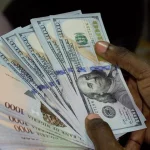
- Official financial metrics from the Open Treasury Portal indicate that the federal government disbursed ₦57.78 billion on defense procurement and security infrastructure within the first four months of 2026, marking a 127.97% spike compared to the same operational timeframe in 2025.
- Despite the massive capital allocation, standard budget implementation remains heavily congested, with less than 1.3% of the total ₦4.66 trillion national security budget actually utilized, leaving critical defense lines completely unfunded.
- Internal police tracking documents reveal a severe escalation in regional lawlessness, cataloging 98 major criminal occurrences within a single seven-day window, including a mass abduction in Zamfara State where 39 locals were seized while attempting to broker peace.
Fresh intelligence data has exposed a worrying disconnect between escalating financial investments and actual operational containment across Nigeria’s defense sectors.
Eko Hot Blog reports that according to financial records uploaded to the Open Treasury Portal, federal spending on state security hardware, barracks renovation, and police facilities rose significantly to ₦57.78 billion between January and April 2026.
EDITOR’S PICK
- Hamzat Appoints Obanikoro as Campaign DG Ahead of 2027 Lagos Governorship Race
- Tinubu’s State Police Plan Gains Momentum as Amendment Looms
- Residents Raise Alarm After Two Bodies Found in Lagos Waterway
However, this increased spending has failed to halt a violent wave of criminal incursions across multiple regions.
An internal police security dossier shows that the country recorded at least 98 distinct violent incidents in just seven days, including 37 homicides, 27 banditry raids, and 24 high-profile kidnappings concentrated heavily across Kaduna, Katsina, Zamfara, and Kebbi states.
A major concern raised by financial analysts is the exceptionally low utilization rate of approved defense funds.
Out of a massive ₦4.66 trillion security budget earmarked for the fiscal year, administrative bottlenecks mean only 1.24% was actually deployed during the first third of the year.
While ₦21.39 billion went directly toward defense hardware procurement and ₦14.16 billion was absorbed by specialized security equipment, critical tactical lines remained entirely dry.
Notably, zero funds were disbursed from the ₦500 million allocation set aside for frontline military operations, and a ₦2.53 billion program meant for kitting armed forces personnel recorded no financial activity whatsoever.
The human cost of this administrative delay was highlighted by several daring criminal operations executed by bandit groups over the past week.
In Zamfara State, a group of 39 residents were intercepted and abducted after traveling deep into the Fadama Forest in a desperate attempt to negotiate a localized peace treaty with a notorious bandit commander, Jimo Smally.
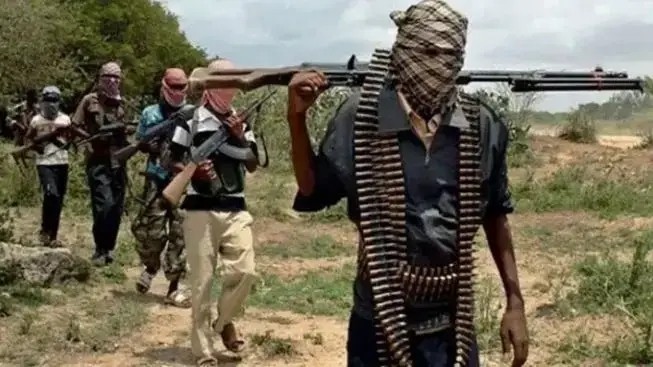
Simultaneously, in neighboring Katsina State, heavily armed actors blocked the strategic Katsina-Kankara highway, ambushing a commercial transport vehicle and taking multiple travelers hostage.
Security experts note that these brazen daylight operations underscore a complete lack of deterrence, leaving major transit corridors vulnerable despite the increased funding.
Reacting to the leaked numbers, prominent defense analyst Lekan Jackson-Ojo warned that the state is facing an unprecedented security crisis that risks fully paralyzing domestic commerce.
Jackson-Ojo strongly criticized the administration’s political will, pointing to the unprecedented loss of four military generals within a three-month window without any major reprisal operations, while blasting the policy of reintegrating repentant terrorists into civilian communities.
Adding to this perspective, security expert Chidi Omeje argued that the current ₦57 billion deployment is completely inadequate when converted to foreign currency, leaving an overstretched military to fight across 30 active theaters.
Omeje stressed that until the government addresses the porous borders of the Sahel region and the root causes of poverty, kinetic spending will continue to produce minimal results.