- MMA2 Dispute Resolution Boosts Investor Confidence, Says FAAN Boss
- Signals New Era for Aviation PPPs
- Unveils Airport Infrastructure Roadmap
The Managing Director and Chief Executive Officer of the Federal Airports Authority of Nigeria (FAAN), Mrs. Olubunmi Kuku, has described the resolution of the long-standing concession dispute involving the Murtala Muhammed Airport Terminal Two (MMA2) as a significant milestone capable of boosting investor confidence and reshaping public-private partnerships in Nigeria’s aviation sector.
Eko Hot Blog reports that Kuku made the remarks at the African Air Transport Convention and Expo 2026 in Lomé, Togo, where she stressed that successful aviation partnerships depend not only on capital but also on strong institutions, regulatory certainty and effective project execution.
EDITOR’S PICK
- Phase 2 of Lekki Deep Sea Port to Begin Soon
- If Only God Can End Insecurity, Then What Are We Paying For?
- Lagos Unveils Team for National Robotics Championship After Thrilling State Finals
She noted that many infrastructure projects across Africa have suffered setbacks due to policy inconsistencies, concerns over continuity and market uncertainties that often discourage investors.
Citing the MMA2 concession as an example, Kuku described the project as one of Nigeria’s most prominent and contentious airport concession arrangements, which had generated years of disputes and uncertainty.
She, however, disclosed that the dispute between the Federal Government and Bi-Courtney Aviation Services Limited (BASL), operator of MMA2, has now been resolved.
The resolution reportedly involved BASL forfeiting a N130 billion judgment debt, while retaining the right to continue developing the conference centre opposite the terminal.
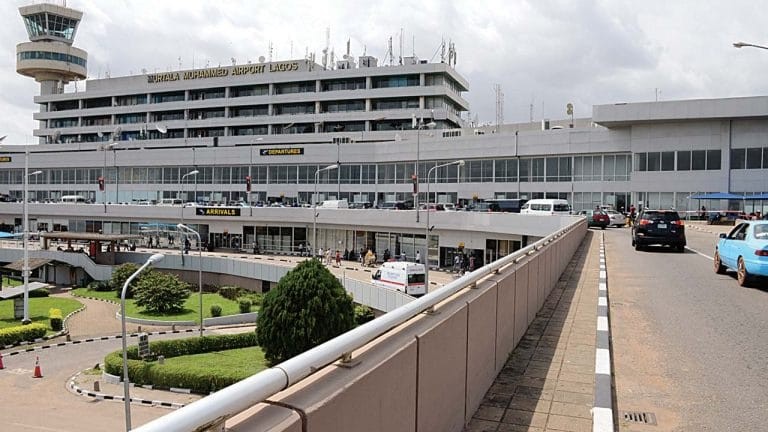
“I believe that one of the most announced concession projects has been the Bi-Courtney project with MMA2, and it has created a lot of noise and conflict. I’m happy to say that within this administration, we’ve done quite a bit of work in renegotiating the contract for the concession,” she said.
Kuku stated that the matter had been concluded at the level of the Federal Executive Council, describing the outcome as a positive signal to prospective local and foreign investors.
“It’s now been resolved. What that means is that it provides better investor confidence for those looking to drive PPP projects,” she added.
She also said the experience offers valuable lessons for future concession agreements by ensuring contracts remain equitable to both government and private sector participants.
According to her, African governments cannot solely rely on public funding to bridge the aviation infrastructure gap and must attract investments targeted at improving regional connectivity and economic integration.
Kuku called on development finance institutions, multilateral lenders and private investors to support projects that enhance connectivity among African countries.
She further advocated early collaboration between project promoters and financiers to ensure projects are structured in ways that appeal to investors.
The FAAN boss cited the ongoing rail extension project linking Lagos to airport terminals as an example of infrastructure that could benefit from co-financing because of its economic potential and expected revenue streams.
While acknowledging proposals for specialised aviation financing institutions, Kuku suggested that existing financial institutions should instead establish dedicated aviation desks staffed with professionals who understand the sector’s unique financing requirements.
She disclosed that FAAN has developed a roadmap outlining short-, medium- and long-term infrastructure priorities across Nigeria’s airports.
According to her, immediate plans focus on stabilising airport operations and improving passenger experience, while medium- and long-term strategies target upgrades to terminals, cargo facilities, airside infrastructure and safety systems.
Kuku also said FAAN is assessing the needs of secondary airports and exploring mechanisms, including guarantee schemes, to encourage airlines to operate routes to smaller airports.
She maintained that while some airport projects are commercially viable and attractive to private investors, others that are critical to safety and security would continue to require direct government funding.
FURTHER READING
- Lagos, 15 States Reject Senate’s Electricity Amendment Bill
- Terrorism Will Not Be Tolerated, FG Declares as 150 Convictions Recorded
- Drones, Biometrics, AI to Drive Nigeria’s New Border Security Strategy
Click here to watch video of the week