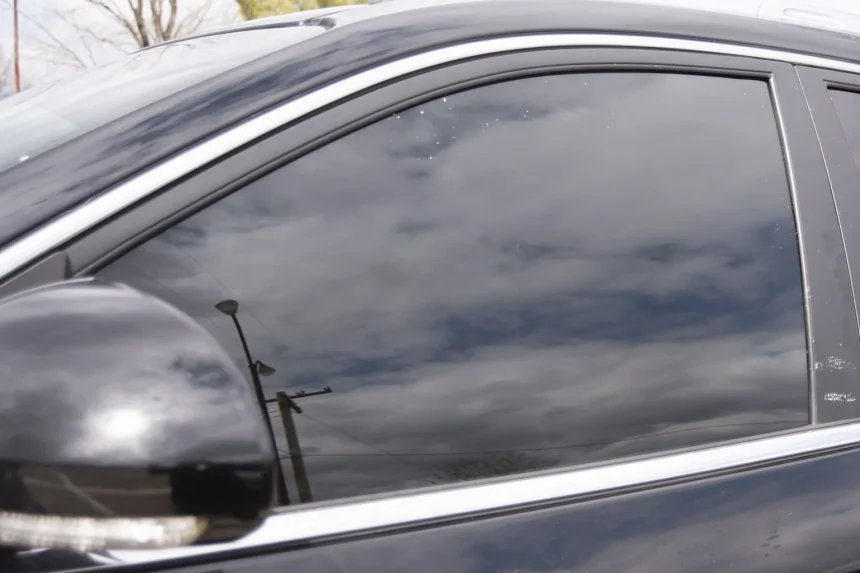
The Inspector-General of Police (IGP), Tunji Disu, stirred a vital conversation on Tuesday when he declared that, if he had his way, no vehicle in Nigeria would be allowed tinted windows.
Speaking in Abuja at a forum where the Nigerian Bar Association (NBA) raised concerns about police commercialisation of tinted glass permits, Disu said Nigeria’s security climate no longer permits a relaxed attitude towards darkened vehicles. “We are moving towards it,” he added.
EDITOR’S PICKS
His candour was striking. But on the substance, he is correct.
A Shield for Criminals
The statistics Disu cited are not abstract. During his tenure as Commissioner of Police in the Federal Capital Territory (FCTl, investigators found that 27 vehicles recovered from “one-chance” gangs — criminal groups that lure unsuspecting passengers into fake taxis before robbing or killing them — were predominantly tinted. Kidnappers and armed robbers have similarly exploited dark windows to move targets, weapons and cash through security checkpoints without scrutiny.
This is not a coincidence. Tinted glass serves one primary operational purpose for criminals: it conceals what is happening inside a vehicle from anyone outside it, including security officers conducting stop-and-search operations.
In a country where roadside checks are often the last line of defence against violent crime, a fully tinted car is not just an inconvenience to law enforcement, it is a deliberate obstacle.
The Problem with Pay-and-Go Permits
Nigeria currently operates a tinted glass permit system in principle. In practice, it has become something closer to a revenue scheme. The NBA itself raised the alarm: private companies collect fees on behalf of the police, permit renewals are demanded repeatedly for vehicles already in a database, and the entire process functions as a money-making exercise rather than a security filter.
This is the crux of the problem. When tinted glass permits are sold to anyone willing to pay the fee, the permit ceases to serve any security function. It becomes a receipt, not a clearance. The police collect the money; the criminal drives off with darkened windows and official paperwork.

Disu acknowledged this tension without fully resolving it. But the logic of his own argument demands a harder conclusion: if tinted vehicles are a documented security risk, then access to them must be restricted by verified need, not purchasing power.
Limit It to Those Who Can Justify It
Nigerian law already recognises that only people with genuine security or medical needs should be permitted to use tinted glass.
The issue is enforcement and eligibility. A country at the level of insecurity Nigeria currently faces — with active insurgencies in the North-East and North-West, bandit operations spreading to the South-West, and mass-kidnapping incidents on highways — cannot afford a system where tinted windows are available to any motorist who fills out a form and pays a fee.
The sensible reform is not necessarily a blanket ban, though that option has merit. A more workable approach would be to restrict permits strictly to verifiable categories: certified VIPs and their protection details, registered diplomatic vehicles, and individuals with documented medical conditions requiring light protection, all subject to biometric registration and vehicle tagging.
The NBA’s concern that permits should not be commercialised is valid. But that argument should lead to higher eligibility standards, not merely cheaper or more transparent fees. Making the permit process cleaner while leaving access wide open solves the wrong problem.
FURTHER READING
Disu may not have the power to enforce a ban today. But he is asking the right question: in a country where tinted glass repeatedly shows up at crime scenes, who exactly are we issuing these permits to protect?
Philip Ibitoye is a Special Correspondent with EKO HOT BLOG. Click here to find daily analysis and critical insight on trending issues in Lagos and other parts of Nigeria.
Click to watch the video of the week below: