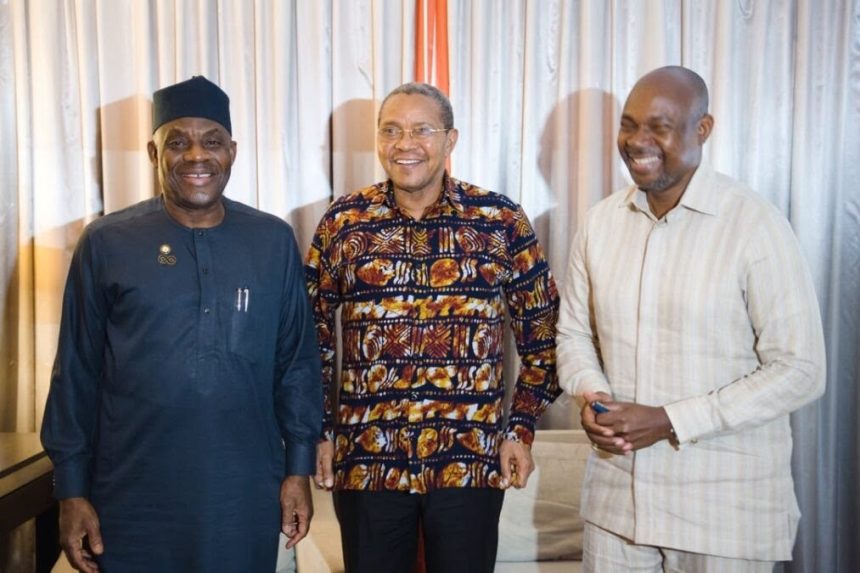
- Ex-Tanzanian president and GPE Board chairman commends Alausa’s education reforms during a bilateral meeting.
- Recognition follows a string of reforms including curriculum overhaul, TVET revitalisation, and a $552m World Bank-backed programme.
- Alausa also plans to scrap the JSS-SSS separation policy, blaming it for over 20 million school dropouts.
A former president of Tanzania and chairman of the Global Partnership for Education (GPE) Board, Jakaya Mrisho Kikwete, has commended Nigeria’s Minister of Education, Dr. Maruf Tunji Alausa.
EKO HOT BLOG reports that the former Tanzanian leader described the ongoing reforms in the country’s education sector as a clear demonstration of Nigeria’s commitment to improving learning outcomes.
EDITOR’S PICKS
Kikwete gave the commendation during a bilateral meeting with the minister, congratulating him on the progress being recorded in the sector.
As GPE Board chairman, he oversees the same body through which Nigeria recently secured $552 million in education financing. He also noted that Alausa’s membership of the GPE Board reflects Nigeria’s growing influence in shaping global education priorities.
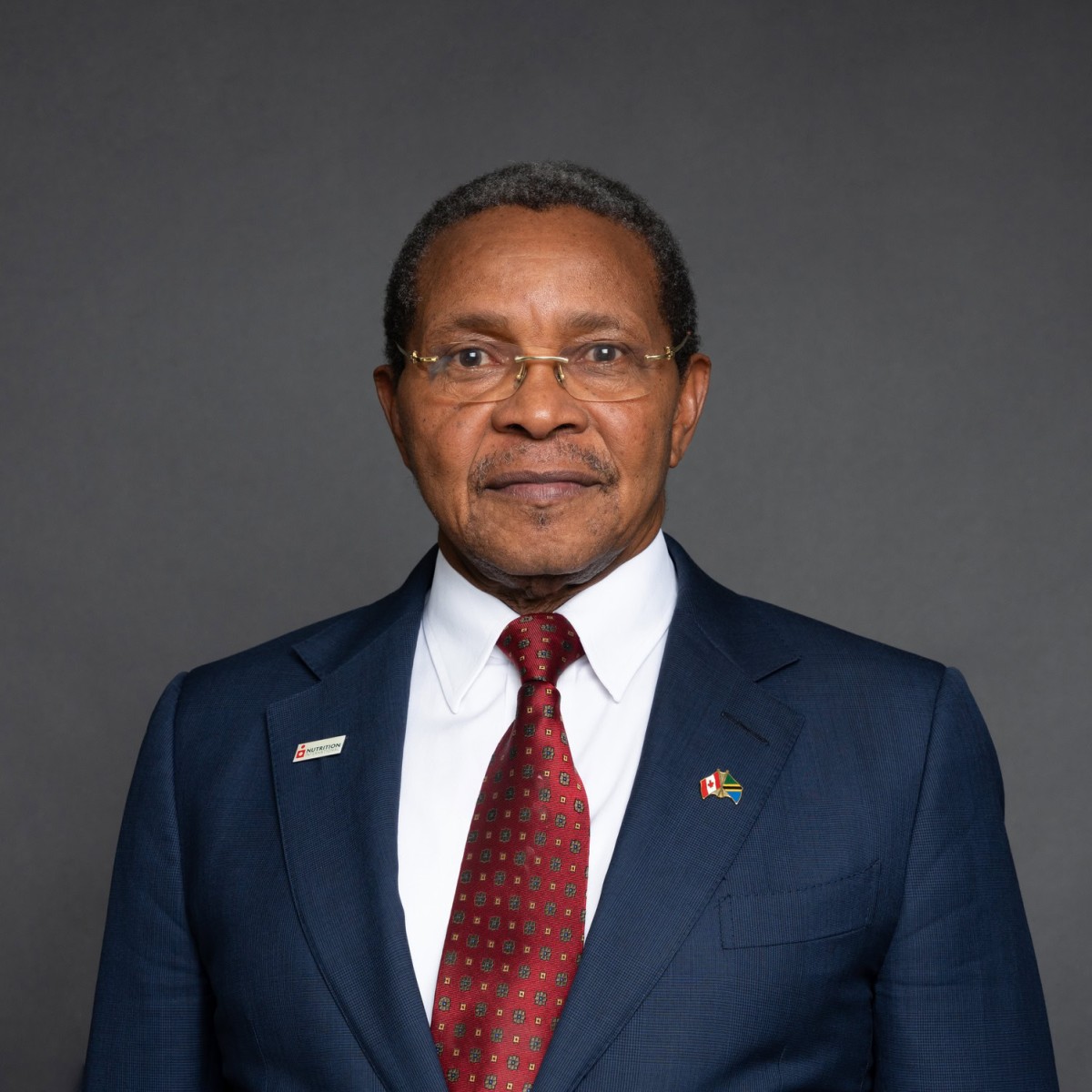
The former Tanzanian president expressed optimism ahead of the Global Education Summit scheduled for September, at which President Bola Tinubu is expected to co-chair proceedings alongside Italian Prime Minister Giorgia Meloni. The summit is expected to mobilise increased global investment in education.
Responding to the former Tanzanian president, Alausa expressed appreciation for his contributions to education and leadership development across Africa.
“Thank you, Mr. President, for all your service to Africa, to the world, and to the children of the world for all the things you continue to do to support foundational education,” the minister said.
Alausa reaffirmed Nigeria’s commitment to deepening education reforms under President Bola Tinubu’s Renewed Hope Agenda through stronger partnerships, increased investment and evidence-based policies aimed at improving learning outcomes and expanding access to quality education.
He said the Federal Ministry of Education would continue to work closely with the Global Partnership for Education and other international development partners to build a resilient, inclusive and future-ready education system.
According to the minister, the government’s objective is to equip Nigerian learners with the knowledge, skills and opportunities required to thrive in the 21st-century global economy while ensuring that no child is left behind in the country’s education reform efforts.
Kikwete’s commendation comes a few months after Alausa won the Most Innovative Cabinet Minister of the Year 2025 at the Silver Jubilee Awards of Independent Newspapers Limited — a recognition that followed public voting, independent jury assessment, and editorial board review.
At the centre of the reforms attracting international attention is an overhaul of Nigeria’s national curriculum, launched under the banner “Lighter Load, Stronger Minds” and effective from the 2025/2026 academic session.
Developed after extensive consultations with NERDC, WAEC, NECO, NBTE, and NABTEB, the new curriculum is built on three core principles: reducing subject overload, promoting practical skill development, and aligning Nigerian education with global best practices.
Primary pupils who previously studied over 20 subjects now take between 9 and 13, depending on their level. Nigerian History has been restored as a compulsory subject from Primary 1 to JSS 3, and JSS 1 pupils are now required to pick at least one trade subject from a list that includes Solar PV Installation, Fashion Design, Livestock Farming, and Computer Hardware repairs, embedding skills training into mainstream schooling rather than treating it as a fallback.
That skills-first logic runs through the broader reform agenda. The revitalised Technical and Vocational Education and Training programme, which is fully federally funded and covers more than 30 trades, attracted 1.3 million applicants through its digital platform, with 58,000 already matched to training centres.
Alongside it, the Student Venture Capital Grant supports student-led innovations, while the Diaspora BRIDGE initiative connects Nigerian professionals abroad to federal universities at home.
Underpinning all of it is the Nigerian Education Data Infrastructure — a real-time monitoring system tracking students, schools, teachers, and out-of-school children through digital dashboards — built on the conviction that policy without data is guesswork.
Also, Alausa recently announced plans to phase out the separation of Junior Secondary Schools from Senior Secondary Schools, following disclosure that more than 20 million pupils who enrolled in primary schools failed to progress to senior secondary education.
According to the minister, the numbers behind the decision made the separation untenable: Nigeria has about 80,000 public primary schools but only around 15,000 junior secondary schools — a mismatch that leaves JSS facilities overcrowded while many senior secondary schools sit underutilised.
“This disarticulation policy has failed. We will phase it out. We cannot continue creating administrative positions while damaging our education system. It is about doing what is best for every Nigerian child,” Alausa said.
The proposal, which is yet to be implemented, will go before the National Council on Education for formal approval.
FURTHER READING
Kikwete’s commendation suggests the reforms are registering well beyond Nigeria’s borders. The September summit is expected to translate the goodwill into the sustained international investment the sector needs.
Click to watch the video of the week below: