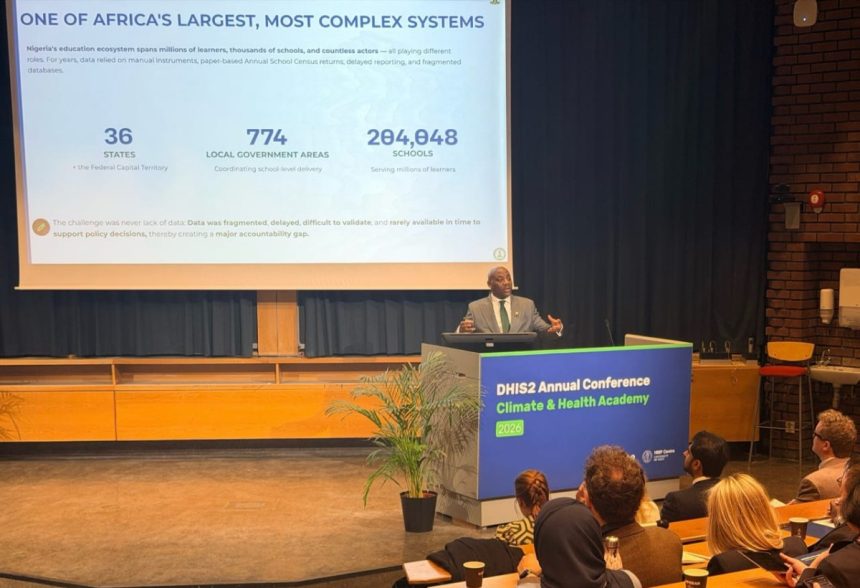
- Nigeria launched DNEMIS, an education data platform, at a global conference in Oslo.
- The system hosts 32 million of the world’s 45 million DHIS2 education records.
- The education minister says Nigeria is now Africa’s reference point for education data.
The Minister of Education, Dr. Maruf Tunji Alausa, has unveiled Nigeria’s Digital National Education Management Information System (DNEMIS), positioning it as the benchmark for education data implementation across Africa.
EKO HOT BLOG reports the Alausa presented the system to a global audience at the 2026 DHIS2 Annual Conference in Oslo, Norway, on Tuesday.
EDITOR’S PICKS
Nigeria’s participation at the conference followed an invitation extended through UNICEF and the University of Oslo, reflecting “growing international recognition of the country’s progress in deploying technology to strengthen education planning, governance, and service delivery,” according to a statement by the Ministry of Education.
Speaking during the conference, Alausa said Nigeria has deliberately repositioned its education sector through digital innovation and evidence-based reforms under the Nigeria Education Sector Renewal Initiative (NESRI), with measurable outcomes across all levels of education.
“Nigeria has established a practical, scalable and replicable framework for how education data systems can be designed, deployed and institutionalised across Africa,” the minister said, adding that the country is “setting a new benchmark for implementation and demonstrating the central role of reliable and near real-time data in improving resource allocation, strengthening interventions and expanding access, equity and learning outcomes.”
A major highlight of the conference was the global co-launch of DNEMIS, a national platform developed to modernise education data collection, management, and reporting.
The system is built on the District Health Information Software 2 (DHIS2) platform — an open-source data system originally developed for health information systems that now supports over 31 million users across countries and institutions worldwide.
Nigeria currently leads the education deployment of the DHIS2 platform, hosting the highest number of education users globally. The education platform holds 45 million records worldwide, of which Nigeria accounts for 32 million, a figure that underscores the scale and ambition of the country’s digital education infrastructure.
Developed through collaboration involving the Ministry of Education, UNICEF, HISP, the National Education Data Infrastructure (NEDI), and the University of Oslo, DNEMIS marks a significant shift from fragmented and largely manual processes to an integrated digital ecosystem capable of generating timely and actionable education intelligence.
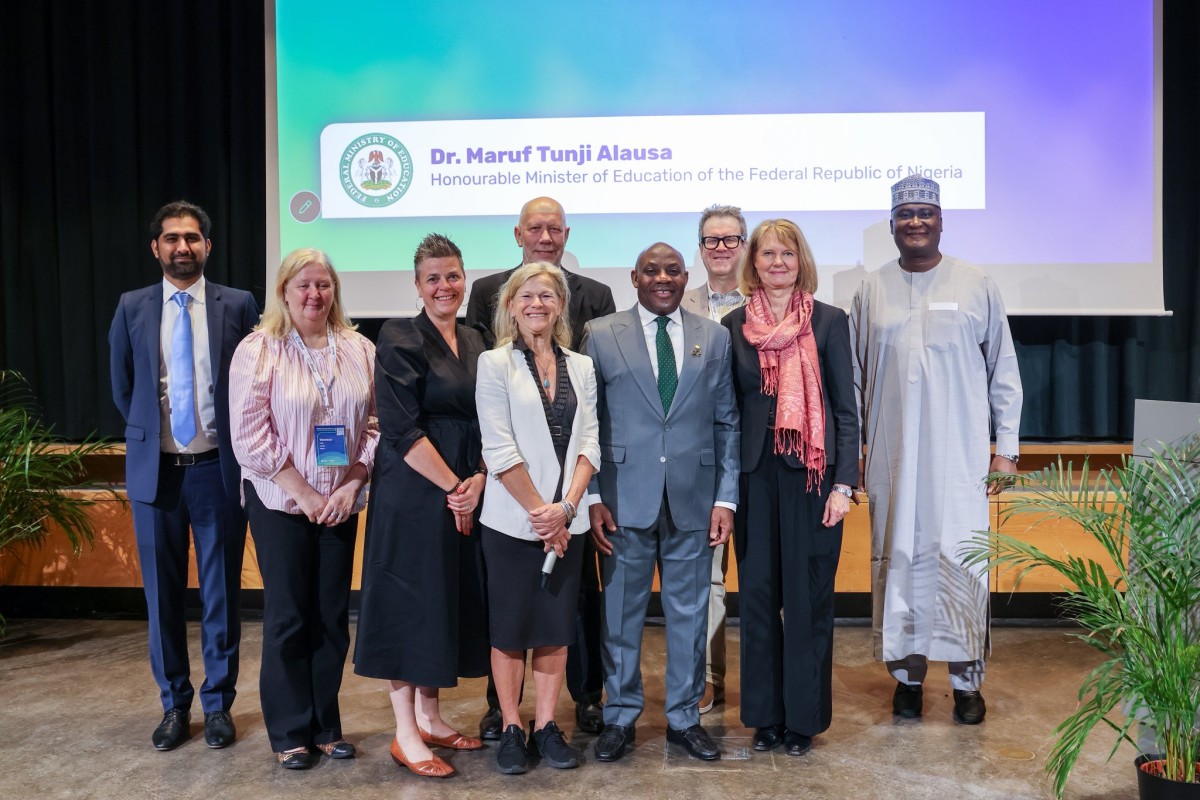
Alausa said the system was already attracting attention from across the continent, with African countries looking to Nigeria’s experience as a pathway for strengthening their own education data systems.
“Nigeria will continue to lead by example in advancing transparency, strengthening evidence-based decision-making and shaping a new continental standard for building inclusive, responsive and future-ready education systems across Africa,” he said.
The minister reaffirmed the Federal Government’s commitment to ensuring that digital innovation translates into measurable improvements for Nigerian learners, describing DNEMIS as central to the country’s broader agenda of transparency and inclusive education reform.
The 2026 DHIS2 Annual Conference brought together ministers, policymakers, development partners, researchers, and technology leaders from more than 100 countries to explore innovative approaches to digital transformation in education, health, and other strategic sectors.
FURTHER READING
Beyond the conference sessions, Nigeria’s delegation used the occasion to deepen international partnerships in education innovation and institutional capacity development.
Philip Ibitoye is a Special Correspondent with EKO HOT BLOG. Click here to find daily analysis and critical insight on trending issues in Lagos and other parts of Nigeria.
Click to watch the video of the week below: