- Trump has signed an order seeking to reduce the number of recommended childhood vaccines
- The order also supports separating the combined MMR vaccine into individual shots
- Medical experts have criticised the move and reaffirmed that vaccines do not cause autism
US President Donald Trump has signed an executive order directing his administration to review the country’s childhood vaccination recommendations and consider reducing the number of vaccines routinely given to children.
Eko Hot Blog gathered that the order also calls for further consideration of administering the measles, mumps and rubella (MMR) vaccines separately rather than as a combined shot, despite scientific evidence showing no link between the MMR vaccine and autism.
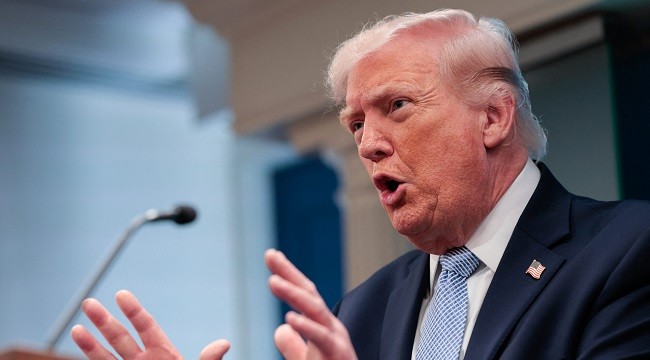
Speaking at the White House on Monday, Trump argued that children receive far more vaccines today than in previous decades and said his administration wanted to focus on what it described as 11 core vaccinations against serious diseases.
The vaccines identified in the order cover measles, mumps, rubella, diphtheria, tetanus, pertussis, polio, Haemophilus influenzae type B, pneumococcal disease, human papillomavirus and chickenpox.
Trump also questioned the safety of giving the three MMR components together, suggesting that separating them into different visits could reduce potential risks. However, when asked to provide evidence for his claim that the combined vaccine could be dangerous, he acknowledged that the view was based on what he had heard.
Health authorities have rejected claims that separating the MMR vaccine provides additional protection. The US Centers for Disease Control and Prevention (CDC) says there is no scientific evidence showing a health benefit from administering the three vaccines separately.
The agency states that most people who receive the MMR vaccine do not experience serious complications and that vaccination is considerably safer than contracting measles, mumps or rubella.
The CDC acknowledges that MMR vaccination can, in rare cases, cause febrile seizures in young children. It advises people with certain medical conditions, including severe allergies or weakened immune systems, to consult healthcare professionals before vaccination.
The proposed changes have drawn criticism from medical organisations and some Republican lawmakers.
Dr Andrew Racine, president of the American Academy of Pediatrics, described the order as dangerous and said it was not supported by high-quality scientific evidence. He warned that delaying or missing childhood vaccinations could expose children to preventable diseases, particularly as measles continues to spread.
Republican Senator Bill Cassidy, a physician who played a key role in confirming Health and Human Services Secretary Robert F. Kennedy Jr, also criticised the move.
Cassidy argued that decisions on vaccination policy should be guided by medical expertise, stressing that vaccines have a strong safety record and do not cause autism.
Trump has repeatedly questioned the safety of childhood vaccines and has promoted the debunked claim that vaccines are connected to autism. However, numerous studies have found no causal relationship between vaccination and autism.
A major Danish study published in 2019 examined more than 657,000 children and found no evidence that the MMR vaccine increased the risk of autism.
The CDC currently recommends two doses of the combined MMR vaccine for children. The first is generally administered between 12 and 15 months of age, while the second is recommended between four and six years.
The American Academy of Pediatrics says the timing of childhood immunisations is based on when children are most vulnerable to particular diseases and when vaccines are expected to provide the strongest protection.
Trump’s order does not itself change state vaccination requirements for school attendance. Such requirements are largely determined by individual states, meaning the federal directive serves primarily as guidance for reviewing national recommendations.
Kennedy, who heads the Department of Health and Human Services, defended the proposed changes, saying the aim was to give parents greater choice rather than prevent access to vaccines.
The order also directs officials to investigate alternatives to aluminium-containing ingredients used in some vaccines and determine whether other options could offer comparable or improved safety and effectiveness.
Aluminium salts have been used in certain vaccines for decades to strengthen the immune response, allowing smaller quantities of vaccine or fewer doses to achieve protection. The American Academy of Pediatrics says research has not identified significant health risks from the small amounts used in vaccines.
Medical experts have expressed concern that changes to vaccination recommendations could lead some parents to delay or refuse immunisations, potentially increasing the risk of outbreaks of diseases such as measles.
The debate comes as US health authorities continue to monitor vaccine-preventable diseases and public confidence in childhood immunisation. While the Trump administration says its approach is intended to give families more choice, health experts maintain that vaccination schedules are designed around extensive evidence on disease risks, vaccine effectiveness and children’s immune development.