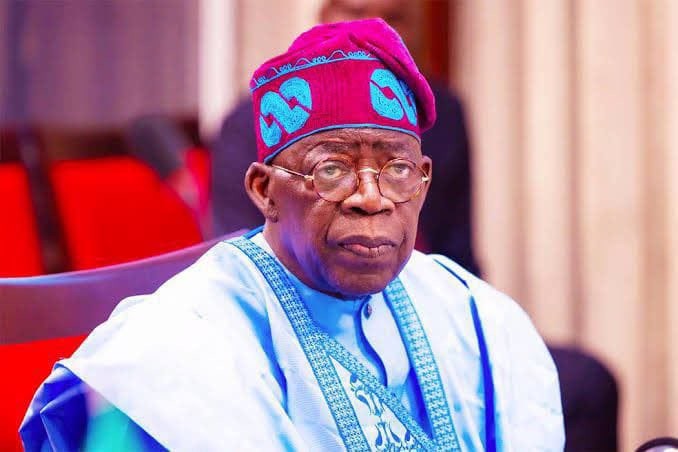
President Bola Tinubu has signed a new order that could unlock up to $50 billion in fresh investment for Nigeria’s deep offshore oil and gas sector, starting with the long-delayed $10 billion Bonga South West project.
The president’s spokesperson, Bayo Onanuga, disclosed the development in a statement on Tuesday.
EDITOR’S PICKS
The Deep Offshore Oil and Gas Projects Incentives (Tax Remission) Order, 2026, was signed on August 6 and published in the Federal Government’s Official Gazette on August 10.
What the order actually does
For years, Nigeria negotiated offshore oil deals one project at a time, with investors haggling over terms for years before committing. This order changes that.
According to Onanuga, the framework replaces old-style negotiations with “transparent eligibility criteria, clear implementation processes and a durable investment architecture” designed to give investors certainty while protecting the country’s long-term interests.
In simple terms: instead of every company cutting its own special deal, there is now one set of rules for any qualifying deep offshore project.
The money on the table
Under the order, qualifying projects get production tax credits, essentially a discount on tax owed, tied to how much oil they produce. A review found the regime offers credits of up to $11.50 per barrel for qualifying oil developments.
There’s also a deadline. Existing deep offshore leases that reach Final Investment Decision by December 31, 2029 qualify for the full standard incentive. Miss that window, and a project may lose out.
Why Bonga South West matters
Bonga South West, the roughly $10 billion Shell-operated project, is the first big test case. It’s one of several major offshore developments that have sat stalled for decades.
Onanuga says the reform traces back to Tinubu’s engagement with Shell CEO Wael Sawan, during which the president “directed the development of the next wave of measures required to unlock Nigeria’s deep offshore investment pipeline.”
But he also notes that it wasn’t built for Shell alone: he says the federal government turned that directive into a framework covering multiple categories of qualifying projects.
The local content angle
The order isn’t just about tax breaks; it also pushes companies to do more work inside Nigeria.
The President’s special adviser on oil and gas, Olu Arowolo-Verheijen, said projects under the framework “will maximise execution within Nigeria wherever commercially and technically feasible, strengthening domestic engineering, fabrication, marine logistics, technical services and project management.”
Her stated goal: “not only to increase investment and production, but also to create skilled jobs, deepen local supply chains and position Nigeria as Africa’s regional hub for deep offshore project execution.”
Who was involved
The presidency says the framework followed an extensive inter-agency process involving the Ministry of Justice, Ministry of Finance, Ministry of Petroleum Resources, the Nigeria Revenue Service, NNPC Limited, the Nigerian Upstream Petroleum Regulatory Commission and the Nigerian Content Development and Monitoring Board, alongside industry operators.
Tinubu personally commended all parties for their “collaboration, technical expertise and commitment.”
The approval also clears NNPC Limited, as government’s counterparty in Production Sharing Contracts, to begin amending eligible contracts to match the new rules.
The bigger picture
Tinubu framed the move as a competitiveness play, arguing that oil wealth alone doesn’t attract capital, predictability does.
“The countries that attract long-term investment are not necessarily those with the greatest natural resources,” he said. “They are the ones that provide the greatest certainty.”
He added that the reform reflects Nigeria’s “determination to build an investment environment defined by clear rules, strong institutions and enduring partnerships,” aimed at getting “capital to flow” and Nigerian businesses to grow.
FURTHER READING
Whether the framework actually delivers $50 billion will depend on how fast companies move to lock in investment decisions before the 2029 deadline and whether the promised certainty holds up once implementation begins.
Philip Ibitoye is a Special Correspondent with EKO HOT BLOG. Click here to find daily analysis and critical insight on trending issues in Lagos and other parts of Nigeria.
Click to watch the video of the week below: