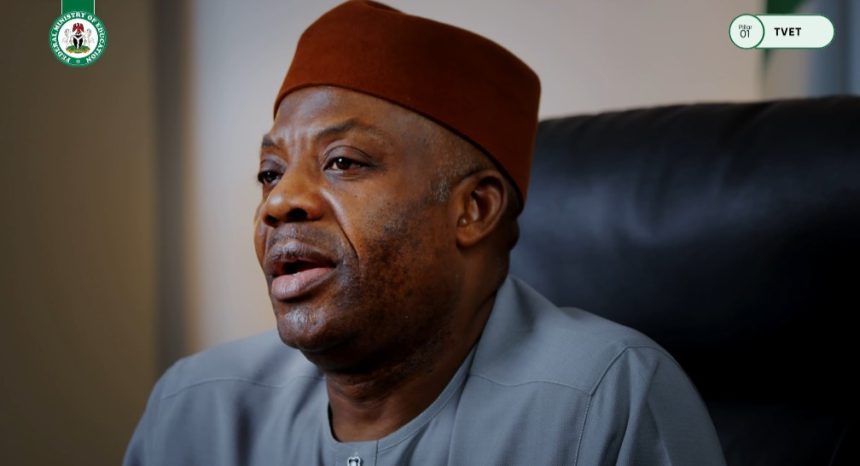
When President Bola Ahmed Tinubu appointed Dr Tunji Alausa Minister of Education on October 23, 2024, the trained nephrologist inherited a sector long accustomed to promises without delivery.
Less than two months later, on December 16, 2024, Alausa unveiled the Nigeria Education Sector Renewal Initiative (NESRI) — a six-point agenda built around Technical and Vocational Education Training (TVET), Science, Technology, Engineering, Mathematics and Medical Sciences (STEMM), Out-of-School Children and Almajiri reintegration, Girl-Child Education, Data and Digitisation, and Education Quality Assurance to drive meaningful reforms.
EDITOR’S PICKS
Twenty months on, from that December unveiling to August 2026, the numbers behind that agenda are beginning to tell their own story.
A Fast Start, A Wide Net
Alausa moved quickly to turn the six pillars into functioning programmes rather than policy documents. TVET alone has drawn over 1.3 million applications, disbursed N13.98 billion, and matched 160,000 young Nigerians to jobs and training centres, with participants earning a monthly stipend of N22,500.
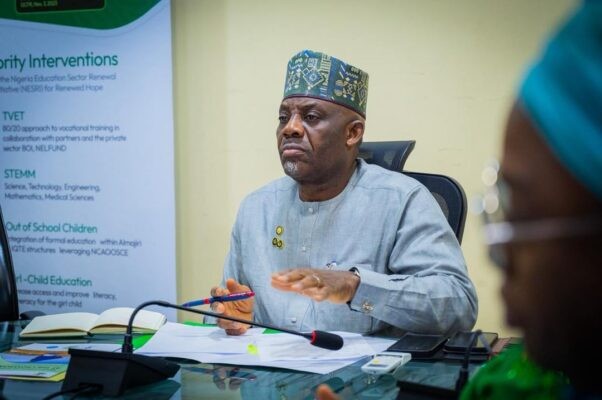
Under STEMM, N110 billion has gone into 18 medical schools and 12 engineering faculties, alongside over a million scholarships.
On the out-of-school children front, nearly a million children have been reintegrated through 120-plus learning centres across 36 state offices, chipping away at a crisis once estimated at 15 million children.
Likewise, Girl-child education has drawn on the $1.2 billion Adolescent Girls Initiative for Learning and Empowerment (AGILE) fund and distributed 370,000 sanitary pads under the Flow with Confidence campaign.
Also, Data and Digitisation has put 32 million students on the NEDI platform across 221,000 schools, with 111 institutions onboarded to AWS Academy. Alausa has been clear about the intent behind the spread: “We’re turning our tertiary institutions as centers where we build the next entrepreneurs of the world.”
Beyond the pillars themselves, Alausa’s ministry pushed complementary interventions that reach students and staff directly.
The Renewed Hope Energizing Education Programme (RHEEP) has brought solar power to 37 federal universities and seven teaching hospitals, addressing years of disrupted lectures and spoiled lab work.
University of Abuja’s Dean of Student Affairs, Prof Simon Malamkawe, called it “one of the most potent or important programmes of this current administration.” An electric tricycle scheme, run with TETFund, has cut campus transport costs for students by more than half in some cases, with fares standardised at N100 per trip.

Funding Follows the Agenda
Delivery at this scale has required significant capital, and Alausa has been able to point to sums that back up the rhetoric.
The Renewed Hope Energizing Education Programme alone has seen N1.012 trillion released, with an additional N70 billion channelled through TETFund.
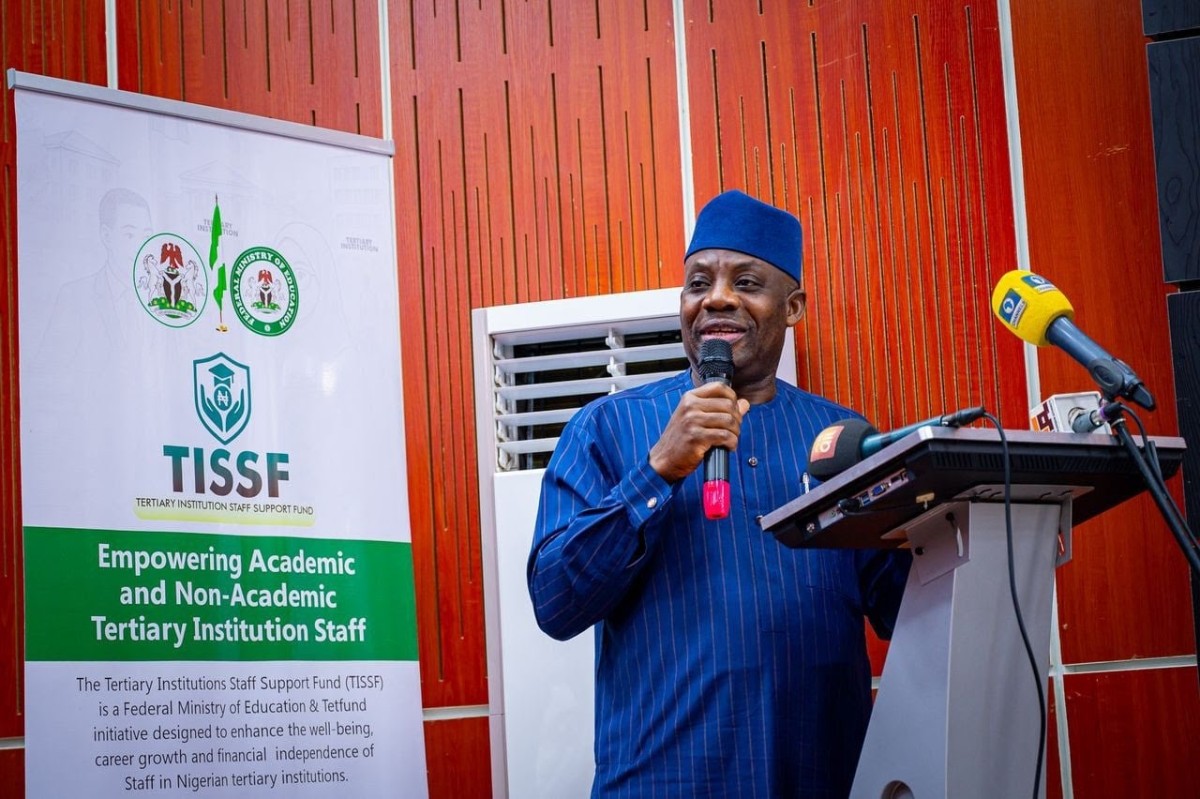
The Tertiary Institution Staff Support Fund (TISSF), launched in August 2025, has disbursed N11.8 billion in interest-free loans of up to N10 million per beneficiary, giving long-serving staff — some without a home to their name after two decades of service — a route out of predatory bank lending.
Kano State Polytechnic’s Chief Accountant, Jamilu Ado Sani, said the fund let him become “a house owner” for the first time.
The Student Venture Capital Grant, run with TETFund and the Bank of Industry (BoI), drew 28,000 applications from over 400 institutions and has paid out grants of up to N50 million to student-led ventures.
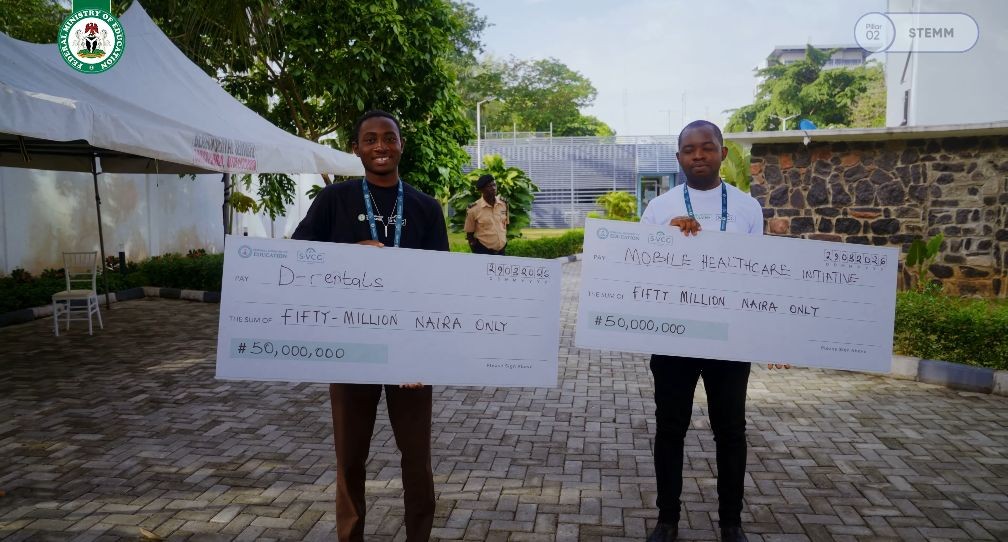
Alausa framed the grant as proof of a broader shift in how the ministry sees its students: “It is not enough for students to acquire just academic knowledge alone. They must also be empowered to translate ideas into viable enterprises that create value” — a line echoed by Minister of State Prof Suwaiba Sa’id Ahmed.
Recognition Reaches the Classroom
Alausa’s agenda has also reached into a corner of the sector long overlooked: the teachers themselves.
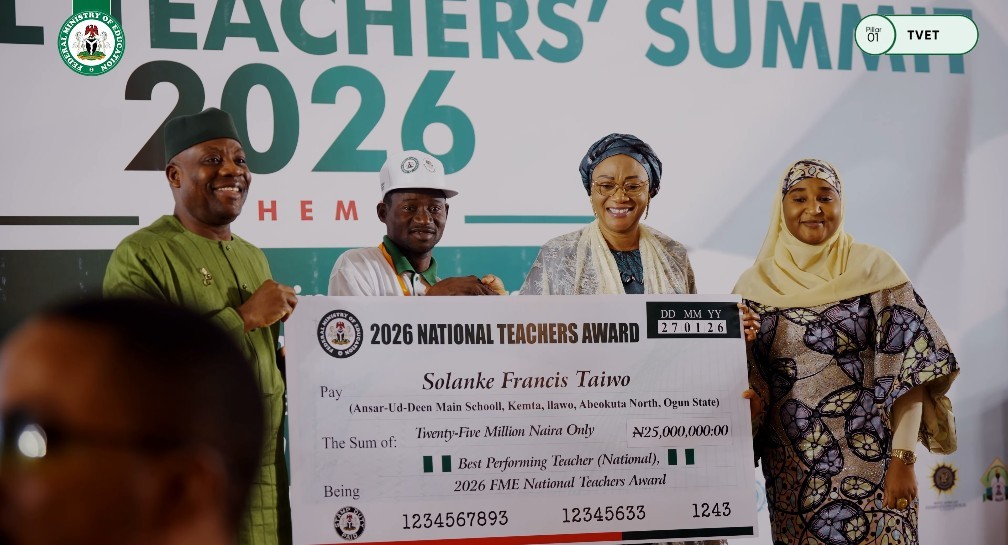
Through the annual National Teacher Summit, UBEC has committed over N300 million in awards, with top-performing teachers receiving N25 million each, a deliberate signal, in Alausa’s telling, that reform is not only about infrastructure and funding but about the people who deliver it daily.
Under his Education Quality Assurance pillar, over 51,000 educators have gone through the EduRevamp training programme.
Twenty months is a short window to judge a sector as large and historically resistant to change as Nigeria’s. But the volume and spread of activity under Alausa — from campus power to student capital, staff loans to teacher awards — mark a departure from the sector’s long pattern of announcements without follow-through.
FURTHER READING
The gains continue to compound and the ledger under Alausa’s watch shows more delivered than promised.
Philip Ibitoye is a Special Correspondent with EKO HOT BLOG. Click here to find daily analysis and critical insight on trending issues in Lagos and other parts of Nigeria.
Click to watch the video of the week below: