- According to him, the framework would allow all aspirants to remain part of the leadership structure
- He noted that the party has already developed a governance blueprint through a committee
- He criticised the All Progressives Congress, accusing it of straying from its founding principles
The African Democratic Congress has introduced a new power-sharing arrangement aimed at strengthening unity within the opposition ahead of the 2027 presidential election.
The model, described as a “collegiate system,” seeks to replace the traditional winner-takes-all approach with a structure that promotes collective leadership, even after a presidential candidate emerges, Eko Hot Blog gathered.
EDITOR’S PICK
- Lassa Fever Hits Oyo, Government Activates Emergency Response
- Bruno Fernandes Reveals Why He Rejected Huge Al Hilal Move
- FG Defends Borrowing Strategy
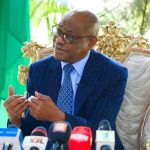
Speaking on a television programme, party chieftain Lukman Salihu explained that the proposal is designed to ensure that governance, if the party wins power, is driven by teamwork rather than individual control.
According to him, the framework would allow all aspirants to remain part of the leadership structure, regardless of who secures the party’s ticket, thereby reducing internal divisions and fostering cooperation.
The move comes amid growing competition among key opposition figures, including Peter Obi, Rabiu Musa Kwankwaso, Atiku Abubakar, and Rotimi Amaechi. However, Salihu insisted that such rivalry reflects healthy political engagement rather than disunity.
He noted that the party has already developed a governance blueprint through a committee, with its manifesto focused on citizen-centred policies aimed at addressing Nigeria’s key challenges.
Salihu added that efforts are also underway to establish a transparent screening process for aspirants to ensure credible and widely accepted candidates emerge.
He criticised the All Progressives Congress, accusing it of straying from its founding principles and allowing elected officials to dominate party structures.
According to him, restoring internal discipline and strengthening party institutions are central to the opposition’s strategy.
While acknowledging that some political actors are yet to join the coalition, Salihu said participation remains voluntary, expressing confidence that the opposition will eventually unite behind a single candidate for the election.
FURTHER READING