- Season two opens with the unsettling return of Bashorun Ogunjimi from Orun Apaadi
- Veteran performances from Sola Sobowale, Taiwo Hassan, and Gabriel Afolayan add gravitas
- the season leaves viewers with more questions than answerssuggesting that the meaning of Aníkúlápó itself
Kunle Afolayan’s Aníkúlápó returns for a second season with a much heavier embrace of mythology, horror, and political tension. Titled Aníkúlápó: The Ghoul Awakens, the new instalment deepens the universe of the Old Oyo Empire, pushing its characters into darker moral and spiritual territory.
Streaming once again on Netflix, Eko Hot Blog reports that the season blends palace politics, ancient belief systems, and the personal cost of ambition. Familiar faces such as Bimbo Ademoye, Sola Sobowale, Taiwo Hassan, Aishah Lawal, and Owobo Ogunde reprise their roles, while fresh additions—including KieKie, Antar Laniyan, Saidi Balogun, Teniola Aladese, and Saga (Adeoluwa Okusaga)—expand the narrative canvas. The result is a visually ambitious season that dares to stretch its mythological roots even further.
EDITOR’S PICK
- ADC Requests INEC to Postpone FCT Area Council Elections
- Tope Alabi Welcomes Grandchild
- CBN to Introduce New Policy to Regulate Debit Card Issuance, ATM Operations
From death to disorder
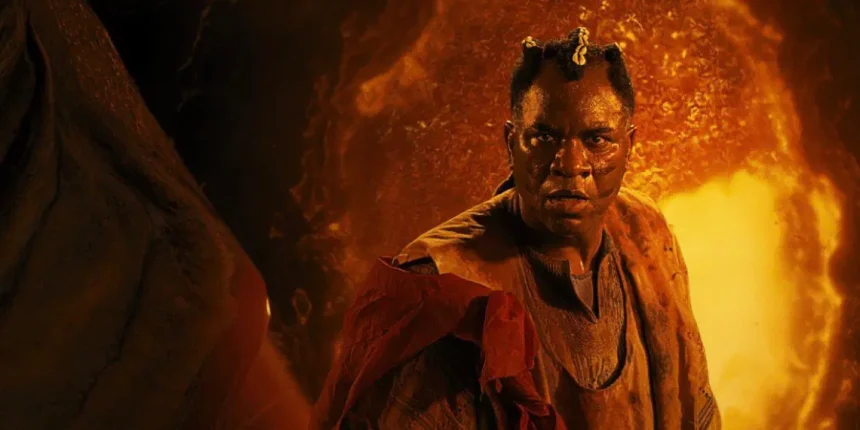
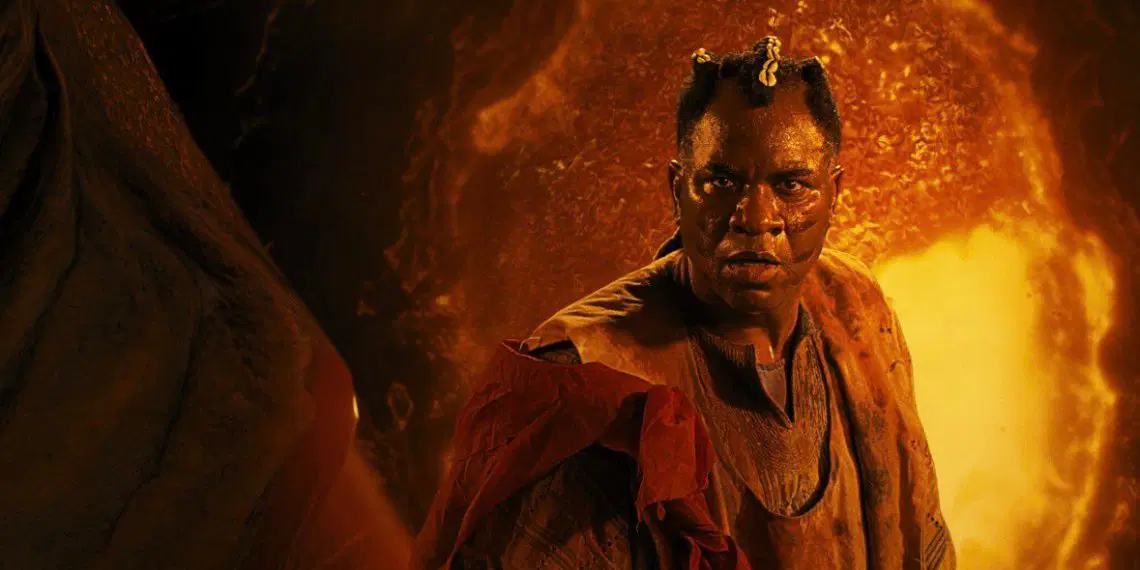
Season two opens with the unsettling return of Bashorun Ogunjimi from Orun Apaadi, the realm of the dead. Once feared for his cruelty and greed, he is resurrected as a ghoul—neither fully alive nor truly dead—condemned to survive by draining human life-force. His reappearance immediately disrupts the fragile balance between the spiritual and human worlds, setting the tone for a story driven by vengeance, survival, and power.
At the same time, Prince Aderoju returns to Oyo after years away, only to confront a crisis sparked by the abduction of his half-sister, Omowunmi, by the people of Ede. Custom dictates that she be married to Prince Asiru to avert war between the kingdoms, but her resistance threatens both political stability and royal authority. Aderoju’s attempts to defy tradition and rescue her deepen tensions with the Alaafin and place old alliances at risk.
Elsewhere, Arolake seeks refuge from Oyo’s violence, hoping to build a quiet life with Akin. Yet peace remains elusive. Her pregnancy, lingering trauma, and the jealousy surrounding Akin’s musical talent pull her back into a dangerous web of human desire and supernatural interference.
Power, tradition, and consequence
This season leans heavily into Yoruba cosmology while introducing stronger horror elements. Bashorun’s ghoul form becomes a metaphor for power acquired through destruction—something taken, not earned. His existence reflects the idea that authority sustained by exploitation eventually consumes itself.
Human conflicts mirror this spiritual decay. Aderoju’s challenge to tradition, Omowunmi’s fight for autonomy, and Arolake’s struggle between love and survival all unfold within rigid social structures that punish defiance. Omowunmi’s journey, in particular, grows increasingly tragic as her quest for freedom leads her into captivity under Portuguese slave traders. Arolake, meanwhile, faces fresh heartbreak when the child she long struggled to conceive is taken from her.
Within the palace, fear replaces certainty. When Aderoju is found alive but trapped between life and death, the Alaafin faces an impossible choice after a priest reveals that saving the prince may require the sacrifice of another child. Though the king refuses, the revelation that Aderoju has a secret child complicates matters further, exposing the cost of hidden truths.
Performances and character weight
The ensemble cast remains one of the series’ strongest pillars. While Kunle Remi’s Saro is largely absent, Owobo Ogunde delivers a chilling portrayal of Bashorun, anchoring the season with quiet menace. Bimbo Ademoye continues to shine as Arolake, balancing strength and vulnerability with emotional depth, particularly in scenes tied to motherhood and loss.
Veteran performances from Sola Sobowale, Taiwo Hassan, and Gabriel Afolayan add gravitas. At the same time, the use of Yoruba dialogue, punctuated by Portuguese and other regional languages, reinforces historical authenticity and cultural immersion.
Visual storytelling
Visually, The Ghoul Awakens remains striking. Expansive landscapes, sacred forests, and detailed palace settings bring the Old Oyo Empire vividly to life. Lighting, costume design, and set pieces create a strong sense of time and place, though some visual effects—particularly those depicting Bashorun’s ghoul form occasionally dilute tension instead of heightening it. Still, the careful use of sound, silence, and music sustains suspense and emotional weight across most episodes.
Final thoughts
Aníkúlápó: The Ghoul Awakens is a bold and visually rich continuation of a celebrated Nigerian series. By weaving mythology, horror, politics, and personal tragedy, it delivers a story that is ambitious and thought-provoking, even when it becomes densely layered.
At times, the narrative appears overstretched, juggling too many arcs at oncefrom the Alaafin’s moral dilemmas to Bashorun’s unresolved fate. Certain plotlines, such as Aderoju’s sudden romance with a spirit transformed into human form, feel rushed. Likewise, Bashorun’s prolonged wandering as a ghoul raises questions about whether his story is merely unfolding toward a larger reckoning.
Ultimately, the season leaves viewers with more questions than answerssuggesting that the meaning of Aníkúlápó itself, and the fate of characters like Saro and Bashorun, may still be evolving.
FURTHER READING