- Atiku called for a forensic probe into the alleged ₦210bn budget duplication
- He urged the National Assembly to identify officials behind the allocations
- The former vice president said fiscal accountability must be strengthened
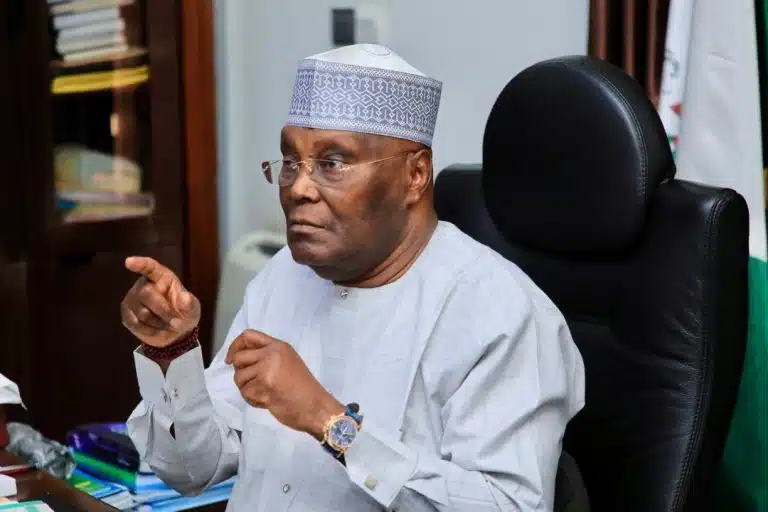
Former Vice President Atiku Abubakar has called on the National Assembly to uncover and publicly identify those responsible for the alleged duplication and overlapping of budget provisions worth ₦210 billion in the 2026 Appropriation Act.
Eko Hot Blog gathered that the African Democratic Congress (ADC) presidential candidate also demanded an immediate forensic audit of the budget, arguing that the alleged irregularities point to worsening fiscal mismanagement under the administration of President Bola Tinubu.
EDITOR’S PICK
- 175th Kayokayo Festival Grand Finale: Epe Celebrates 175 Years of Faith, Heritage, Unity and Prosperity
- Wale Raji Reaffirms Commitment at KayoKayo Finale
- India: Massive Garbage Heap Collapse Kills Nine Workers at Waste-to-Energy Plant.
In a statement issued on Saturday by his Senior Special Assistant on Public Communication, Phrank Shaibu, Atiku said the reported budget discrepancies, coupled with Nigeria’s weak performance on global prosperity rankings, reflected what he described as one of the most fiscally irresponsible governments in the country’s democratic history.
He argued that the revelations had weakened the administration’s claims that its economic reforms were restoring stability and improving public finances.
According to Atiku, Nigerians have endured years of hardship following the removal of fuel subsidy, exchange rate reforms, increased taxes and higher tariffs, based on assurances that the measures would eventually strengthen the economy.
He questioned how the government could justify the reported duplication of more than ₦210 billion in the national budget while citizens continued to make sacrifices.
The former vice president maintained that any government asking citizens to endure difficult economic policies must first demonstrate transparency and prudent management of public funds.
He alleged that the reported duplications formed part of a broader pattern of questionable budgeting, including project allocations outside the mandates of government agencies and controversial insertions running into billions of naira.
Atiku also renewed his criticism of the government’s handling of the fuel subsidy policy, claiming that the 2024 audited financial statements of the Nigerian National Petroleum Company Limited (NNPCL) showed that ₦7.13 trillion was still recorded under “Energy Security Expenses,” which he argued amounted to the continued payment of fuel subsidy under another description.
He insisted that Nigerians deserved greater openness in the management of public resources, saying any attempt to conceal such spending undermined public trust and weakened the credibility of ongoing reforms.
The ADC leader further warned that irregularities in the national budget could damage investor confidence, noting that the budget should serve as a transparent blueprint for national development rather than a document tainted by questionable allocations.
He added that the effects of poor fiscal management were evident in the daily struggles of many Nigerians, including rising living costs, business closures, unemployment and challenges facing farmers.
Atiku urged the National Assembly to carry out a comprehensive forensic examination of the 2026 budget, publish all duplicated allocations, identify officials responsible for approving them and recover any funds found to have been improperly appropriated.
He also called on the Auditor-General of the Federation, anti-corruption agencies and civil society organisations to independently scrutinise the budget.
According to him, every duplicated allocation represents public projects and essential services denied to Nigerians.
Atiku pledged that an ADC-led administration would prioritise transparent budgeting, zero-based expenditure planning, digital monitoring of public spending, stronger legislative oversight and greater accountability in public finance.
His comments come amid continued debate over the Tinubu administration’s economic reforms, including fuel subsidy removal, exchange rate liberalisation and tax policies introduced since 2023.
While the Federal Government has defended the reforms as necessary to stabilise the economy and improve public finances, opposition parties and labour groups maintain that they have significantly increased the cost of living for Nigerians.
The latest remarks are expected to intensify public scrutiny of the 2026 federal budget as political activities ahead of the 2027 general elections gather momentum.
FURTHER READING