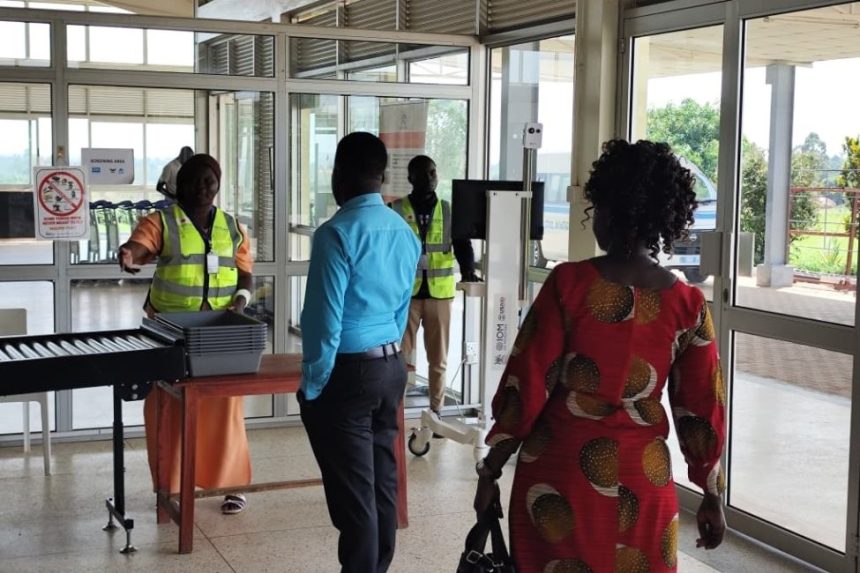
- The International Organization for Migration (IOM) has issued an urgent plea to governments and regional partners to rapidly scale up cross-border cooperation to contain an ongoing outbreak of the Bundibugyo Ebola virus.
- The global body strongly warned that reactive border closures fail to halt population movement, instead driving migration underground into unmonitored routes and significantly increasing transmission risks.
- Official data confirms a heavy health toll in the Democratic Republic of the Congo (DRC) alongside confirmed cross-border transmissions into neighbouring Uganda, complicating an already severe humanitarian crisis.
The International Organization for Migration (IOM) has issued a critical advisory urging international governments and regional authorities to urgently strengthen cross-border coordination to successfully contain the ongoing Bundibugyo Ebola virus disease outbreak.
Eko Hot Blog reports that in an official global briefing released on Tuesday, June 2, 2026, the migration agency strongly cautioned against relying solely on border closures as a containment mechanism.
EDITOR’S PICK
- Fresh Details Emerge on Death of Odomola Monarch, Oba Adebowale Adeshina
- Sanwo-Olu Applauds LASU’s Academic Excellence After JAMB Ranking
- NRC Moves 176,820 Tonnes Of Cargo Through Lagos Ports In Q1
IOM emphasized that complete border shutdowns do not stop human mobility; instead, they aggressively drive population movements underground into informal, unmonitored routes where health screening, tracking, and medical surveillance are severely restricted, thereby exacerbating the risk of undetected disease transmission.
According to the latest statistical compilations released by the World Health Organization (WHO), the outbreak has already registered a troubling footprint. In the Democratic Republic of the Congo (DRC), health authorities have logged 116 suspected cases, 321 confirmed cases, 48 deaths, and six recovered patients.
Meanwhile, in neighboring Uganda, cross-border transmission has been formally established with nine confirmed cases and one fatality recorded to date.
Speaking on the necessity of integrated public health strategies, Ugochi Daniels, the IOM Deputy Director General for Operations, stated: “Viruses do not stop at borders, and neither should our response.
The most effective response is coordinated action that keeps mobility visible, safe and monitored.”
The health emergency is unfolding against the backdrop of one of the world’s most unstable humanitarian environments.
The eastern region of the DRC is heavily plagued by ongoing armed conflict and systemic internal displacement.
As of March 2026, the country accounts for over 3.6 million internally displaced persons (IDPs), with nearly 922,000 refugees concentrated inside Ituri Province, the exact epicenter of the current Ebola outbreak.
People living within these congested displacement camps, adjacent border communities, and conflict zones face catastrophic vulnerabilities due to an acute lack of clean water, basic sanitation, and standard healthcare infrastructure.
Despite prevailing movement restrictions, real-time data from IOM’s Flow Monitoring Registry across major formal and informal border checkpoints, including Bunagana, Mpondwe, Busunga, Cyanika, Goli, Vurra, Busanza, and Ntoroko, indicates that vital cross-border migration continues daily.
This is because local populations rely heavily on these crossings for commerce, ancestral livelihoods, and access to basic human services.
This marks the 17th Ebola outbreak recorded in the history of the DRC and ranks as the third largest on record, highlighting the critical importance of long-term regional preparedness over panicked, short-term border blocks.
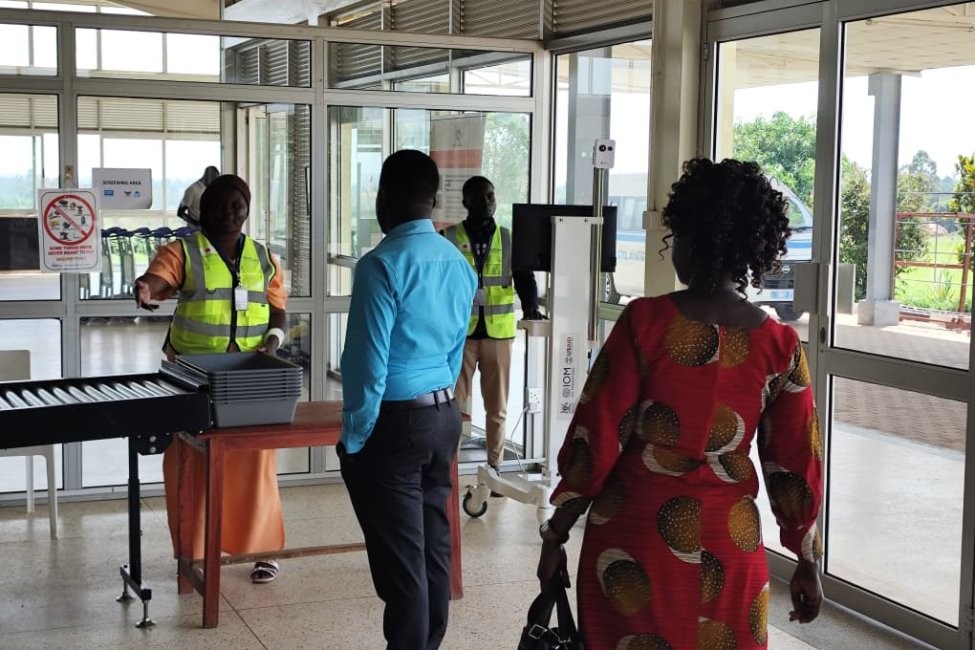
To counter the further spread of the disease, IOM is actively supporting governments in the DRC, Uganda, and surrounding transit nations by deploying population mobility mapping, expanding frontline health screening operations at major entry hubs like Arua Airport, and strengthening risk communication.
However, the agency noted that significant funding deficits continue to heavily bottleneck the overall speed and scale of these crucial containment operations.
While welcoming a swift, life-saving financial intervention from the United States government, IOM stressed that more international resources are urgently needed to sustain border health systems and strengthen community-based prevention models alongside the African Union, Africa CDC, and United Nations partners.