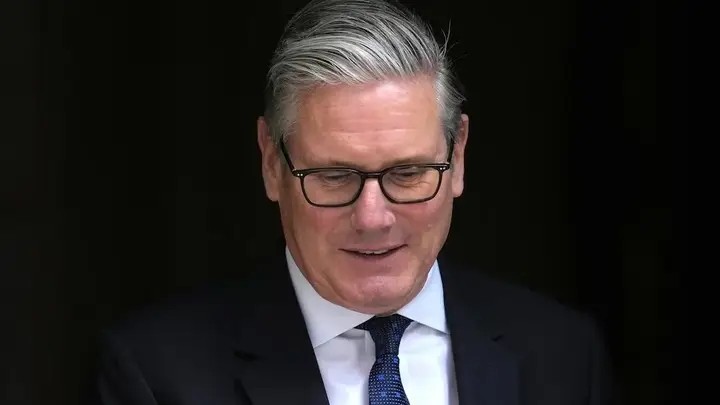
- British Prime Minister Keir Starmer is expected to announce a formal timetable for his resignation following overwhelming pressure from cabinet ministers and members of parliament within his ruling Labour Party.
- The political crisis reached a boiling point following veteran politician Andy Burnham’s landslide victory in the northwest Makerfield by-election, clearing the constitutional requirement for the former Greater Manchester mayor to launch a direct leadership challenge.
- If Starmer finalizes his departure, the United Kingdom will prepare to welcome its seventh prime minister in a single decade, signaling a period of remarkable political instability despite Labour’s significant parliamentary majority.
British Prime Minister Keir Starmer is on the verge of announcing a structured plan to step down from office, with senior Whitehall sources and UK media indicating a resignation statement could be delivered imminently.
Eko Hot Blog reports that the severe threat to Starmer’s leadership culminated over the weekend as his long-term internal rival, Andy Burnham, prepared to be officially sworn in as a member of parliament at Westminster, establishing the necessary legislative platform to assume the party leadership.
EDITOR’S PICK
- Hamzat Appoints Obanikoro as Campaign DG Ahead of 2027 Lagos Governorship Race
- Tinubu’s State Police Plan Gains Momentum as Amendment Looms
- Residents Raise Alarm After Two Bodies Found in Lagos Waterway
The political realities shifted dramatically for Starmer following the emphatic margin of Burnham’s victory in the Makerfield constituency by-election.
Burnham, widely referred to as the “King of the North” during his tenure as Greater Manchester mayor, secured nearly 55% of the total vote, comfortably defeating the hard-right, populist Reform UK party.
In his victory speech, Burnham pointedly remarked that the ruling party was facing its “final chance to change,” a statement viewed by political analysts as an explicit declaration of intent to march on 10 Downing Street.
Starmer, who took office in July 2024 following a landslide general election victory, has spent months battling collapsing public approval ratings, economic stagnation, and severe policy reversals.
Internal dissent intensified sharply in March over his controversial appointment of Peter Mandelson as the UK’s ambassador to Washington, alongside devastating losses for Labour during municipal and regional elections.
Over the weekend, the Prime Minister reportedly held intense consultations with family members and close allies at Chequers, the countryside prime ministerial retreat, to evaluate the viability of his position as more than 100 Labour lawmakers and high-ranking cabinet members, including Foreign Secretary Yvette Cooper, quietly urged him to facilitate an orderly transition.
The brewing domestic transition has also attracted international attention.
United States President Donald Trump commented on the situation via his Truth Social platform, predicting Starmer’s imminent departure and criticizing the British leader’s domestic record on immigration and green energy policies.
Diplomatic ties between London and Washington had already grown increasingly strained in recent months due to disagreements regarding the ongoing war with Iran, which the UK government declined to actively join.
Under the institutional guidelines of the center-left Labour Party, any viable contender for the prime ministership must hold an active seat in the House of Commons.
Given Labour’s overwhelming parliamentary majority, if Starmer confirms his exit timetable, potentially managing government affairs until the annual party conference in late September, Burnham could be poised for an uncontested coronation as the next prime minister unless a rival cabinet faction emerges to force a wider ballot.