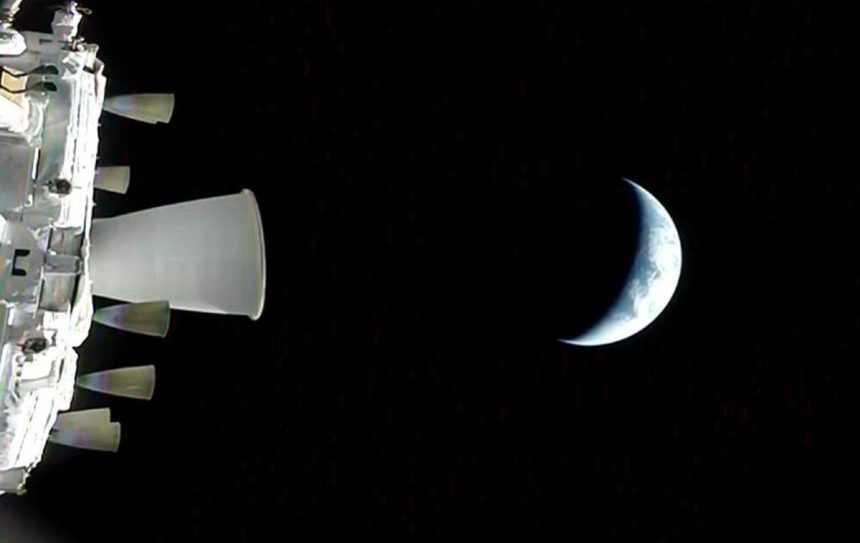
- On Thursday evening, April 2, 2026, the four Artemis II astronauts successfully fired their main engine for nearly six minutes, reaching a staggering 24,500 mph to escape Earth’s gravity.
- The crew is on a “free-return” trajectory that will take them 252,455 miles from Earth, surpassing the record set by Apollo 13 in 1970 and making them the humans who have traveled farthest into space.
- NASA mission control cleared the maneuver after the Orion capsule, named Integrity, showed “near-flawless” performance during its first full day in space.
NASA’s journey back to the moon reached a milestone Thursday as the Artemis II crew, Commander Reid Wiseman, Victor Glover, Christina Koch, and Canadian Jeremy Hansen officially left Earth’s orbit behind.
Eko Hot Blog reports that the “trans-lunar injection” (TLI) burn began at 7:49 p.m. EDT, just 115 miles above the planet, successfully pushing the spacecraft toward the lunar far side.
EDITOR’S PICKS
- Judge Frees 37 Inmates Over Prolonged Detention in Akwa Ibom
- Trump Threatens Iran Over Energy Attacks
- Tinubu Excludes Kemi Badenoch from UK State Visit Itinerary
“Humanity has once again shown what we are capable of,” radioed astronaut Jeremy Hansen shortly after the engine shut down.
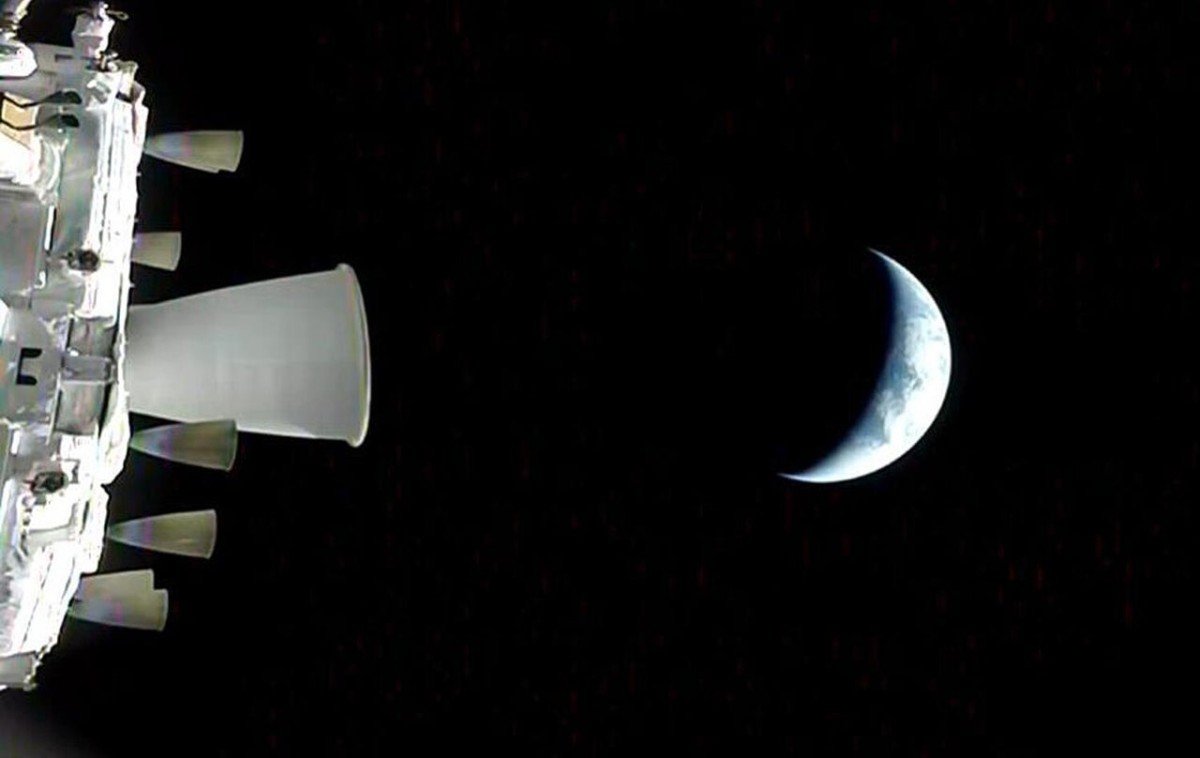
The crew reported being “glued to the windows” as they watched a spectacular crescent Earth recede, opting to take photos rather than eat their scheduled lunch.
While the mission is a flyby and will not land on the surface, it serves as the ultimate “stress test” for NASA’s deep-space hardware. Over the coming days, the crew will:
- Validate Navigation: Ensure the Orion ferry ship can safely maneuver and return without further major rocket firings.
- Set the Stage for 2028: The data gathered will finalize protocols for Artemis IV, which aims to put boots back on the moon near the lunar south pole.
- Test Deep-Space Life Support: Monitoring how systems, including communication and waste management, handle the long-duration stretch away from Earth.
NASA Administrator Jared Isaacman, who watched the burn from mission control in Houston, has outlined an aggressive vision for the program.
Following this trail-blazing flight, NASA plans to launch Artemis III next year to rehearse docking procedures in low-Earth orbit.
The ultimate goal remains a permanent U.S. base near the lunar south pole. Isaacman noted that the agency aims to scale up to a moon landing every six months, backed by a $20 billion investment over the next seven years.
For now, the world watches as Wiseman and his crew prepare to loop around the far side of the moon this Monday, April 6.