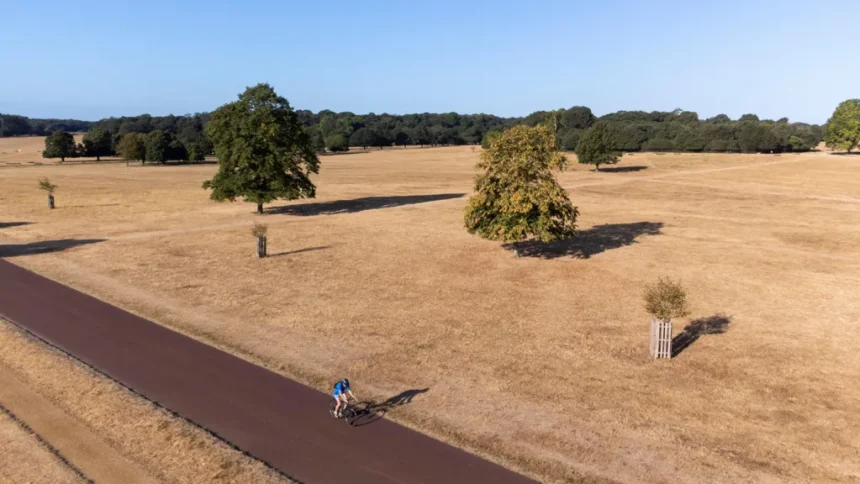
- More than 71% of England is now in drought
- July was the driest on record
- Farmers and water supplies are under pressure
More than 71 per cent of England has officially been placed under drought conditions following an exceptionally hot and dry summer that produced the driest July since records began in 1836.
Eko Hot Blog gathered that the East Midlands, Lincolnshire and Northamptonshire, Kent and East Sussex, as well as Solent and the South Downs, were added to the drought list on Monday after a meeting of the National Drought Group.
EDITOR’S PICK
- How Lagos Achieved 57.4% Exclusive Breastfeeding Rate
- Shaibu Lists Nigeria’s Biggest Security Challenges
- Vote, Protect Your Mandate, Governor Adeleke Urges Residents Ahead of August 15 Polls.
The move means about 45 million people across England now live in areas affected by drought, while more than 27 million are facing restrictions on water use.
The National Drought Group, which brings together government agencies, regulators, water companies and representatives of the agricultural sector, warned that conditions could deteriorate further without significant and sustained rainfall.
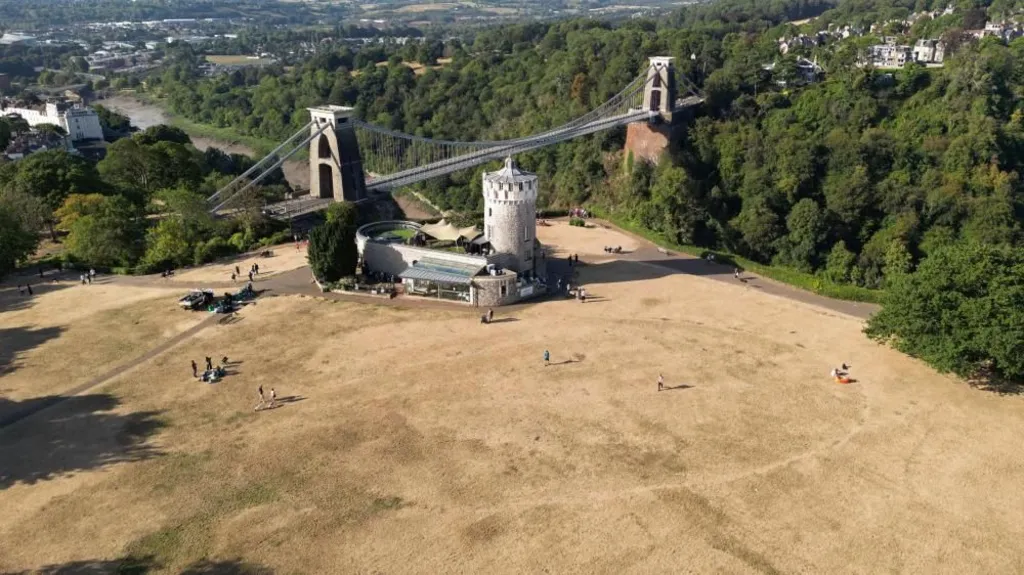
Its chairman, Tony Grayling, said the prolonged heat and lack of rain were already placing serious pressure on agriculture and the environment.
He urged the public to reduce water consumption where possible, warning that existing supplies needed to be protected as the dry spell continued.
The authorities said much of England was experiencing what is known as a flash drought, a condition that develops rapidly when unusually low rainfall combines with high temperatures.
Yorkshire and north-east England have been placed under a prolonged dry weather status, which is the stage immediately before drought. No part of England remains under normal water-resource conditions.
The latest development comes as another heatwave is expected to affect much of the country. The UK Health Security Agency has issued amber heat-health alerts across England, except the North East, from Tuesday morning until Friday evening.
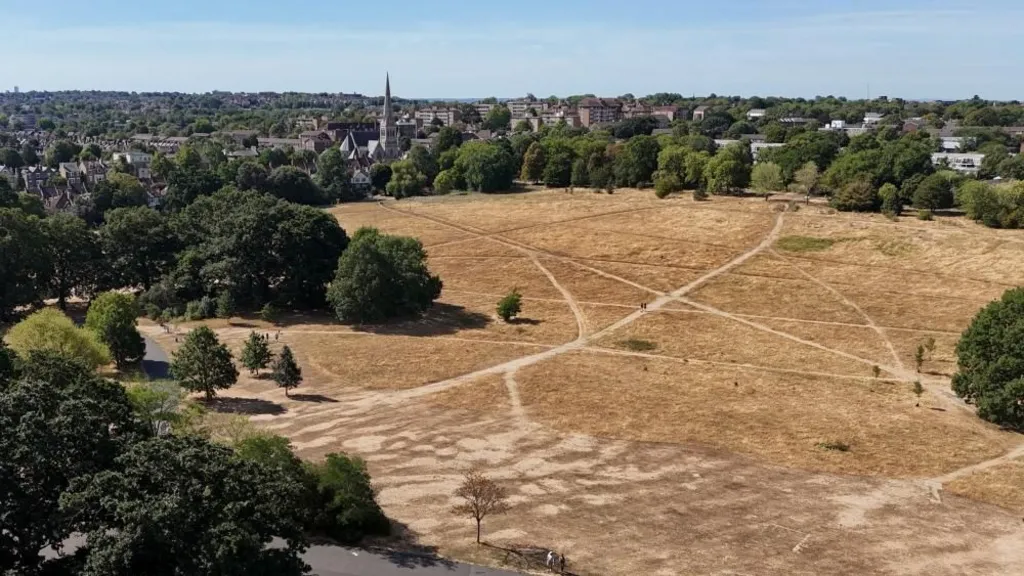
The hot and dry weather has also increased the danger of wildfires, with firefighters battling a major blaze in the New Forest.
The drought has already affected farmers and water resources. England and Wales recorded their driest July on record, while southern England experienced its driest month ever recorded.
South-east England received only about one per cent of its average July rainfall, while parts of Hampshire, the Isle of Wight and West Sussex went 59 days without a day of rain.
Farmers have reported declining yields, with the National Farmers’ Union warning that prolonged dry conditions could create shortages of some food products.
NFU president Tom Bradshaw said wheat and oat harvests had been particularly poor, while livestock farmers were being forced to rely on winter feed because grass growth had been severely affected.
The government said it was considering measures to help farmers improve water storage, including making it easier to develop irrigation reservoirs on farms.
River levels have also fallen sharply, with only 14 per cent of England’s rivers considered to be at normal levels. About 22 per cent are classified as exceptionally low.
Reservoir supplies are similarly under pressure, with almost all reservoirs below normal levels and five recorded as exceptionally low.
Environmental groups have also warned about the impact of warmer water on fish, as higher temperatures reduce the amount of dissolved oxygen available in rivers.
Emma Pinchbeck, chief executive of the Climate Change Committee, said the country was poorly prepared for prolonged periods of extreme heat and dry weather, warning that agriculture, infrastructure and other parts of the economy were vulnerable.
Scotland and Northern Ireland have not been classified as being in drought, although parts of eastern Scotland remain under significant water-scarcity pressure.
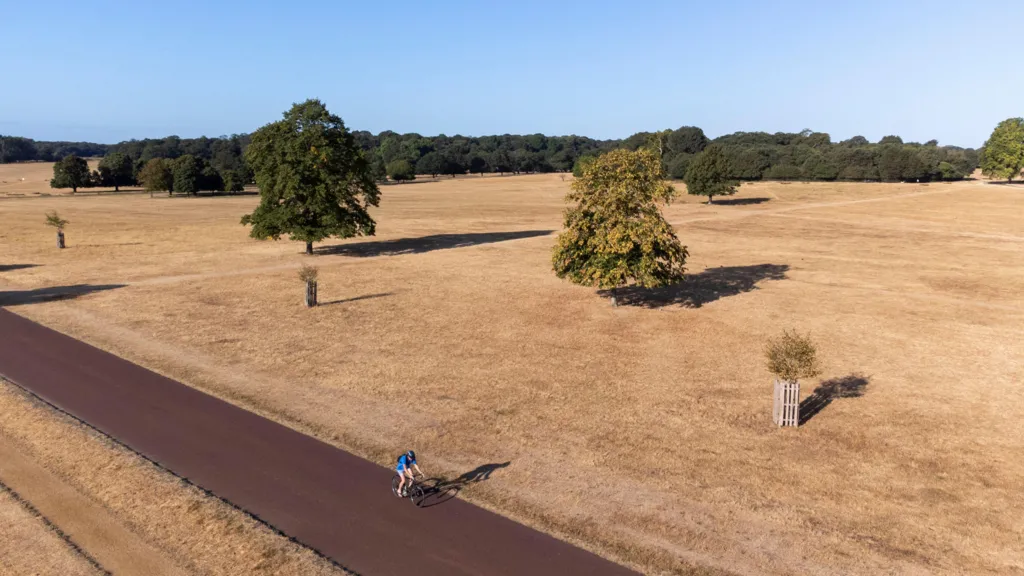
The worsening conditions have also renewed concerns about the impact of climate change. Scientists say climate change does not directly cause every drought or heatwave, but rising average temperatures increase the likelihood and intensity of extreme heat.
Higher temperatures also accelerate evaporation, dry out soil and can make hot conditions more severe.
England has now experienced drought conditions in three of the past five years, including 2022, 2025 and 2026.
The country has recorded 34 days of temperatures reaching at least 30°C somewhere in England this year, including a 13-day run in July.
The Met Office has warned that human-driven climate change is making extreme heat more frequent and intense, while a developing El Niño event is expected to provide an additional natural boost to global temperatures in the months ahead.
FURTHER READING