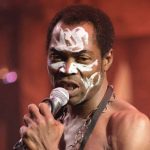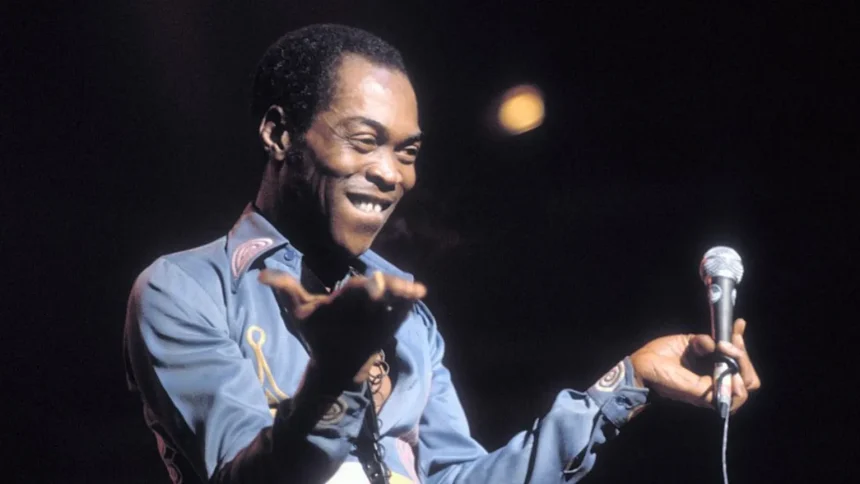
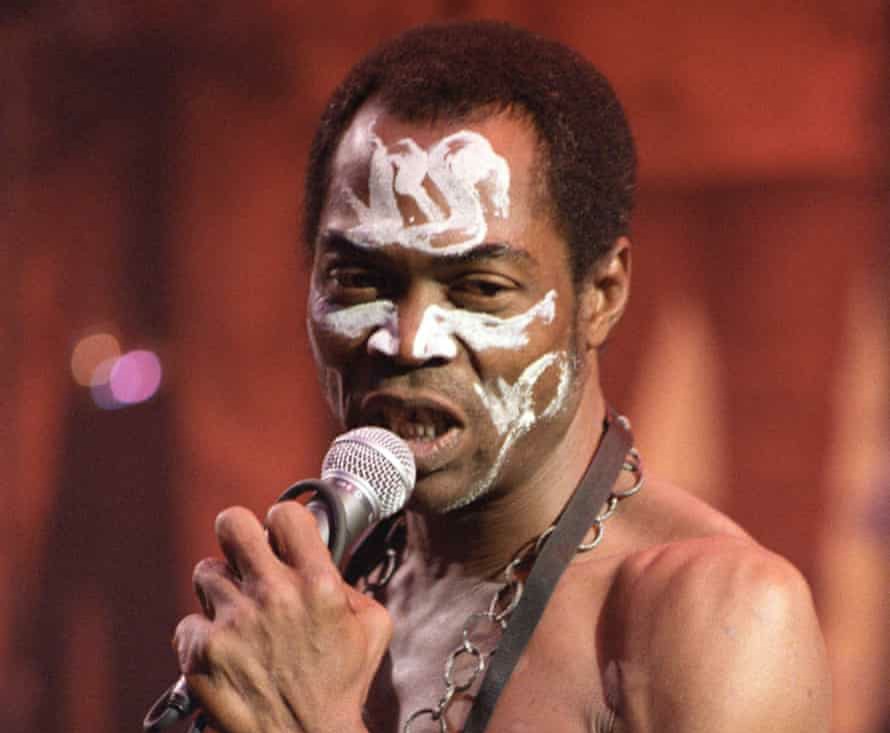
Nearly three decades after his death, Nigerian music legend Fela Anikulapo Kuti will posthumously receive a Lifetime Achievement Award at the Grammys, becoming the first African to receive this honour since it was introduced in 1963.
EKO HOT BLOG reports that the recognition marks a significant shift in how the global music industry acknowledges African contributions to world music.
EDITOR’S PICKS
“Africa hasn’t in the past rated very highly in their interests. I think that’s changing quite a bit of late,” Rikki Stein, Fela’s long-time friend and manager, told BBC.
For Fela’s son, musician Seun Kuti, the award represents more than personal pride.
“Fela has been in the hearts of the people for such a long time. Now the Grammys have acknowledged it, and it’s a double victory,” he told the BBC. “It’s bringing balance to a Fela story.”
Beyond the music: A revolutionary legacy
Fela Kuti was not simply a musician. He was a cultural theorist, political agitator and the architect of Afrobeat, a genre he pioneered alongside drummer Tony Allen by blending West African rhythms, jazz, funk, highlife and politically charged lyrics.
His music became a weapon against injustice. After releasing the album Zombie in 1977, which mocked government soldiers as mindless enforcers, his compound in Lagos was raided and burnt.
His mother, Funmilayo Ransome-Kuti, later died from injuries sustained during the assault. Fela’s response was characteristically defiant: he took his mother’s coffin to government offices and released the song Coffin for Head of State, aimed at then military Head of State, Gen. Olusegun Obasanjo, transforming grief into protest.
“He castigated any form of social injustice, corruption [and] mismanagement” in government, Stein noted. “So it would be impossible to ignore that aspect of Fela’s legacy.”
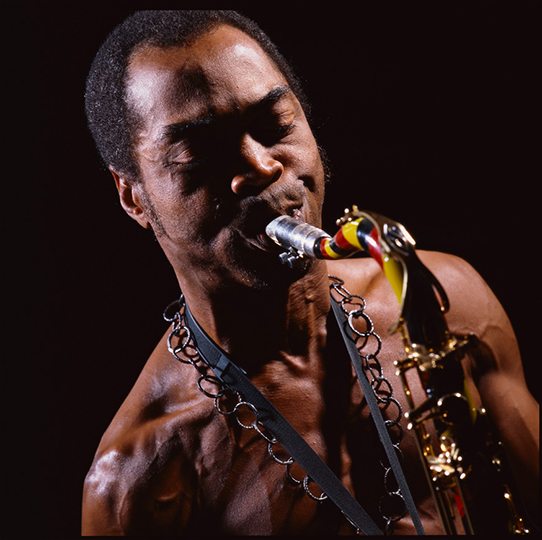
Throughout his career, Fela endured repeated arrests, beatings and surveillance by Nigerian security forces. Yet repression only strengthened his influence. “He was fearless. He was determined,” Stein recalled. “He wasn’t doing what he was doing to win awards. He was interested in liberation. Freeing the mind.”
Why this recognition matters now
The Grammy’s acknowledgement of Fela comes at a crucial moment.
Following the global success of Afrobeats — a modern genre inspired by Fela’s sound — the awards introduced the Best African Performance category in 2024. This year, Nigerian superstar Burna Boy has a nomination in the Best Global Music Album category, demonstrating Africa’s growing presence in mainstream music.
Fela’s influence extends far beyond Nigeria. His musical evolution was shaped by Ghanaian highlife music from pioneers like ET Mensah and Ebo Taylor, making Afrobeat fundamentally West African and pan-African in origin. Today, his impact is audible in artists from Burna Boy to Kendrick Lamar and Sir Idris Elba, who has curated an official vinyl box set of Fela’s work.
Artist Lemi Ghariokwu, who designed 26 of Fela’s album covers, welcomed the posthumous award: “Fela has been an ancestor for 28 years. His legacy is growing by the day. This is immortality.”
For Seun Kuti, the recognition speaks to something larger than individual achievement. “The global human tapestry needs this, not just because it’s my father,” he explained.
His father’s approach to life and art taught him valuable lessons. “Fela was our dad, but you didn’t own him. Fela belonged to himself. But we all belonged to him,” Seun reflected. “He always reminded us that he was in service to others more than himself.”
That philosophy shaped Seun’s own evolution as an artist. “I used to make music to make money. But as I’ve grown, I lean more towards working for my people as well as my art.”
FURTHER READING
As Fela’s family, friends and colleagues prepare to attend the Grammys ceremony alongside other recipients including Carlos Santana and Chaka Khan, the award represents more than belated recognition. It acknowledges a revolutionary who used music as a force for social change and whose fearless commitment to justice continues to inspire millions worldwide.
Better late than never, indeed.
Philip Ibitoye is a Special Correspondent with EKO HOT BLOG. Click here to find daily analysis and critical insight on trending issues in Lagos and other parts of Nigeria.
Click to watch the video of the week below: