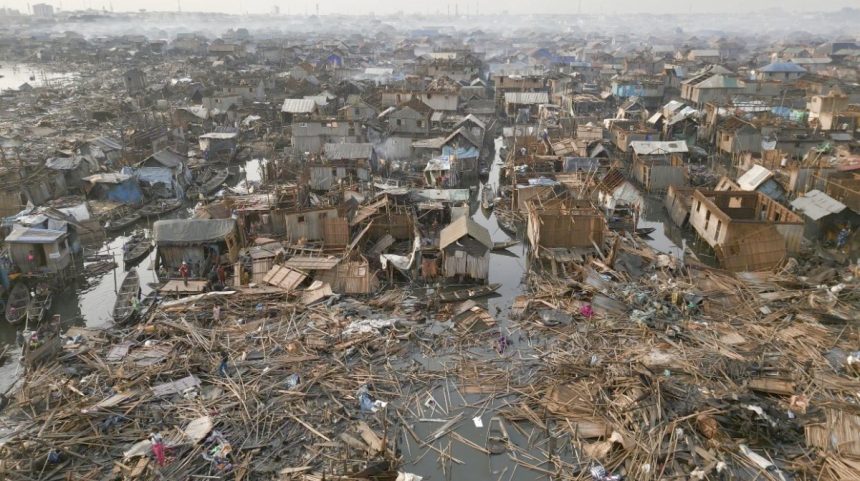
The recent demolition of structures in Makoko, Lagos, reputed as the world’s largest floating slum, has left thousands of residents homeless and hungry, raising questions about whether the government’s approach to safety goes far enough to actually protect lives.
Since late December 2025, bulldozers have torn through homes in the waterfront community, with Lagos State Government citing safety concerns about structures built too close to high-tension power lines.
EDITOR’S PICKS
But while the government says it is saving lives, EKO HOT BLOG gathered that displaced residents are now sleeping in boats, begging for food, and some have died in the process.
Death Despite Safety Claims
On Monday, Governor Babajide Sanwo-Olu defended the demolitions while signing the state’s N4.4 trillion 2026 budget into law. “The safety of lives and property is paramount and must be safeguarded,” the governor said, comparing the Makoko situation to Monday’s fuel tanker accident where quick response prevented tragedy.

The governor insisted the demolitions target only dangerous areas under high-tension wires and near the Third Mainland Bridge, not the entire community. He said the government has held meetings with residents for two and a half years and has ordered palliative measures, relocation options, and grants for affected people.
However, the reality on the ground tells a different story. Reports indicate that three people, two of them babies, have died, allegedly from teargas used during the demolitions. According to Vanguard, one resident sent a desperate message saying, “Another woman has been shot now. Many of us, especially the orphans, don’t have anything to eat. We are finished.” Another pleaded for just N2,000 to buy food.
Hunger, deaths in wake of demolitions at Makoko, Sogunro
As the demolition of buildings within 100 meters of the power line continues in the Makoko waterfront community, residents have taken to the streets pleading for food, clothing, and assistance for survival.
Credit:… pic.twitter.com/N86qSWSVTS
— Vanguard Newspapers (@vanguardngrnews) January 15, 2026
Three civil society groups — the Centre for Children’s Health Education, Orientation and Protection (CEE-HOPE), the Health of Mother Earth Foundation (HOMEF), and Corporate Accountability and Public Participation Africa (CAPPA) — have condemned what they call “brutal and unconstitutional demolitions” that have displaced over 10,000 people. Nnimmo Bassey, Director of HOMEF, described the operation as “a violent assault on the urban poor,” accusing the government of treating vulnerable residents as “human scrap to be cleared for elite profit.”
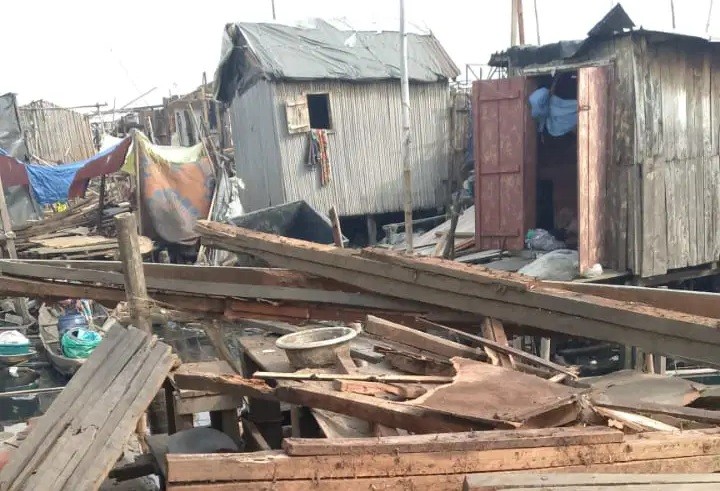
If residents are left homeless without adequate support, they may still face the same fate the government claims to be preventing. Hunger, exposure to the elements, and lack of shelter can be just as deadly as electrical accidents.
The Gap Between Promise and Action
Sanwo-Olu’s promise of palliative measures raises a critical question: will they arrive in time and in sufficient quantity? Nigerian government programmes are often known for delays and inefficiency. When people are sleeping in boats and begging for food today, promises of future support offer little comfort.
The government claims this is not about demolishing all of Makoko but ensuring safety.
Yet residents say the demolitions went far beyond the agreed 100-meter setback from power lines. Community leaders allege they received inadequate notice and no clear resettlement plan. Protest placards read “Maintain 100 meters” and “Immediate stop to demolition beyond 100 meters,” suggesting the operation exceeded its stated scope.
This is not Makoko’s first encounter with bulldozers. The community has faced demolitions in 2005, 2012, and now 2026. In 2012, a community leader was shot dead by police during evictions. Each time, the government cites safety violations. Each time, residents are displaced. And each time, the underlying problems remain unsolved.
Years of Attention, Decades of Neglect
What makes the current crisis particularly troubling is that Makoko has not lacked attention from powerful voices calling for solutions beyond demolition.
In December 2021, UN Deputy Secretary-General Amina J. Mohammed — a Nigerian herself — visited Makoko. She boarded a canoe and toured the waterfront settlement, meeting with local chiefs, women’s groups, and youth.
After seeing the conditions firsthand, she offered a vision of hope rather than destruction.
“Lagos State has the opportunity to demonstrate that communities can co-exist suitably with water and that Water Cities could evolve into an ecosystem of nature-based solutions for smart, resilient and inclusive live,” Mohammed said.
Her visit was significant because it came from someone who understood Nigeria’s challenges intimately. Mohammed had previously mentioned Makoko as one of the communities that inspired her environmental work, referring to “the overflowing Makoko communities in Lagos” alongside other environmentally challenged areas across Nigeria.
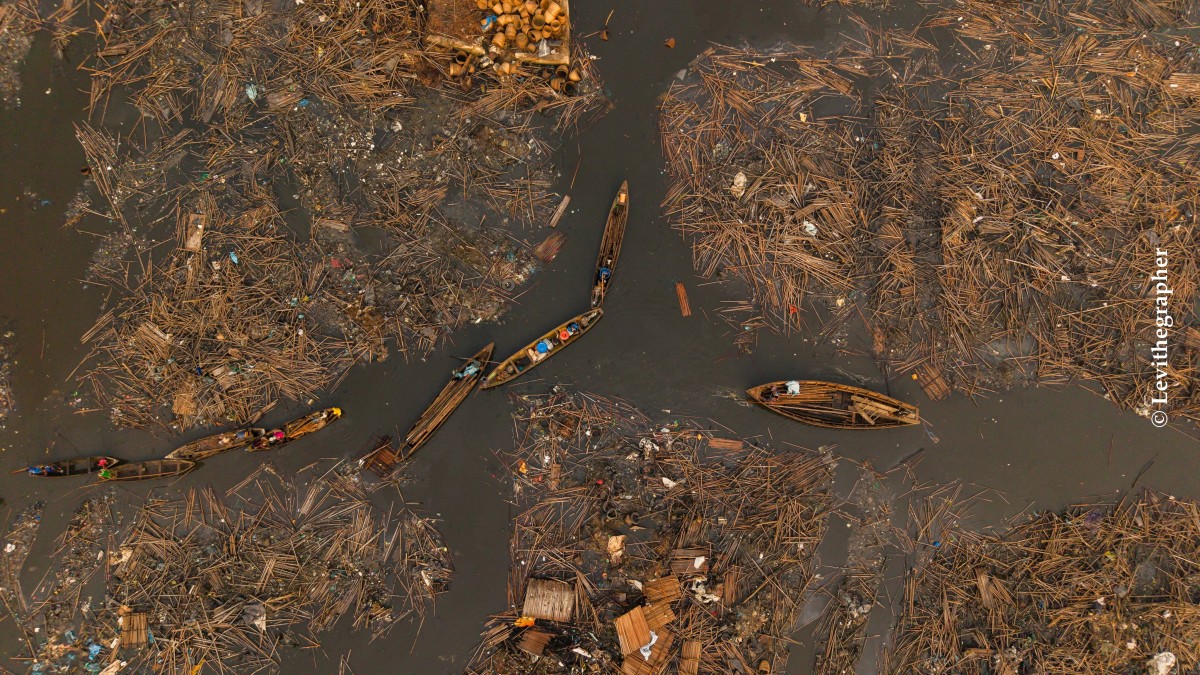
Yet more than four years after that high-profile visit and the international attention it brought, Makoko residents are still living in conditions dangerous enough to warrant mass demolitions or worse, homeless and hungry after those demolitions.
The question is not whether safety concerns are real — living under high-tension power lines is genuinely dangerous. The question is whether demolition without proper resettlement, compensation, and alternative housing is the only solution a government can offer.
A global coalition of 23 human rights, environmental, and social justice organizations has called on Lagos State to halt the demolitions, condemning them as violations of court orders, constitutional protections, and international human rights standards. The Makoko operation reflects a broader pattern across Lagos waterfront communities over the past year, displacing tens of thousands from areas including Oko-Baba, Ayetoro, Otumara, Baba-Ijora, Oworonshoki, and Precious Seeds.
If the government truly wants to save lives, it must do more than clear land. It must provide real alternatives — immediate shelter, food, and a path forward for people who have lived in these communities for generations. Palliative measures announced after demolitions have already begun are too little, too late for families sleeping in boats tonight.
FURTHER READING
Makoko has received local and international attention for years. What it needs now is not more attention or more demolitions, but genuine development that treats its residents as citizens deserving of dignity, not obstacles to be cleared away.
Philip Ibitoye is a Special Correspondent with EKO HOT BLOG. Click here to find daily analysis and critical insight on trending issues in Lagos and other parts of Nigeria.
Click here to watch the video of the week below: