- The Federal Government, through the Ministry of Communications, Innovation and Digital Economy, has opened a public survey to gather input on protecting children in the digital space.
- Minister Dr. Bosun Tijani highlighted risks such as cyberbullying, online exploitation, and AI-linked challenges as primary drivers for the proposed policy.
- Potential measures under review include strict age restrictions, improved age verification systems, and increased accountability for social media platforms.
Nigeria has officially joined the global conversation on digital safety for minors as the Federal Government launched a nationwide public consultation to determine whether age limits should be imposed on social media usage.
Eko Hot Blog reports the initiative, announced on Tuesday by the Minister of Communications, Innovation and Digital Economy, Dr. Bosun Tijani, aims to create a regulatory framework that balances the educational benefits of the internet with the safety of Nigeria’s youth.
EDITOR’S PICK
- 540 Candidates Cleared as Lagos APC Moves to Elect LGA Executives
- Court Sentences Pastor to Death for Killing UniUyo Student
- Lagos Teacher Questions Lack of Recognition for One-Day Governor Mentors
Taking to his official X (formerly Twitter) account, Dr. Tijani emphasized that while the internet is a hub for learning and creativity, it has also become a breeding ground for cyberbullying, the spread of harmful content, and the misuse of personal data.
The emergence of sophisticated artificial intelligence tools has further complicated the digital landscape, making it more difficult to shield children from online predators and exploitation.
The Minister noted that the government is evaluating several policy pillars, including:
- Age Restrictions: Determining a minimum age for account creation.
- Age Verification: Implementing robust systems to ensure users are who they claim to be.
- Platform Accountability: Holding tech giants responsible for the safety of their younger users.
- Regulatory Oversight: Strengthening the government’s ability to monitor digital activities.
This move mirrors international trends, most notably in Australia, where the government recently implemented a landmark ban on social media for children under the age of 16. Nigeria’s approach, however, seeks to tailor these global standards to the country’s unique digital realities.
“Public input is essential to ensure that any framework adopted reflects national priorities and respects children’s rights,” Tijani wrote.
He invited parents, educators, digital professionals, and young people themselves to participate in the survey via a provided link (https://t.co/qsW3h72M9U) to ensure the resulting policy is evidence-based and culturally relevant.
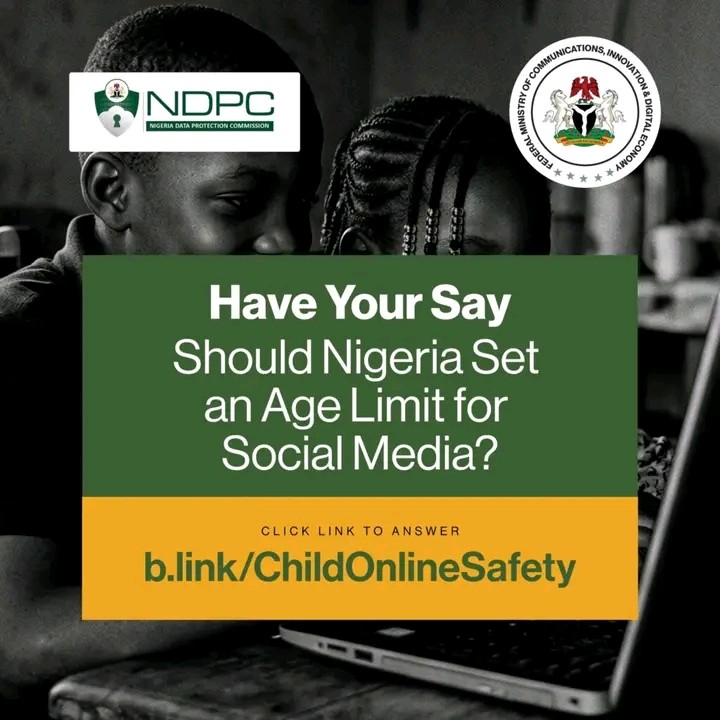
As the consultation begins, the debate is expected to intensify between those who view age limits as a necessary shield and others who worry about the potential for government overreach and the restriction of digital literacy.