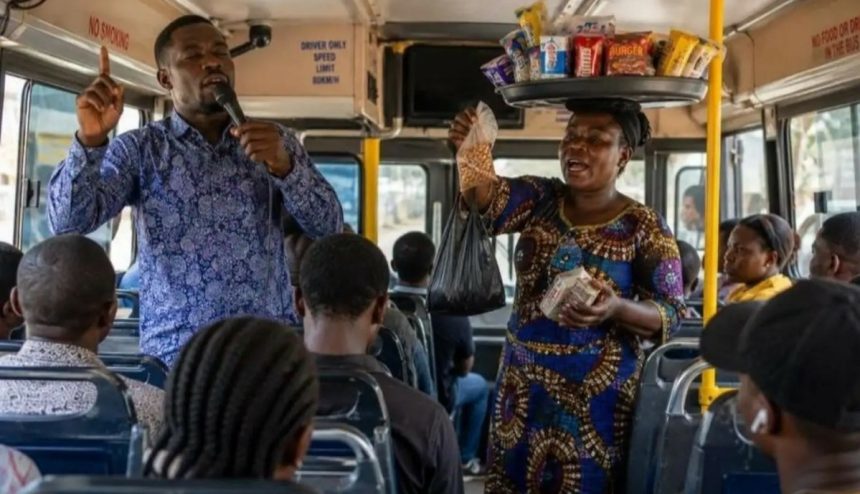
The Senate has passed the Federal Road Safety Corps (Amendment) Bill, 2026, which sets a ₦50,000 fine for anyone caught hawking, trading or preaching inside a commercial vehicle. The bill is now awaiting President Bola Tinubu’s signature.
The amendment is part of a wider overhaul of 52 traffic offences and their penalties. It also raises the fine for drunk driving from ₦5,000 to ₦100,000, with up to two years in prison. Motorists who refuse a roadside breath test now face a ₦50,000 fine, six months in jail, or both.
EDITOR’S PICKS
Lawmakers say the hawking and preaching clause will cut down on distractions inside commercial vehicles and make journeys safer for passengers. But the question worth asking is simple: does removing traders and preachers from buses actually stop crashes, or does it just remove an irritation that has nothing to do with what causes accidents on Nigerian roads?
What the FRSC’s own numbers say
The FRSC’s 2025 annual report offers a useful check. The Corps recorded 10,446 crashes and 5,289 deaths last year, a 9.2 per cent rise in crashes from 2024.
Corps Marshal Shehu Mohammed named five offences responsible for more than 70 per cent of fatal and serious crashes: speed violation, dangerous overtaking, drunk or drug-impaired driving, wrong-way driving and overloading. Speed alone accounted for 41 per cent of all identified crash causes in December 2025.
Distraction does appear on the FRSC’s radar, but not the kind lawmakers have targeted. The Corps’ 2025 “Take Responsibility for Your Safety: Stop Distracted Driving” campaign was built around a different culprit: phone use behind the wheel. In Lagos, more than 15 per cent of crashes in 2024 were linked to driver distraction, mainly from mobile phones, according to the FRSC’s Lagos sector commander.
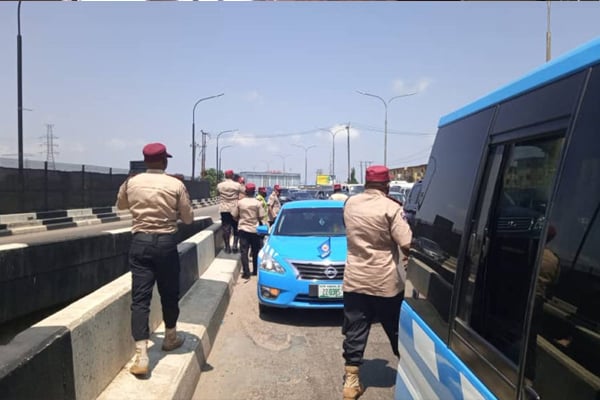
Hawking, trading and preaching do not appear anywhere in the Corps’ published list of leading crash causes. So, the new clause is not built on crash data showing that a trader’s shout or a preacher’s sermon has caused buses to crash. It is, instead, targeting behaviour many commuters find irritating or unsafe-feeling, without solid evidence tying it to actual road traffic deaths.
By contrast, the increased drunk-driving fine sits squarely on the FRSC’s own list of major killers, and the breath-test provision gives officers a tool to catch it. Those two provisions match the data. The hawking and preaching clause does not.
Two sides to the argument
There is a case for the provision beyond crash statistics.
Traders moving through a moving vehicle, opening windows, exchanging money and goods, can distract a driver and block the aisle in an emergency. Preachers sometimes prolong sermons in ways that irritate other passengers, and some hawking has been linked to theft and confidence scams targeting distracted commuters. Lawmakers may also be responding to years of passenger complaints about being a captive audience with nowhere to go.
But the new clause criminalises an entire informal economy without proof it saves lives. Many hawkers are the working poor, using commercial buses as one of the few open markets left to them. A ₦50,000 fine is well above what most of them earn in a week.
Without data showing these activities cause crashes, the provision risks looking like moral policing dressed up as road safety, while the offences actually responsible for most deaths on Nigerian roads, speed, overloading and drink-driving, still depend on the FRSC’s patchy enforcement capacity to be checked.
FURTHER READING
Whether the clause survives presidential assent unchanged, or gets fine-tuned, may depend on how lawmakers answer that basic question: is this about safety, or about comfort?
Philip Ibitoye is a Special Correspondent with EKO HOT BLOG. Click here to find daily analysis and critical insight on trending issues in Lagos and other parts of Nigeria.
Click to watch the video of the week below: