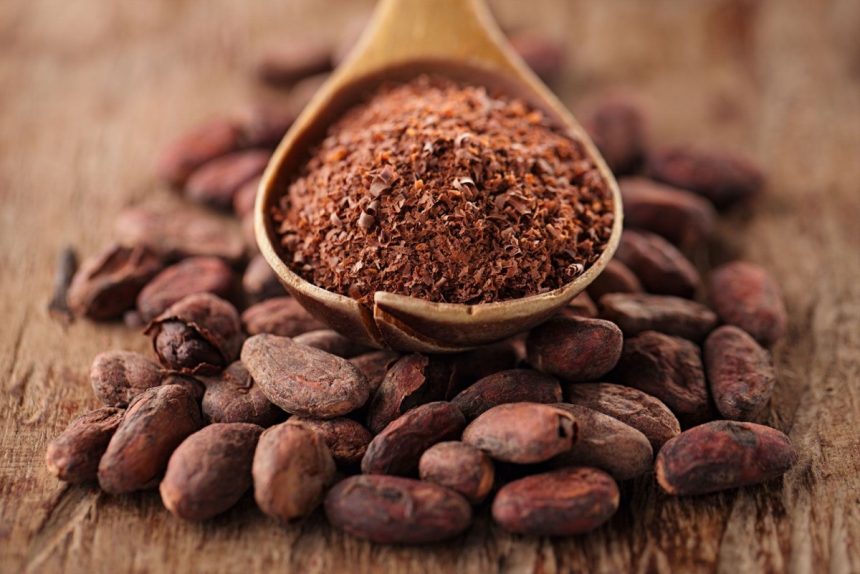
Nigeria, Ghana, Côte d’Ivoire and Cameroon have agreed to stop selling raw cocoa beans to the world and start processing them at home instead.
The four countries signed the Abuja Declaration on Tuesday at the 2026 Cocoa Value Addition Summit in Abuja. Together, they grow about 75 percent of the world’s cocoa. Their plan is to speak with one voice when dealing with international cocoa buyers, instead of competing against each other.
EDITOR’S PICKS
- What Tinubu Wants ICPC To Uncover About PFIPC, Adeyemi
- 2% of GDP ‘Missing’ or Just Unreported? Inside the IMF Controversy
President Bola Tinubu, represented by Agriculture Minister Abubakar Kyari, said Nigeria will stop exporting raw beans and then spending money to import finished chocolate. He said Nigeria will grind its beans, press its butter, make its chocolate, brand it, and sell it to the world, all at home.
Why this matters now
Cocoa prices shot up to over $11,000 per tonne in late 2024, then crashed.
That crash forced Ghana and Côte d’Ivoire to pay their farmers less. It showed a simple truth: countries that only sell raw beans cannot control the price they get.
As Ghana Cocoa Board’s chief executive, Ransford Abbey, put it, Africa grows most of the world’s cocoa, but earns less than one-tenth of the money made from chocolate globally. Most of that money goes to companies abroad that process and sell the finished product.
A warning that came before this
Former African Development Bank (AfDB) president Akinwumi Adesina made a similar argument in April 2025, before he left office in September that year.
He said Africa must stop exporting raw materials, calling it “the door to poverty,” while exporting value-added products is “the highway to wealth.”
Africa must end the exports of its raw materials. The export of raw materials is the door to poverty. The export of value-added products is the highway to wealth. And Africa is tired of being poor.
— Dr. Akinwumi A. Adesina, CON, CGH (@akin_adesina) April 17, 2025
And this is not a new terrain for Adesina who has consistently pushed African countries to prioritise exporting value over raw materials.
More than 12 years ago, in January 2014, the development economist backed a call by billionaire entrepreneur, Aliko Dangote, to end the practice of sending raw materials out of Africa.
#Davos410 Aliko Dangote in Davos calls for United Africa for trade and an end to sending raw materials out of Africa. @akin_adesina
— Dr. Akinwumi A. Adesina, CON, CGH (@akin_adesina) January 22, 2014
In 2023, Adesina also that Nigeria earns only about $160 per person from exports, compared to $7,100 for Malaysia and $3,600 for Vietnam — countries that built industries around processing goods instead of selling them raw.
This new cocoa alliance looks like an attempt to finally act on that kind of warning.
Bank of Industry Managing Director Olasupo Olusi shared a surprising fact on Tuesday: Nigeria grows more than 300,000 tonnes of cocoa every year, and it has the machines to process over 120,000 tonnes.
But only about 50,000 tonnes are actually being processed. This means Nigeria’s problem is not a lack of machines. It may be about money, planning, or the fact that selling raw beans has always been faster and easier than building a processing business.
To fix this, the BoI says it gave out more than N164 billion to agro-processing businesses in 2025. It also got a €60 million loan from the European Investment Bank to support cocoa processing. A new cocoa factory that can process 70,000 tonnes a year is also being built in Sagamu, Ogun State.
Tinubu called it the biggest of its kind in Nigeria’s history. “Nigeria will no longer export raw beans while importing finished value,” the president said. “We will grind our beans at home, we will press our butter at home, we will make our chocolate at home, brand it at home and sell it to the world on our own terms.”
There is also pressure from outside. A new European Union rule on deforestation will apply to large and medium cocoa businesses starting December 30, 2026.
Minister of State for Industry John Owan Enoh said the four countries plan to present one shared position on this rule. They want Europe to accept their own systems for tracking where cocoa comes from. They also want to make sure that ordinary farmers do not end up paying the cost of following the new rule.
What to watch next
This declaration is only a promise for now, not a finished job. The real test will be whether Nigeria starts using its idle processing machines, whether farmers actually earn more money, and whether the four countries can stay united once their individual interests start to clash.
FURTHER READING
A delivery council has been set up to publish yearly progress reports. It is worth checking back on this time next year to see if the promises made in Abuja were kept.
Philip Ibitoye is a Special Correspondent with EKO HOT BLOG. Click here to find daily analysis and critical insight on trending issues in Lagos and other parts of Nigeria.
Click to watch the video of the week below: