- He also insisted that the Strait of Hormuz, a major global oil shipping route, must be reopened
- Trump also stated that naval mines placed in the Strait of Hormuz would be removed if an agreement is reached
- Iran is also reportedly demanding sanctions relief, a reduction of US military presence in the region
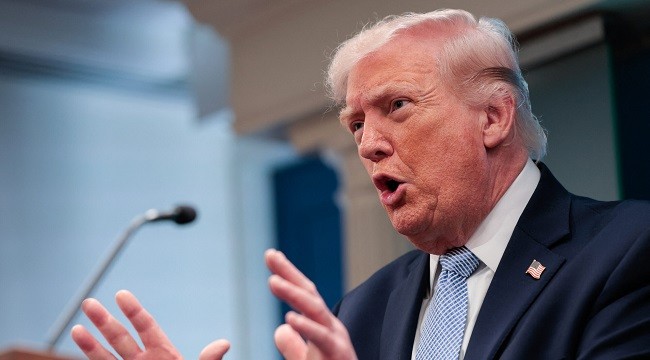
United States President Donald Trump says he is expected to make a final decision on Friday regarding a possible agreement with Iran aimed at extending the current ceasefire between both countries.
Eko Hot Blog reports that Trump disclosed that discussions were ongoing over conditions tied to the proposed arrangement, including the reopening of the Strait of Hormuz and restrictions on Iran’s nuclear activities.
EDITOR’S PICK
- Gov. Alex Otti Says Slashed State Debt by 60%, Completes 414 Roads In Few Years
- Nwoko Rejects APC Delta North Primary Result, Claims Victory Over Okowa
- Lagos Expands Infrastructure at Agbowa Timberville Project in Epe
Speaking ahead of a meeting in the White House Situation Room, the US president said any agreement must guarantee that Iran would never develop a nuclear weapon.
He also insisted that the Strait of Hormuz, a major global oil shipping route, must be reopened for unrestricted maritime movement without additional charges or interference.
Reports indicate that negotiators are considering a 60-day extension of the truce that has been in place since April in order to allow oil and gas shipments to resume while both sides continue discussions on Iran’s nuclear programme and other unresolved issues.
Although officials suggested that progress had been made toward a political understanding, sources familiar with the talks said the agreement had not yet been formally concluded.
Iranian media reacted cautiously to Trump’s remarks, with the semi-official Fars news agency claiming parts of the US president’s comments were inaccurate and exaggerated.
According to the report, Tehran may allow the reopening of the Strait of Hormuz after the United States removes restrictions on Iranian shipping activities, but under conditions determined by Iran.
The report also disputed claims that any agreement included the destruction of Iran’s nuclear materials, although it suggested discussions had taken place concerning access to frozen Iranian funds abroad.
The conflict involving the United States, Israel and Iran has significantly disrupted regional stability and global energy markets since fighting escalated earlier in the year.
Thousands of people have reportedly been killed during the conflict, particularly in Iran and Lebanon, while tensions around the Strait of Hormuz contributed to rising oil prices and economic uncertainty worldwide.
Global markets, however, reacted positively to reports of possible progress in negotiations, with oil prices falling and stock markets recording gains on Friday.
Trump also stated that naval mines placed in the Strait of Hormuz would be removed if an agreement is reached, allowing trapped commercial vessels to resume movement through the waterway.
Meanwhile, Rafael Grossi, Director-General of the International Atomic Energy Agency, revealed that Kazakhstan could potentially receive Iran’s stockpile of highly enriched uranium under a future agreement.
Kazakhstan currently hosts an internationally supervised uranium storage facility managed through the IAEA framework.
Diplomatic efforts have also intensified, with Pakistan’s Foreign Minister, Ishaq Dar, arriving in Washington for talks with US Secretary of State Marco Rubio as part of broader regional consultations.
Iran is also reportedly demanding sanctions relief, a reduction of US military presence in the region, and an end to Israeli military operations in Lebanon as part of any long-term settlement.
The conflict has displaced large numbers of people in Lebanon following Israeli military operations targeting Hezbollah positions in several parts of the country.
Lebanese authorities say thousands of people have died during the fighting, while Israel has also recorded military and civilian casualties since the escalation began.