- Lagos Positions Afrobeats as Global Economic Powerhouse at Harvard Policy Launch
- Benson-Awoyinka said Afrobeats now represents culture, infrastructure, technology and economic policy combined
- Warn that industry’s sustainability depends on stronger legal and economic frameworks
Lagos State Commissioner for Arts, Culture and Tourism, Mrs. Toke Benson-Awoyinka, has described Afrobeats as a “youth-powered economic engine” and one of Africa’s greatest exports, stressing that the genre has evolved beyond entertainment into a major driver of jobs, growth and global influence.
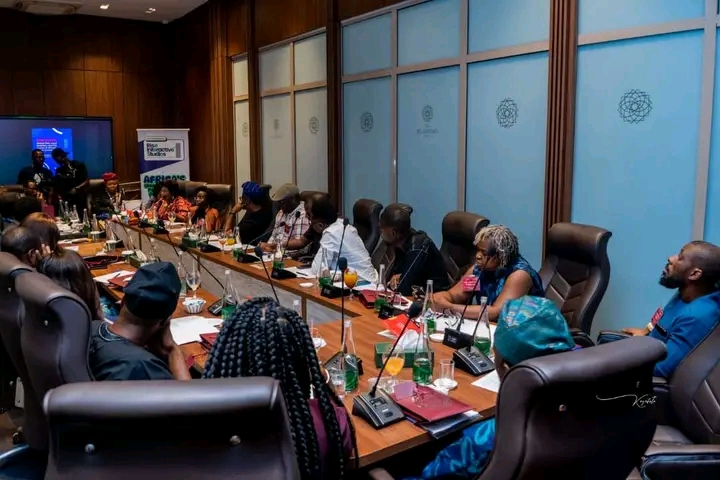
Eko Hot Blog reports that she made the assertion at the global launch of the 2025 Afrobeats Inaugural Policy Report hosted by Harvard University’s Centre for African Societies and Economies (CSASE), in collaboration with Rise Interactive Studios, at Delborog Hotel, Victoria Island, Lagos, on Friday.
EDITOR’S PICK
- Digital Skills Will Drive Nigeria’s Trillion-Dollar Ambition – Tinubu
- Omokri’s Ambassadorial Screening Triggers Senate Rift
- Remi Tinubu Says President Working Daily to Keep Nigeria Safe
Addressing scholars, policymakers and creative industry leaders, Benson-Awoyinka said Afrobeats now represents culture, infrastructure, technology and economic policy combined, noting that empowered young people are building industries capable of transforming national economies.
According to her, Lagos has emerged as a “creative megacity,” hosting many of Africa’s leading artists, producers and creative entrepreneurs, with the city’s influence extending across global entertainment markets.
She said the Lagos State Government, under Governor Babajide Sanwo-Olu’s THEMES Plus Agenda, has expanded talent development programmes, strengthened cultural infrastructure and built international partnerships to position Lagos as Africa’s cultural and entertainment capital.
The commissioner also aligned the state’s creative push with President Bola Tinubu’s Renewed Hope Agenda, which prioritises the orange economy as a key pillar of national development. She highlighted music, film, fashion, animation, gaming and design as sectors with strong potential for job creation and global competitiveness.
Despite Afrobeats’ global success, Benson-Awoyinka warned that the industry’s sustainability depends on stronger legal and economic frameworks. She called for reforms in intellectual property protection, royalty systems, cross-border trade, creative financing, anti-piracy enforcement and public–private collaboration.
“If Afrobeats is to mature into a stable global industry, creators must be protected and their work properly valued,” she said, while commending Harvard Law School for advancing research on intellectual property rights in African creative sectors.
She paid tribute to Afrobeat pioneer Fela Anikulapo-Kuti, describing his legacy as foundational to the global Afrobeats movement and its enduring cultural relevance.
Benson-Awoyinka praised the 2025 Afrobeats Policy Report, produced by Harvard CSASE and Rise Interactive Studios, describing it as the first comprehensive framework offering policymakers and investors a long-term strategy for structuring and scaling the Afrobeats economy.
“This report gives structure to what many have long felt intuitively. It charts a future where African creativity becomes a global economic superpower,” she said.
She reaffirmed Lagos State’s commitment to building Africa’s most vibrant creative economy and invited global investors, institutions and innovation hubs to partner with the state.
Key challenges identified during the event included extractive global industry structures, weak local data and metrics, informality, opaque royalty and contracting practices, and underdeveloped African touring and live-performance markets.
Proposed policy actions were grouped into 5 areas: building a strong regional creative-economy regulatory framework, strengthening local financial and business ecosystems, developing robust African touring and live-performance markets, creating a comprehensive creative-economy data strategy, and establishing African-centred intellectual property and contracting models.
FURTHER READING
- Klint Da Drunk Reveals Why He Quit Music
- Tinubu’s Ambassadors Arrive Senate for Screening
- PSC Opens Portal to Recruit 50,000 Police Constables
Click here to watch video of the week