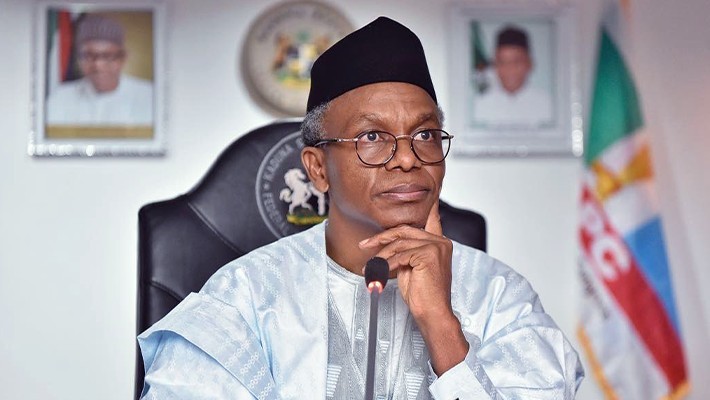
Former Kaduna State Governor, Nasir El-Rufai, faces criminal charges after admitting on live television that he had access to recordings of National Security Adviser (NSA) Nuhu Ribadu’s phone calls.
The Department of State Services (DSS) has filed a three-count charge at the Federal High Court in Abuja, sparking intense legal debate amongst Nigeria’s legal community.
EDITOR’S PICKS
The Charges and What Led to Them
During a Friday, February 13, 2026, interview on Arise TV, El-Rufai made a startling admission.
When discussing government surveillance, he stated: “We listen to their calls,” and later clarified that “someone tapped his [Ribadu’s] phone and told me.” When the presenter pointed out that such actions were illegal, El-Rufai responded: “I know, but the government does it all the time; they listen to our calls all the time without a court order.”
The Office of the NSA immediately directed the SSS to investigate, and within days, formal charges were filed under Case No. FHC/ABJ/CR/99/2026.
The charges include unlawfully intercepting the NSA’s communications, knowingly associating with individuals who committed the interception without reporting them, and using technical equipment that compromised national security.
Legal Experts Weigh In
Human rights lawyer Inibehe Effiong was amongst the first to raise concerns about the charges. Whilst stating he is “not a fan of El-Rufai,” he argued that “this charge appears problematic in law.”
Effiong identified four key issues. First, he noted that “there is no entity known to law as Department of State Services (DSS) as stated in this charge. The National Security Agencies Act only recognises and creates the State Security Service (SSS).” Second, he contended that the Act “does not vest the SSS with prosecutorial power.”
On the admissibility of El-Rufai’s televised statements, Effiong questioned: “Does El-Rufai’s statement on Arise TV qualify as an ‘extrajudicial statement’ under the law, same having not been made under caution? For a statement to be extrajudicial and confessional, it has to be under caution.” He also emphasised that El-Rufai “didn’t say he wiretapped the NSA, he said someone else did and told him.”
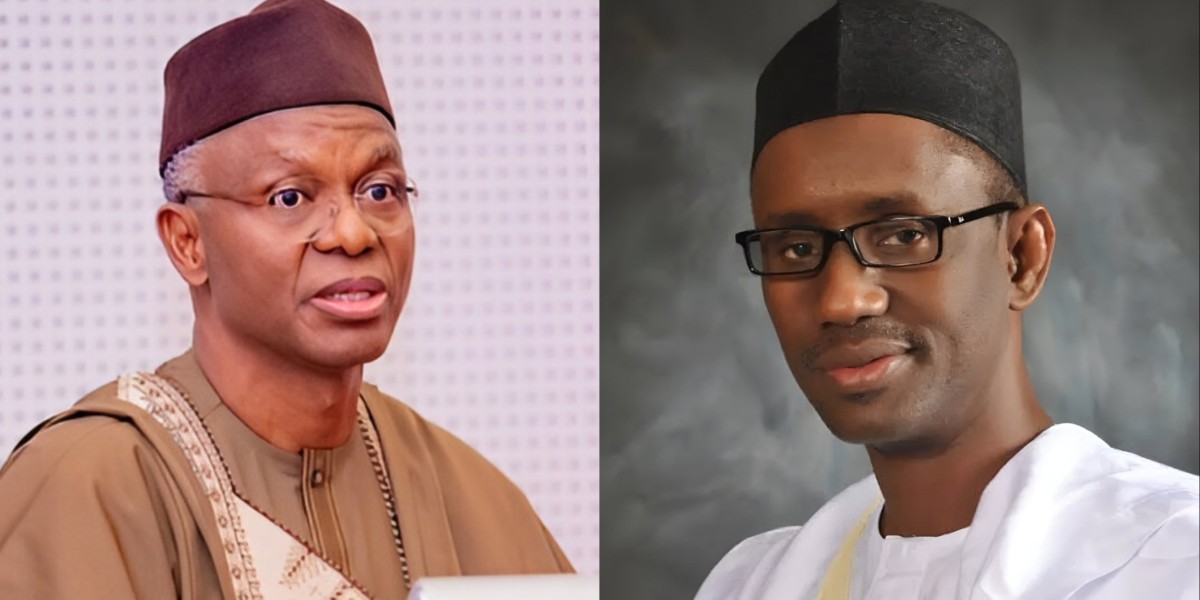
Mallam Nasir El-Rufai has been charged with cybercrime for alleging wiretapping the National Security Adviser, Mallam Nuhu Rubadu,
Looking at this charge, I have a few issues with it.
Firstly, there is no entity known to law as Department of State Services (DSS) as stated in… pic.twitter.com/etP06SiDQz
— Inibehe Effiong (@InibeheEffiong) February 16, 2026
Finally, Effiong invoked constitutional protections: “The constitutional right against self-incrimination will enure in his favour. No court can compel him to give evidence against himself.”
Bulama Bukarti, a prominent legal analyst, responded directly to Effiong’s concerns. On the SSS versus DSS nomenclature issue, Bukarti acknowledged the discrepancy but argued it was “unlikely to invalidate proceedings.” He explained that “Nigerian courts treat such nomenclature discrepancies as misnomer, provided there is no confusion about the identity of the agency. The SSS has long operated administratively as DSS. Unless prejudice is shown, the defect is curable.”
Interesting points. Allow me to offer my views on some of them.
On your first point, it is correct that the National Security Agencies Act establishes the State Security Service (SSS) and does not expressly mention the “Department of State Services (DSS).”
However, this is… https://t.co/bAZZLU0dFz
— Bulama Bukarti, PhD (@bulamabukarti) February 16, 2026
On prosecutorial authority, Bukarti countered that whilst the Act does not expressly grant such powers to the SSS/DSS, Section 174 of the Constitution allows the Attorney-General of the Federation to delegate authority. “In practice, SSS/DSS officers frequently prosecute matters, particularly under the Cybercrimes Act,” he noted.
“The real legal question is not whether the SSS possesses inherent prosecutorial power, but whether the charge was instituted in the name of the AGF or pursuant to proper constitutional authorisation.”
Regarding the admissibility of El-Rufai’s televised statements, Bukarti added that: “An extrajudicial statement simply means a statement made outside court proceedings. A televised interview is capable of constituting an admission. The absence of caution does not automatically render it inadmissible.” He also highlighted that Section 36(11) of the Constitution protects against compelled self-incrimination, not voluntary public statements. “If a person speaks freely on national television, those words are admissible,” he stated.
However, Bukarti cautioned that El-Rufai’s words alone may be insufficient for conviction. “The prosecution must still prove beyond reasonable doubt that interception actually occurred, that it was unlawful, and that he participated, facilitated or conspired,” he explained. “Without independent oral, document or expert evidence, a televised utterance alone may be insufficient.”
Chidi Odinkalu, a human rights lawyer and former chairman of the National Human Rights Commission, addressed concerns about the DSS’s legal standing. Whilst acknowledging that the National Security Agencies Act creates the “SSS” rather than “DSS,” he explained that General Abdulsalami Abubakar directed in 1999 that the service “shall operate under the cover name, DSS.” He noted that Section 6(c) of the Act empowers the president to issue directives on how agencies exercise their powers, which has been used to grant the SSS police-like capabilities.
Ini,
1. I agree with ur 1st point. The National Security Agnecies Act creates the #SSS. U will see that in Instrument No. 1 made under the Act in 1999, Gen Abdulsalami Abubakar as Head of State directed that the Service "shall operate under the cover name, DSS". But a subsidiary… https://t.co/8wjHKeOZD1 pic.twitter.com/P3wA6CK1qP
— Chidi Anselm Odinkalu, CGoF (@ChidiOdinkalu) February 16, 2026
A principal partner at Iris Attorneys LP offered a succinct observation: “For someone as intelligent as El Rufai, he actually incriminated himself. He has two options here: he denounces what he said, apologise and move on, or he stands by it and damn the consequences, whatever that might be. He really set himself up without pressure whatsoever.”
For someone as intelligent as El Rufai, he actually incriminated himself. He has two options here, he denounces what he said, apologize and move on or he stands by it and damn the consequences, whatever that might be. He really set himself up without pressure whatsoever. Eedi https://t.co/Kderh87fGB
— Ridwan Oke (@RidwanuLlah) February 16, 2026
The Dilemma Facing El-Rufai
Bukarti summarised the former governor’s predicament starkly: “If this matter goes to trial, El-Rufai would have only two options: he can either maintain in court that what he said on Arise TV regarding wiretapping the NSA is true, which would amount to an effective confession to a crime – or say that he lied on national television. I’m not sure which would be worse for him.”
If this matter goes to trial, El-Rufai would have only two options: he can either maintain in court that what he said on Arise TV regarding wiretapping the NSA is true, which would amount to an effective confession to a crime – or say that he lied on national television.
I’m…
— Bulama Bukarti, PhD (@bulamabukarti) February 16, 2026
FURTHER READING
The Federal High Court has yet to set a hearing date for the matter. El-Rufai is already facing separate investigations by the Economic and Financial Crimes Commission (EFCC) and the Independent Corrupt Practices Commission (ICPC) over various matters from his tenure as governor.
Philip Ibitoye is a Special Correspondent with EKO HOT BLOG. Click here to find daily analysis and critical insight on trending issues in Lagos and other parts of Nigeria.
Click to watch the video of the week below: