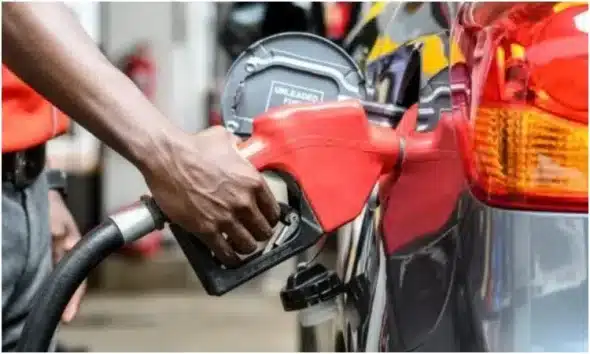
The outbreak of the US-Israel war on Iran has sent fuel prices surging across the world, and Nigeria has not been spared.
Between February 28 and March 23, 2026, Nigeria recorded a 48.7 per cent rise in petrol prices and a 65.5 per cent rise in diesel, among the steepest increases globally. For a country still absorbing the shock of the 2023 subsidy removal, the timing has sharpened public pressure on the government to act.
EDITOR’S PICKS
That pressure found a public voice last week when Bolaji Abdullahi, national publicity secretary of the African Democratic Congress (ADC), used President Bola Tinubu’s birthday address to ask what the government was doing to cushion the impact.
The president’s spokesperson, Sunday Dare, responded with a defence of the administration’s reform record.
Abdullahi replied with specific proposals: suspend the five per cent fuel tax and strip import and regulatory charges from the pump price. The exchange framed a legitimate policy question that deserves a direct answer: what options does the federal government actually have?
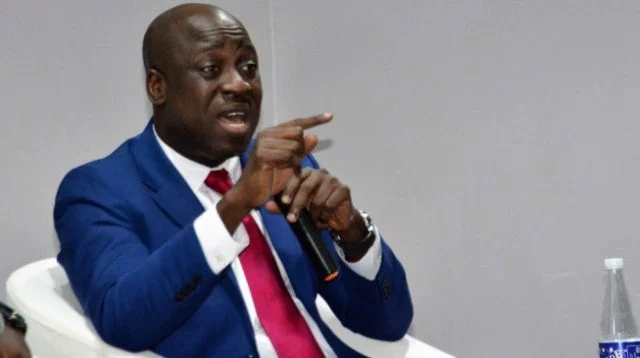
There are at least five steps the government could take, ranging from immediate executive actions to medium-term structural fixes.
Suspend Fuel Taxes and Regulatory Levies
The most immediately actionable lever is tax and levy relief. Suspending the five per cent fuel tax and removing import and regulatory charges from the pump price requires no new legislation, only an executive directive.
Economists who support deregulation have endorsed temporary adjustments of this kind during extreme external shocks, arguing they lower pump prices without permanently dismantling the market framework. Other governments have moved faster: France raised the possibility of releasing 20 to 30 per cent of emergency strategic reserves, and Pakistan moved to a four-day government workweek to conserve fuel. Nigeria has taken no comparable emergency step.
Enforce Domestic Crude Supply Obligations
Under the Petroleum Industry Act (PIA), crude oil cannot be exported before domestic demand is met. Yet the Dangote Refinery purchases crude at international benchmark prices, meaning that even locally produced crude arrives at the refinery through global market pricing.
Compelling upstream producers to prioritise the domestic market at agreed contract prices, rather than exporting at spot premiums, would reduce the refinery’s dollar exposure and, in turn, its output pricing. This is a legal obligation that already exists. The government’s task is enforcement.
Scale Up the Naira-for-Crude Programme
Closely tied to crude supply is the Naira-for-Crude arrangement, under which Dangote receives crude priced in naira to produce cheaper local fuel.
The programme has run well below contracted volumes since its launch. Expanding deliveries from the reported five cargoes per month to the agreed 13 to 15 would structurally insulate a portion of domestic fuel supply from dollar volatility, a direct buffer against the kind of external shock the Middle East conflict represents.
Expand CNG Conversion Support
The Federal Government approved 100,000 additional CNG conversion kits, positioning the fuel as a substitute that costs roughly a quarter of petrol’s pump price.
The measure has merit as a long-term cost-of-living intervention, but CNG infrastructure remains sparse outside Lagos and Abuja. For the current crisis, it is a medium-term instrument rather than an immediate fix. Accelerating the rollout while expanding refuelling infrastructure would strengthen its impact over time.
Investigate Supply Chain Profiteering
When global prices spike, the spread between refinery gate and pump price can widen beyond what market conditions justify.
Directing the Nigerian Midstream and Downstream Petroleum Regulatory Authority to audit pricing along the distribution chain would establish whether consumers are absorbing legitimate cost increases or subsidising excess margins. It costs nothing to order the investigation and could reveal significant room for price reduction without touching the upstream market at all.
The federal government’s stated position is that direct price controls are off the table. That is a reasonable deregulation principle. But tax suspension, domestic crude enforcement, and the Naira-for-Crude expansion are not price controls; they are structural adjustments that the government has the legal and executive authority to make.
The question Abdullahi posed last week was not whether the government should return to the subsidy era. It was whether the government is doing everything within a deregulated framework that it could be doing.
FURTHER READING
So far, the answer appears to be no.
Philip Ibitoye is a Special Correspondent with EKO HOT BLOG. Click here to find daily analysis and critical insight on trending issues in Lagos and other parts of Nigeria.
Click to watch the video of the week below: