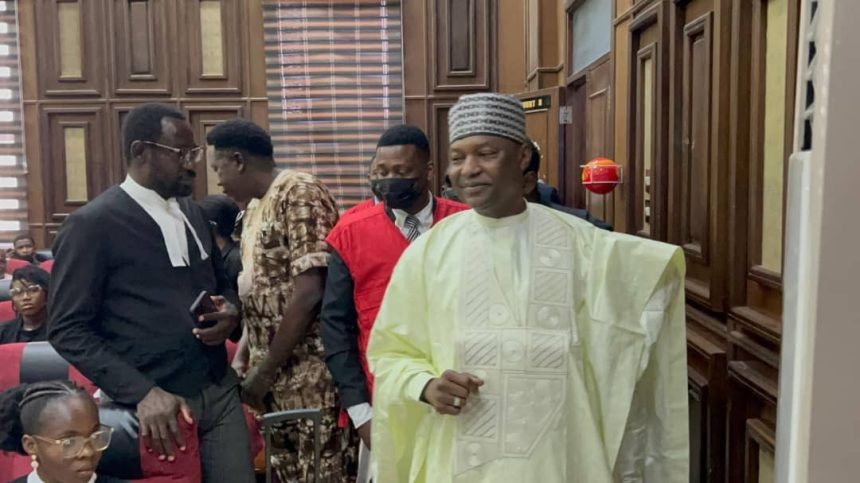
Abubakar Malami’s freedom lasted only a few moments on Monday. The former Attorney-General of the Federation (AGF) had just walked out of Kuje Correctional Centre in Abuja after meeting his bail conditions when officers from the Department of State Services (DSS) arrested him again on new charges.
The scene captures a troubling and growing trend. Malami is now the third former AGF in recent years to face serious legal problems after leaving office.
EDITOR’S PICKS
For a position meant to represent justice and the rule of law, the pattern raises questions about how power is used and monitored in Nigeria. EKO HOT BLOG looks into Malami and other former AGFs who faced legal troubles after leaving office.
Abubakar Malami
Malami served as Attorney-General for eight years under President Muhammadu Buhari, one of the longest tenures in the position. Two years after leaving office in 2023, he now faces what may be the biggest corruption case against any former AGF.
The Economic and Financial Crimes Commission (EFCC) charged him, his son, and his wife with 16 counts of money laundering involving about 8.7 billion naira. The charges claim that between 2015 and 2025, they used companies and bank accounts to move money and buy property in Abuja, Kano, and Kebbi.
Court documents list dozens of properties including houses, commercial buildings, hotels, and filling stations.
A court has ordered that 57 of these properties, worth an estimated 213.2 billion naira, be held while the case continues.
Justice Emeka Nwite granted each person charged bail of 500 million naira with conditions that included surrendering their international passports. Malami had been held since December 8, 2025, until Monday’s brief release.
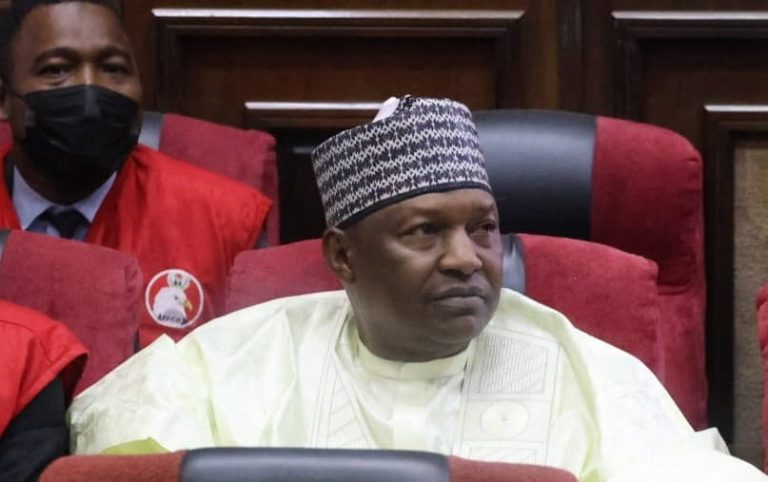
The DSS re-arrest involves different allegations. Security sources say Malami faces claims of terrorism financing, based on several complaints filed against him. The accusations suggest he used his position to protect terrorists and their sponsors from prosecution.
During a search of Malami’s home in Birnin Kebbi, arms and ammunition were reportedly found. Malami denies all charges and is considered innocent until proven guilty in court.
Mohammed Bello Adoke
Adoke served as AGF under President Goodluck Jonathan. After leaving office, he spent years fighting legal cases over his role in the OPL 245 oil block deal.
The case involved claims of bribery, money laundering, and abuse of office connected to the transfer of the oil block to Malabu Oil and Gas. Prosecutors said the deal included illegal payments to government officials and that Adoke helped the transaction despite warning signs.
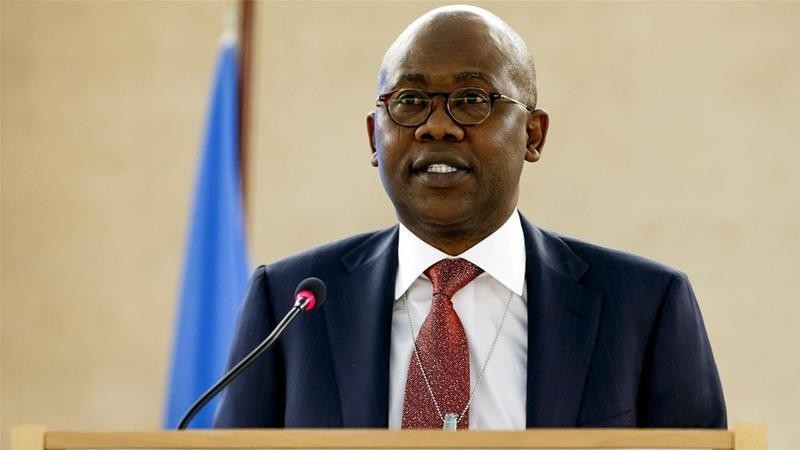
Adoke’s legal problems stretched to other countries, including Italy. He left Nigeria and faced possible extradition.
In the end, two Nigerian courts dismissed the charges, clearing him of criminal wrongdoing. Adoke has always said he followed the law and argued that his prosecution was politically motivated.
Michael Aondoakaa
Aondoakaa was Attorney-General during the Umaru Musa Yar’Adua government. While not charged with crimes, he was investigated and temporarily lost his Senior Advocate of Nigeria title over claims of professional misconduct.
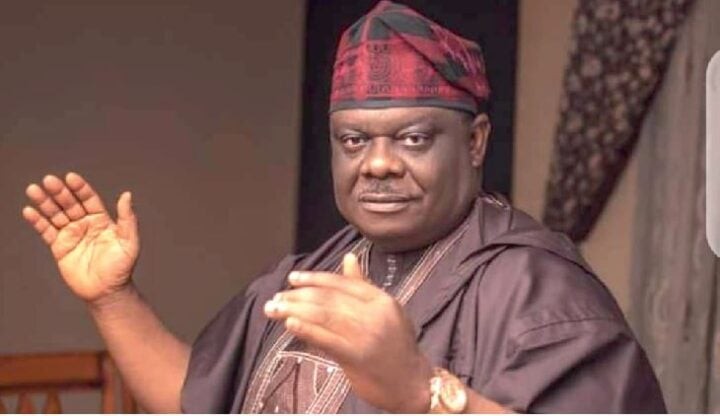
The trouble started when Aondoakaa told the former INEC Chairman, Maurice Iwu, and the Speaker of the House of Representatives to ignore a Court of Appeal judgment. His SAN title was later restored, but on December 10, 2021, the Supreme Court ruled that he should not be trusted with any other public office.
Yet, like Adoke, Aondoakaa has been cleared of the most serious charges made against him.
A Troubling Pattern
Three of the last four Attorneys-General have faced major legal or ethical problems after leaving office. This pattern points to bigger issues in Nigerian governance.
The Attorney-General is a cabinet minister and the government’s top legal adviser who should set an example for how the state follows the law. When people in this office are repeatedly connected to claims of corruption, whether proven or not, it damages public trust in the legal system.
Many Nigerians already have little faith in government, believing that people given power often use it for personal gain. When the country’s chief law officer becomes the subject of major investigations, it strengthens the view that laws are not applied fairly.
This does not mean all former AGFs are guilty. Courts have cleared some of those accused. But the fact that this keeps happening suggests that systems meant to prevent abuse of power are weak or not properly used.
FURTHER READING
For many Nigerians, the question is whether the country can build a system where people trusted to uphold the law are themselves held to high standards, and where the office of Attorney-General stands for justice rather than scandal.
Philip Ibitoye is a Special Correspondent with EKO HOT BLOG. Click here to find daily analysis and critical insight on trending issues in Lagos and other parts of Nigeria.
Click here to watch the video of the week below: