On Tuesday, June 9, political violence broke out across several parts of Osun State. Armed hoodlums driving branded vehicles shot sporadically across Osogbo, the state capital, as well as in Ile-Ife, Ede, Aisu, and Owode, leaving at least one person feared dead and several others injured.
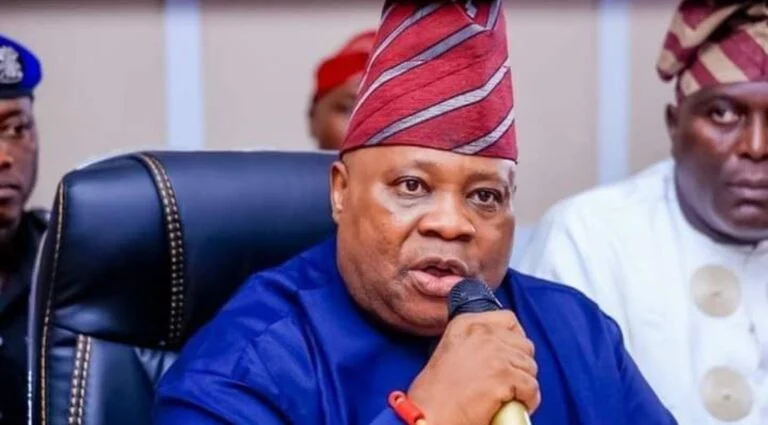
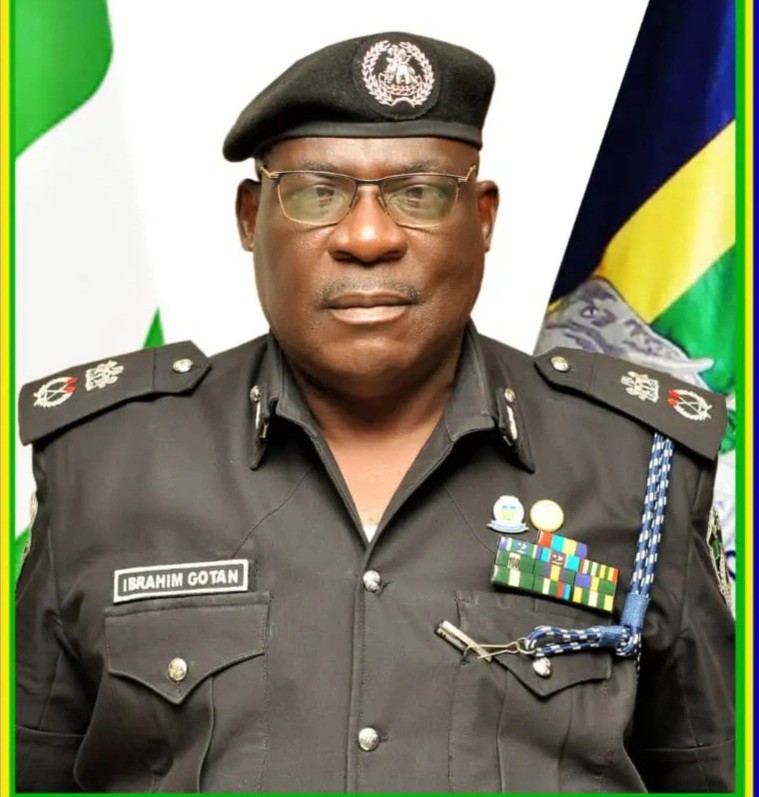
Reacting to the violence, Governor Ademola Adeleke addressed the press at Government House in Osogbo. He said he was very sad. Then he alleged something that cut to the heart of a much larger problem: the Commissioner of Police in his state, Ibrahim Gotan, was not cooperating with him.
EDITOR’S PICKS
He said he had called the GOC. He had called the Chief of Army Staff. He had reported to the Inspector-General. He urged President Tinubu to intervene directly. A state governor, dealing with an emergency inside his own territory, was on the phone to Abuja asking for help.
"I am sad! I am very, very sad!! The Commissioner of Police in Osun State is not cooperating. That's why we have been having problems." – Governor Ademola Adeleke @AAdeleke_01 speaking on the security situation in the state pic.twitter.com/Aae4iGMahY
— MAO (@ademide25_) June 9, 2026
The Reality of Being ‘Chief Security Officer’
Every Nigerian governor carries the constitutional title of chief security officer of his state. In practice, the title does not come with matching authority.
The Commissioner of Police is a federal appointee who answers to the Inspector-General in Abuja, not the governor in whose state he is deployed. The governor can make requests. He can complain. He can hold press conferences.
Section 215 of the 1999 Constitution does allow a governor to issue lawful directions to the CP on matters of public safety. But the same section allows the CP to refer those directions upward to the president and wait. In the gap between a governor’s directive and Abuja’s response, anything can happen, and in Osun on Tuesday, it did.
Adeleke alleged that the state police command had not raised a finger to stop the attacks or arrest the attackers as they happened.
The CP’s office later said it had launched an investigation and directed its Violent Crime Response Unit to begin a comprehensive probe. That is a reaction, not a prevention. By then, people were already dead and injured.
A Pattern Bigger Than Osun
Osun is not an isolated case. It is a particularly visible one because it is happening during a governorship election campaign and because the governor said it out loud.
But the structural problem — a governor unable to direct the security apparatus in his own state — plays out across Nigeria in quieter, deadlier ways.
In the North-East, governors have watched insurgents operate within their territories while military and police operations are coordinated entirely from Abuja.
In Oyo and Borno, the recent school abductions happened in states where governors have no command over federal security deployments. When the Oriire abductions happened in May, Oyo Governor Seyi Makinde could mobilise state resources and make public statements, but the operational security response remained in federal hands.
The result is a accountability vacuum. When security fails, the governor gets the political blame — he is after all the chief security officer — but he does not have the operational control that would allow him to prevent the failure in the first place. He owns the consequences without owning the tools.
Where the State Police Debate Stands
Last Thursday, Chief of Staff Femi Gbajabiamila confirmed that the federal government was working on constitutional amendments to establish state police, describing it as a process that cannot happen “with the snap of the fingers.”
The IGP, Tunji Disu, was present at that consultative meeting. Senate leader Opeyemi Bamidele has said the National Assembly would fast-track the legislation following the recent school abductions.
What Adeleke’s situation adds to that conversation is a concrete, current illustration of the cost of delay.
The debate around state police has largely focused on the risk of abuse; that governors could weaponise a state force against opponents. It is a fair concern.
FURTHER READING
But Tuesday in Osun showed the cost of the current arrangement: a governor watching violence unfold in real time, with no direct authority over the one institution meant to stop it, making phone calls and waiting.
Philip Ibitoye is a Special Correspondent with EKO HOT BLOG. Click here to find daily analysis and critical insight on trending issues in Lagos and other parts of Nigeria.
Click to watch the video of the week below: