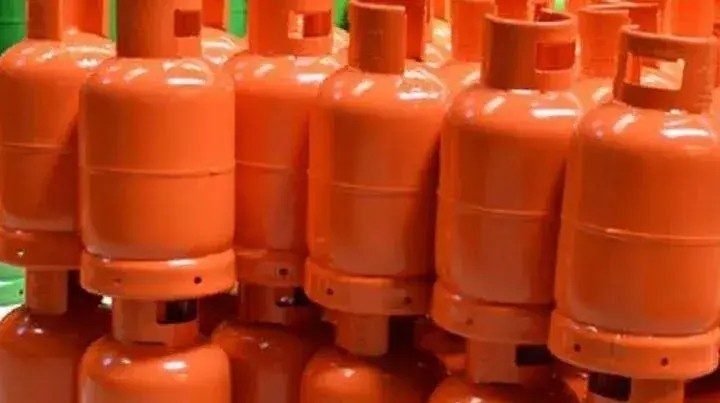
- The retail price of Liquefied Petroleum Gas, commonly known as cooking gas, has skyrocketed by an unprecedented 140 percent across Nigeria, jumping from an average of ₦1,000 per kilogramme earlier in the year to as high as ₦2,400.
- To combat severe domestic scarcity and force down the soaring cost of the commodity, the Nigerian Midstream and Downstream Petroleum Regulatory Authority has begun issuing new licenses to independent marketers for massive LPG importation.
- Industry sources revealed that a major cause of the current supply shortfall is a drop in local availability from the Dangote Petroleum Refinery, which has redirected its internal gas outputs to scale up its primary crude oil refining capacity to 700,000 barrels per day.
Nigeria’s domestic cooking gas market has been thrown into severe turmoil following a massive 140 percent surge in the retail price of Liquefied Petroleum Gas.
Eko Hot Blog reports that investigations show that the vital household commodity, which traded at an average of ₦1,000 per kilogramme between January and February, has aggressively hit a peak of ₦2,400 in several retail outlets across the federation.
EDITOR’S PICK
- Hamzat Appoints Obanikoro as Campaign DG Ahead of 2027 Lagos Governorship Race
- Tinubu’s State Police Plan Gains Momentum as Amendment Looms
- Residents Raise Alarm After Two Bodies Found in Lagos Waterway
In a direct bid to end the deepening scarcity and break the escalating pricing gridlock, independent energy marketers are currently perfecting extensive logistical frameworks to import massive volumes of LPG back into the country under newly approved regulatory frameworks.
Operational findings indicate that the localized supply deficit became acute due to unexpected shifts in domestic gas allocations.
Industry experts dismissed popular rumors claiming that local producers were exporting the commodity, clarifying instead that the Dangote Petroleum Refinery recently reduced its commercial domestic LPG supply to meet internal energy demands.
The mega-refinery has significantly scaled up its crude processing operations to a new peak of 700,000 barrels per day, a ramp-up that requires substantial internal gas utilization to optimize fuel production capacity amid rising global energy demands.
Confirming the government’s intervention strategy, Louis Ibah, the spokesperson for the Minister of State for Petroleum Resources (Gas), Dr. Ekperikpe Ekpo, assured the public that the minister has ordered the NMDPRA to collaborate closely with the Nigerian National Petroleum Company Limited and major depot owners.
He emphasized that the federal restriction on exporting locally produced LPG remains strictly enforced, ensuring that all local outputs are dedicated entirely to domestic consumers.
Ibah added that the management of the Dangote refinery has been formally urged to re-prioritize its commercial distribution and allocate higher volumes to the home market to offer fast relief to citizens.
Supporting this development, the National President of the Nigerian Association of Liquefied Petroleum Gas Marketers, Edu Inyang, confirmed that major private depot owners have already given firm commitments to execute large-scale shipments of cooking gas in the coming weeks.
The mass-import strategy aims to rapidly flood the market, ease the operational pressures on gas filling stations, and systematically crash the retail pricing structure.
While government representatives maintain that supply stability is gradually returning, local retailers and consumers on the ground insist that the commodity remains highly scarce, forcing many low-income households to temporarily revert to firewood and charcoal.