- According to him, extremist elements are becoming increasingly active in countries surrounding Nigeria
- Fayemi stressed that the country cannot afford to ignore the changing security landscape in the region
- Fayemi said the country must become more deliberate in building stronger institutions
Former Ekiti State governor, Kayode Fayemi, has warned that Nigeria’s worsening security situation requires urgent attention, saying extremist groups operating across West Africa are drawing closer to the country’s borders.
Speaking during State Affairs, a podcast hosted by Edmund Obilo,Eko Hot Blog reports that Fayemi expressed concern over the growing threat posed by insurgent movements in neighbouring countries and called for a review of Nigeria’s security and foreign policy strategies.
EDITOR’S PICK
- APM Endorses Makinde For 2027 Presidency, Targets PDP Members In Osun
- Eredo Monarchs Suspend Ojude Oba Celebrations in Honour of Late Omola of Odomola
- “Do Not Cheat Back”—Actress Eriata Ese Warns Women Against Revenge Infidelity
According to him, extremist elements are becoming increasingly active in countries surrounding Nigeria, including Benin, Togo and Burkina Faso, a development he said should be treated as a matter of national importance.
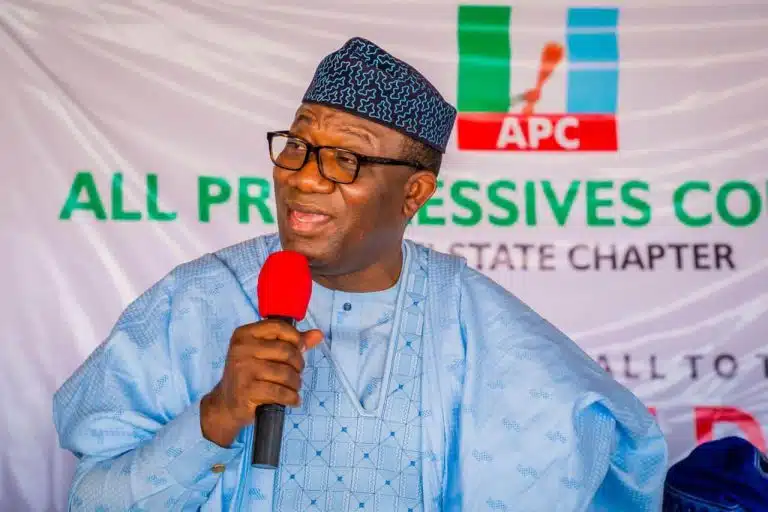
Fayemi stressed that the country cannot afford to ignore the changing security landscape in the region, warning that the threat posed by violent groups is edging closer to Nigeria and demands a coordinated response from government authorities.
He argued that strengthening diplomatic ties and regional cooperation would be essential in addressing cross-border security challenges and preventing further expansion of extremist activities.
The former governor also assessed the performance of the ruling All Progressives Congress, admitting that the party had not advanced as rapidly as he had hoped despite recording some achievements.
While reaffirming his membership of the APC, Fayemi said the pace of progress remained disappointing for a country with Nigeria’s population, resources and strategic position on the African continent.
He noted that although there had been measurable improvements in some sectors, the gains were not sufficient for a nation widely regarded as a potential leader in Africa.
Reflecting on Nigeria’s broader development journey, Fayemi said the country must become more deliberate in building stronger institutions and creating systems capable of supporting sustainable growth.
According to him, nation-building is an ongoing process that requires continuous reforms and a commitment to improving governance structures.
He maintained that Nigeria possesses the capacity to play a more influential role in continental affairs but said achieving that goal would depend on purposeful leadership, institutional strengthening and greater national unity.
Fayemi further argued that the country’s future should be shaped through careful planning rather than chance, insisting that leaders must pursue policies that promote development, stability and long-term prosperity.
The former governor concluded that with the right reforms and a renewed commitment to effective governance, Nigeria can still realise its potential as a leading force in Africa.
FURTHER READING