- Nigeria’s Economy Now More Resilient, Primed for Sustainable Growth – Cardoso
- Inflation Falls, FX Market Stabilises
- CBN Marks Two Years of Reforms
Nigeria has entered a new phase of macroeconomic stability after two years of far-reaching reforms that have lowered inflation, strengthened the naira, restored discipline to the foreign exchange market and placed the economy on a firmer path to sustainable and inclusive growth.
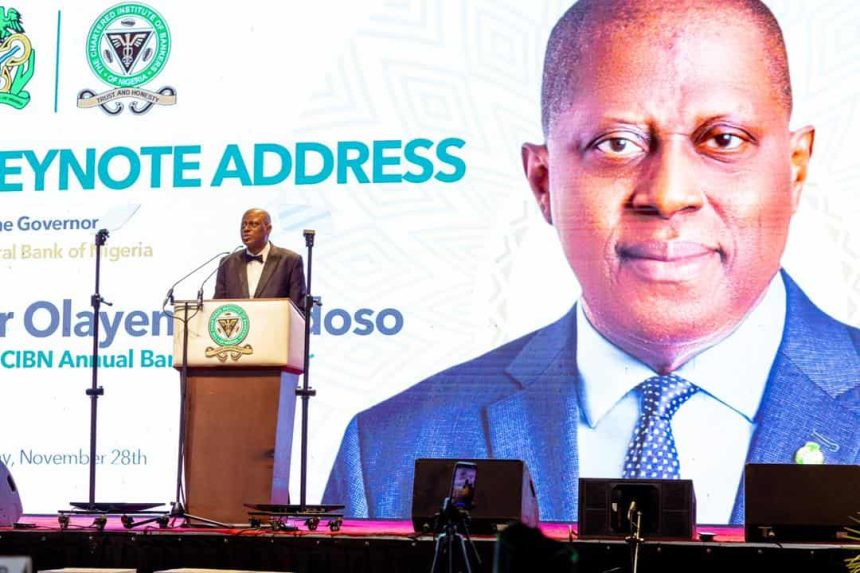
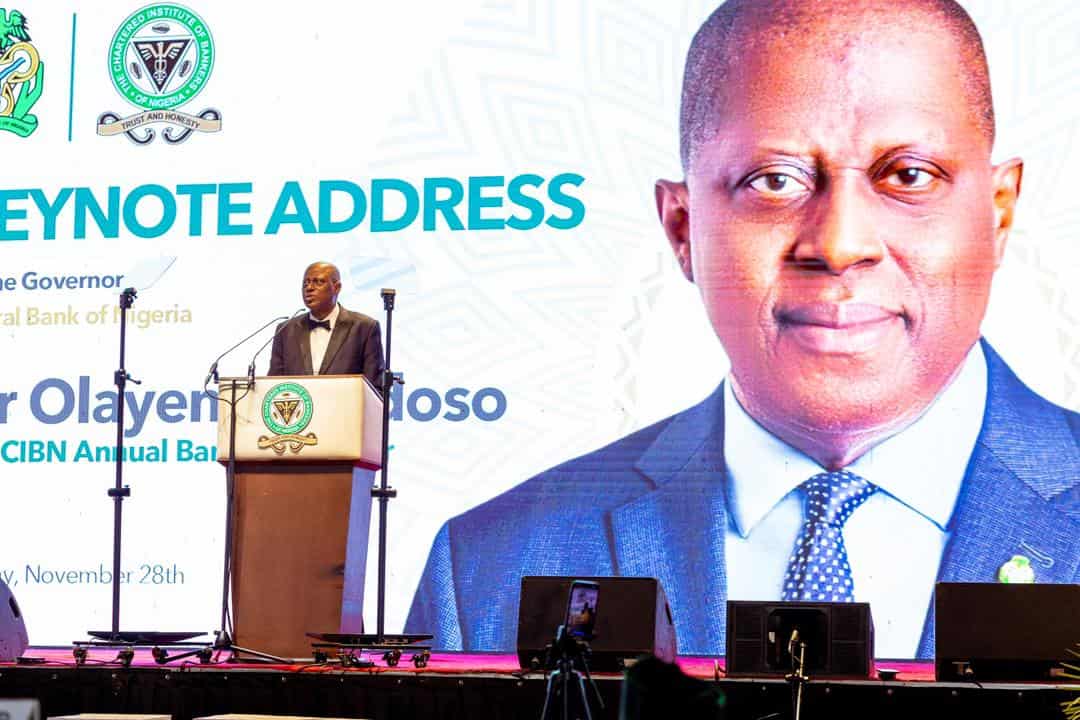
Eko Hot Blog reports that this was revealed by the Governor of the Central Bank of Nigeria, Olayemi Cardoso.
EDITOR’S PICK
- FCT Court Rejects EFCC Witnesses in Emefiele Trial
- Tems Reveals Alternate Career Path Before Music Fame
- Lamido Holds Emergency PDP Stakeholders Meeting Amid Party Crisis
Speaking at the sixtieth Annual Bankers Dinner of the Chartered Institute of Bankers of Nigeria in Lagos, Cardoso said the country is emerging from a period of severe macroeconomic distortions into one defined by renewed confidence in economic management.
He described the past two years as one of the most ambitious reform periods in Nigeria’s recent history and one that is now delivering measurable progress across key indicators.
Inflation, which peaked at thirty four point six percent in November 2024, has dropped to sixteen point zero five percent. This marks seven consecutive months of disinflation. Food inflation has eased even faster, falling from twenty one point eight seven percent in August to thirteen point one two percent in October.
Cardoso said the sustained decline reflects the Bank’s strengthened framework. According to him, the move toward an inflation targeting regime is gaining momentum. He noted that the Bank has improved data analysis, strengthened communication and ended the monetary financing of fiscal deficits. These steps have improved policy transmission and anchored expectations.
On growth, the Governor highlighted that Nigeria’s economy expanded by four point two three percent in the second quarter of 2025, the strongest in four years. This was driven by the telecommunications sector, the financial services industry and a modest recovery in oil production.
He also noted that economic diversification is improving, with non oil exports rising by more than eighteen percent year on year, while oil continues to account for a smaller share of national output and government revenue.
A major sign of renewed stability, he said, is the transformation of the foreign exchange market. The Central Bank has cleared the seven billion dollar FX backlog that once weighed heavily on the market, unified the multiple exchange rate windows and introduced wide ranging transparency reforms through the Nigerian Foreign Exchange Code and the Electronic FX Management System.
The gap between the official and parallel markets has narrowed sharply from more than sixty percent to less than two percent. Foreign capital inflows have risen to twenty point nine eight billion dollars in the first ten months of 2025, a four hundred and twenty eight percent increase compared to 2023.
Nigeria’s external buffers have also improved. Foreign reserves now stand at forty six point seven billion dollars, the highest level in almost seven years, providing more than ten months of import cover.
The current account balance rose by more than eighty five percent in the second quarter to five point two eight billion dollars. Diaspora remittances have also grown by twelve percent due to improvements in settlement transparency and the introduction of the Non Resident BVN policy.
Cardoso said global institutions are taking note of Nigeria’s progress. Fitch upgraded Nigeria to B with a stable outlook, Moody’s upgraded the rating to B3 and S and P revised its outlook to positive.
He added that Nigeria’s recent two point three five billion dollar Eurobond, which attracted thirteen billion dollars in orders, shows strong investor confidence in the reform agenda.
He also highlighted progress in the banking sector, where recapitalisation is moving steadily toward the March 2026 deadline. Sixteen banks have already met or surpassed the new capital requirements.
He added that digital finance continues to grow, with more than twelve million contactless cards in circulation and Nigerian fintech companies maintaining their lead as the ecosystem that has produced eight of Africa’s nine unicorns.
Looking ahead to 2026, Cardoso outlined five priorities. These are strengthening the banking system, ensuring durable price stability, modernising the payments ecosystem, supporting responsible fintech innovation and building a more agile, digitally driven Central Bank.
He concluded that Nigeria is more resilient to external shocks today than at any time in recent years. According to him, the Central Bank will continue to guide monetary policy with discipline, evidence and transparency.
FURTHER READING
- Olubadan Predicts Rapid Economic Growth for Ibadan
- Group Raises Alarm Over Nigeria’s High Malaria Deaths
- Over 160,000 Lagos Residents Living with HIV
Click here to watch video of the week