- The Nigeria Labour Congress (NLC) has rejected a new ₦100,000 national minimum wage proposal being considered by the Nigeria Governors’ Forum (NGF).
- Labour insists that due to severe economic hardships, a realistic living wage for the average Nigerian worker should be as high as ₦1 million.
- The union argues that the government can afford higher pay, pointing out that over ₦5 trillion has entered the treasury from Middle East war windfalls shared at FAAC.
The Nigeria Labour Congress (NLC) has dismissed a proposal by the Nigeria Governors’ Forum (NGF) to set the new national minimum wage at ₦100,000.
Speaking on behalf of the union on Sunday, May 31, 2026, Eko Hot Blog reports that NLC spokesperson Benson Upah stated that while it was thoughtful of the governors to consider a wage review, the suggested ₦100,000 amount falls significantly short of what is required to survive in the country’s current economic climate.
EDITOR’S PICK
- Fresh Details Emerge on Death of Odomola Monarch, Oba Adebowale Adeshina
- Sanwo-Olu Applauds LASU’s Academic Excellence After JAMB Ranking
- NRC Moves 176,820 Tonnes Of Cargo Through Lagos Ports In Q1
Instead, the labour union is pushing for a ₦1 million benchmark, arguing that anything less fails to reflect the true cost of living.
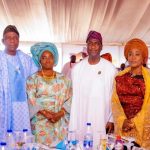
The proposal was brought to light by the NGF Chairman and Governor of Kwara State, AbdulRahman AbdulRazaq, who disclosed during a Sallah homage to President Bola Tinubu in Lagos that governors were eyeing the ₦100,000 structure.
AbdulRazaq noted that the forum was engaging the Federal Government and organized labour to strike a balance between workers’ welfare and fiscal sustainability, especially given rising inflation and living costs.
However, Upah countered that the continuous depreciation of the naira, skyrocketing fuel prices, inflated electricity tariffs, and new tax burdens have completely eroded the purchasing power of the average worker, making a massive upward review non-negotiable.
The NLC further argued that state and federal governments have more than enough financial capacity to adequately compensate their workforce.
Upah pointed out that government revenues have increased dramatically, citing recent Federation Account Allocation Committee (FAAC) distributions.
He revealed that temporary windfalls tied to the Middle East war have injected over ₦5 trillion into the national treasury. This wage battle comes nearly two years after the ₦70,000 minimum wage agreement was signed into law in July 2024 to replace the older ₦30,000 benchmark.
With the National Bureau of Statistics continuously reporting elevated food and headline inflation, labour leaders maintain that the workforce, the nation’s greatest asset, must be properly remunerated to sustain productivity.