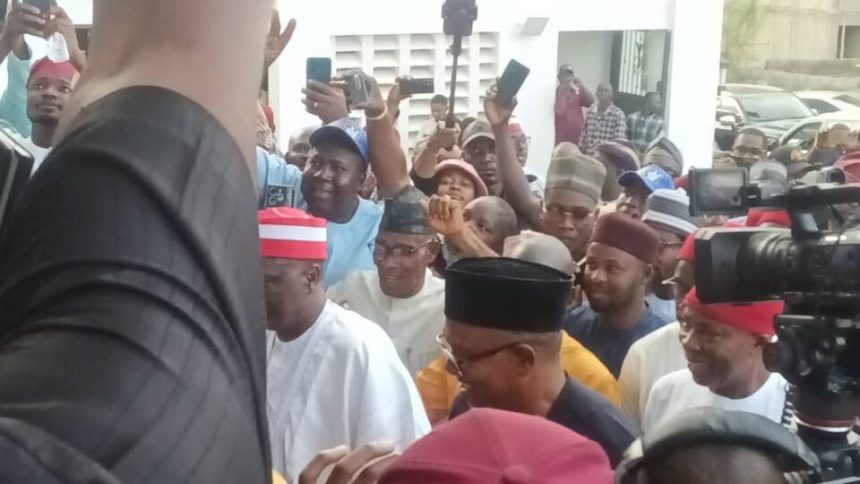
- The meeting comes amid intensified political activity among opposition leaders
- Obi, who recently left the ADC, had cited persistent internal disputes and external interference as reasons for his decision
Former Anambra State governor Peter Obi and former Kano State governor Rabiu Kwankwaso on Sunday met privately with leaders of the Nigeria Democratic Congress at the Abuja home of its national leader, Seriake Dickson.
Eko Hot Blog reports that the meeting, held at Dickson’s residence in Guzape, is seen as part of ongoing consultations among opposition figures as they explore possible alliances ahead of the 2027 general elections.
EDITOR’S PICK
- Benue Mortician Arrested for Using Corpse Part as Walking Stick
- Baba Yusuf: Bandits May Reach National Assembly
- PDP Asks INEC To Withdraw Recognition Of Anyanwu As National Secretary
Both leaders arrived in the evening to a warm reception from supporters associated with the Obi Kwankwaso Movement, who gathered at the venue in anticipation of the talks.
The development follows recent remarks by Buba Galadima, who hinted that two major political figures would soon unveil a new platform, fueling speculation about a possible shift in opposition alignment.
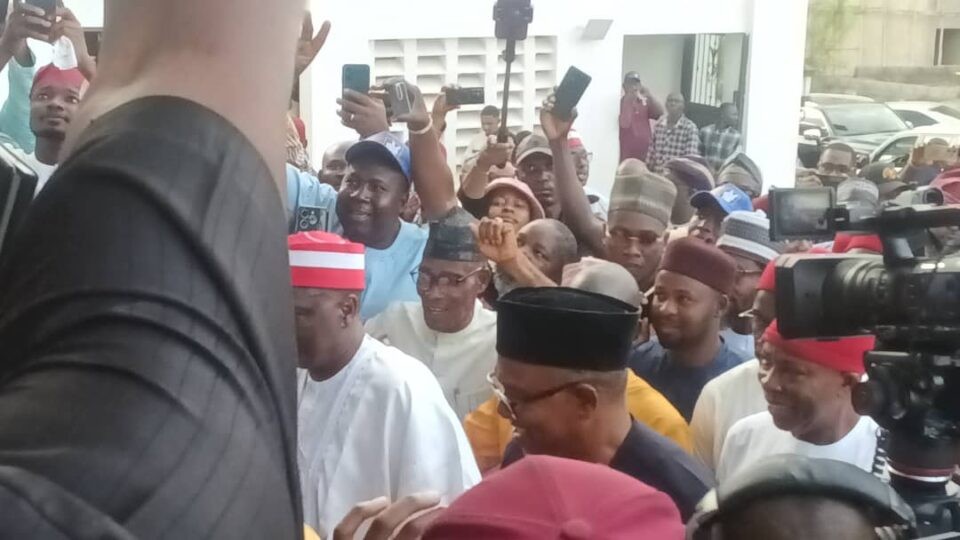
Sources familiar with the discussions indicated that Obi and Kwankwaso are considering closer ties with the Nigeria Democratic Congress as part of broader efforts to reposition ahead of the next election cycle.
The meeting comes amid intensified political activity among opposition leaders seeking to build a stronger coalition after setbacks in previous alliance attempts.
Efforts to rally around existing platforms such as the African Democratic Congress have been challenged by internal disagreements and recent exits.
Obi, who recently left the ADC, had cited persistent internal disputes and external interference as reasons for his decision, noting similarities with issues he previously encountered in the Labour Party.
Kwankwaso, a key figure with a strong support base in northern Nigeria, has remained central to ongoing coalition talks, with his influence viewed as crucial to any viable opposition strategy.
The growing interest in alternative platforms such as the Nigeria Democratic Congress suggests a shift in approach by opposition actors aiming to consolidate support outside traditional party structures as preparations for 2027 gather momentum.
FURTHER READING