- On the third anniversary of the administration, Special Adviser on Information and Strategy Bayo Onanuga defended President Bola Tinubu’s economic policies, stating his principal took the necessary financial bullets to prevent a complete national collapse.
- The presidency emphasized that the painful removal of the petrol subsidy and the floating of the naira have successfully boosted monetary allocations to states and local governments, enabling extensive regional infrastructure development.
- In a detailed audit of the last three years, the administration highlighted a massive boom in the stock market, ongoing mega-highway construction projects, and specialized social interventions like expanded student loan schemes.
Special Adviser to President Bola Tinubu on Information and Strategy, Bayo Onanuga, on Friday, May 29, 2026, robustly defended the administration’s aggressive economic overhauls, asserting that his principal “took the bullets” required to rescue Nigeria from imminent fiscal ruin.
Eko Hot Blog reports that in an official opinion piece marking the administration’s third anniversary titled “Bola Tinubu: the man who took the bullet for Nigeria to survive,” Onanuga cautioned that opposition political actors have deliberately intensified coordinated misinformation campaigns ahead of the 2027 general elections to cloud the federal government’s tangible milestones.
EDITOR’S PICK
- Fresh Details Emerge on Death of Odomola Monarch, Oba Adebowale Adeshina
- Sanwo-Olu Applauds LASU’s Academic Excellence After JAMB Ranking
- NRC Moves 176,820 Tonnes Of Cargo Through Lagos Ports In Q1
According to the presidency, Tinubu inherited a deeply distressed economic landscape upon taking office in May 2023, which was heavily burdened by chronic fuel scarcities, fragmented foreign exchange windows, low domestic revenue, mounting debt service obligations, and a financially crippling petrol subsidy regime.
Onanuga maintained that immediate macro-reforms, including the elimination of the fuel subsidy and the floating of the local currency, were highly agonizing but unavoidable maneuvers that ultimately checked an economic catastrophe and drastically enhanced sub-national cash allocations from the Federation Account.
He stated that state governors across political divides now possess the liquidity to routinely pay worker salaries and execute vital local capital projects.
Citing specific testimonials, the presidential spokesman noted that governors from states like Kwara, Ebonyi, Enugu, and Nasarawa have publicly linked their localized project booms to the presidency’s financial re-engineering.
He pointed out that Nasarawa State Governor Abdullahi Sule explicitly validated the President’s personal sacrifice for the sub-nationals, while state executives in Ebonyi and Enugu have credited federal financial adjustments for funding iconic urban underpasses, overpasses, and rural development frameworks.
Onanuga further asserted that once local government councils begin receiving their financial allocations completely untethered, the direct impact of these reforms will cascade down effectively to all 774 local government areas.
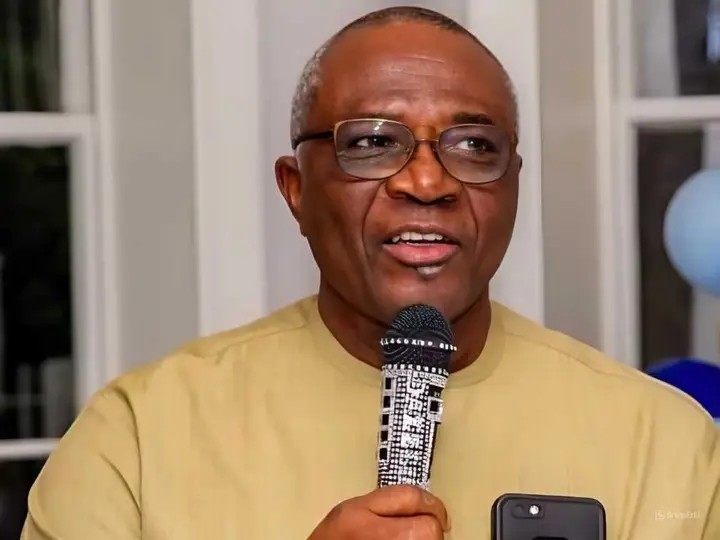
On an economy-wide scale, the aide showcased the exponential growth of the Nigerian Exchange, where the All-Share Index rose from approximately 53,000 points in May 2023 to nearly 250,000 points, alongside a market capitalization surge from ₦30 trillion to ₦160 trillion.
He also listed historically ambitious infrastructural achievements, including the construction of the Lagos-Calabar Coastal Highway and the Sokoto-Badagry Super Highway, alongside systemic upgrades to the national electricity grid, oil sector reforms, the NELFUND student loan expansion, and retail credit access through CREDICORP.
While acknowledging that violent banditry and regional terrorism remain persistent national security issues, Onanuga concluded that history will vindicate the Tinubu administration for its legacy of structural transformation.