- Scotland qualified for 2026 World Cup after 24-year absence
- Steve Clarke led team to major tournaments with improved structure
- Group stage progress could mark historic breakthrough for Scotland
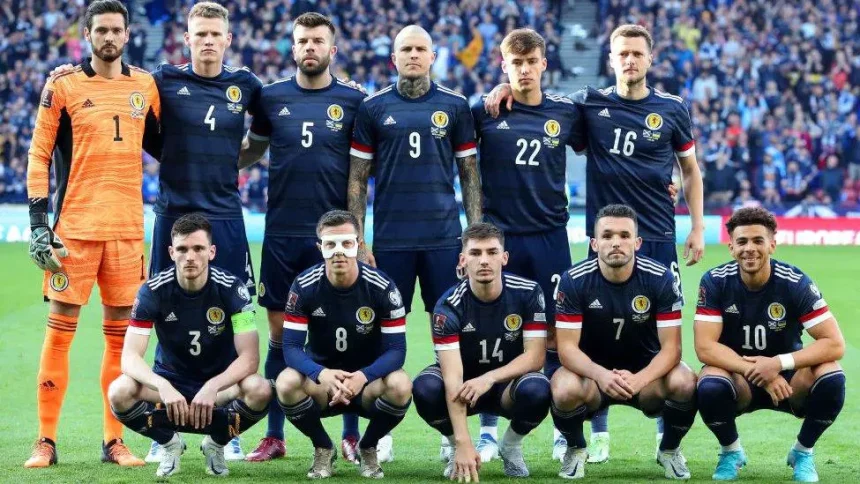
The Scotland national football team have secured qualification for the 2026 FIFA World Cup, marking their first appearance on football’s biggest stage since 1998.
The qualification has sparked widespread celebrations across the country, as a new generation of supporters prepare to watch the team compete at the global level for the first time in decades.
EDITOR’S PICKS
- FA Introduces New Rules To Limit Heading In Football
- President Tinubu Has Not Endorsed Any APC Candidate for 2027 – Jandor
- Police Arrest 2 Over Trafficking of Nigerian Woman to Côte d’Ivoire
EKO HOT BLOG reports that after multiple failed attempts, Scotland ended a 24-year absence from the tournament, arriving in North America with renewed belief and growing expectations of competing with top football nations.
Under head coach Steve Clarke, the team has undergone a transformation, developing a clear identity built on structure, discipline and ambition. Clarke has now guided Scotland to three major tournaments, including two European Championships and the 2026 World Cup.
Scotland will compete in Group C alongside Brazil national football team, Morocco national football team, and Haiti national football team. The team is scheduled to face Haiti on June 14, Morocco on June 20, before a final group game against Brazil on June 25.
A strong start in the opening fixtures is expected to be crucial if Scotland are to advance beyond the group stage, a feat they have never achieved in their World Cup history.
Scotland secured qualification through a disciplined UEFA campaign, showing consistency, resilience and improved game management against competitive opposition.
Historically, the team has featured in the World Cup eight times before 2026, with all previous appearances ending at the group stage.
Key players expected to lead the squad include captain Andy Robertson, known for his leadership and energy, Kieran Tierney, who offers defensive strength and versatility, and Scott McTominay, a key midfield presence.
Others include Billy Gilmour, who controls tempo in midfield, Lyndon Dykes, a physical forward central to set-piece play, and John McGinn, known for his creativity and goal-scoring contributions.
Clarke’s tactical approach typically relies on structured formations focused on defensive compactness, quick transitions, and effective use of set-pieces.
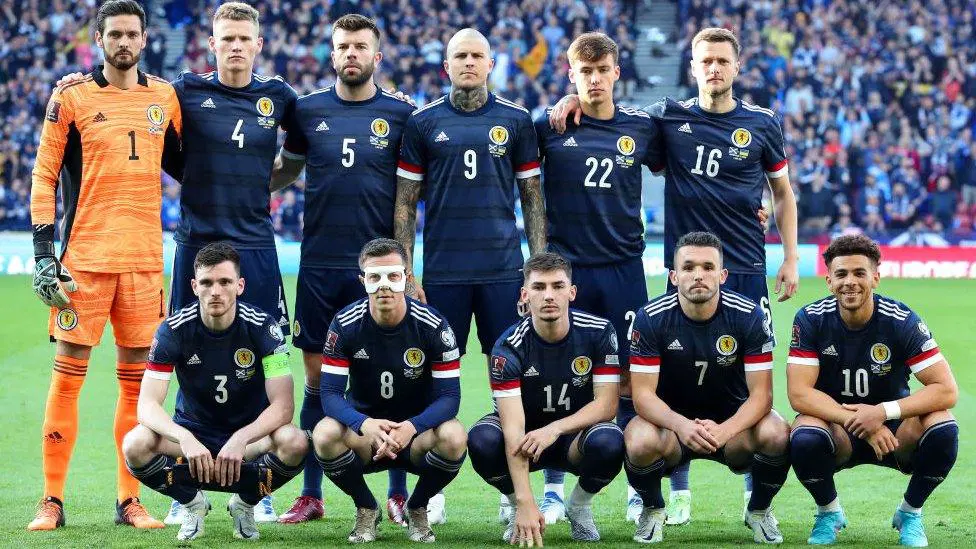
While Scotland’s strengths lie in organisation, teamwork and physicality, concerns remain over limited attacking depth and the absence of a consistent high-scoring forward.
If the team progresses beyond the group stage in 2026, it would represent a historic milestone for a nation seeking its first major breakthrough at the World Cup.
FURTHER READING
- Nigerian Fraudster Admits Role in $50 Million Email Scam Network
- FG Begins Review of Agricultural Curricula to Bridge Skills Gap
- Mother Slumps, Dies While Escorting Daughter To UTME Centre In Ondo