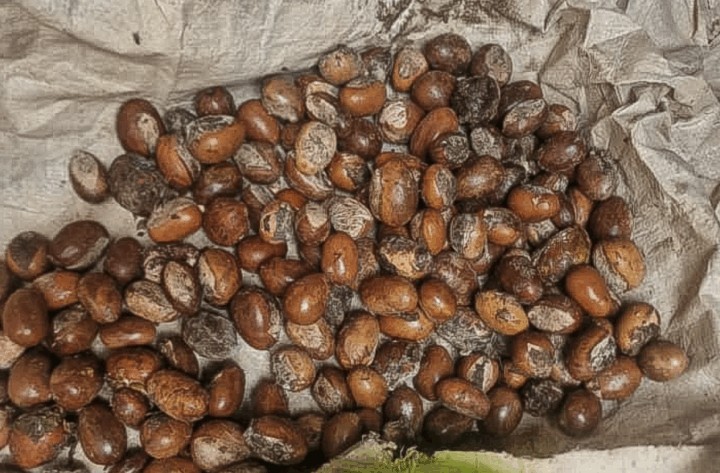
When President Bola Tinubu announced a ban on the export of raw shea nuts on August 26, 2025, the intent was straightforward: keep the nuts at home, build local processing capacity, and ensure Nigeria earns more from a commodity it dominates in supply but barely benefits from in value.
Six months later, with the ban extended by one year, now running until February 25, 2027, the question being asked across the shea value chain is whether the policy is actually working.
EDITOR’S PICKS
The ideological foundation for such a move is not new.
Akinwumi Adesina, former President of the African Development Bank (AfDB), had put it starkly in April 2025: “The export of raw materials is the door to poverty. The export of value-added products is the highway to wealth.”
Africa must end the exports of its raw materials. The export of raw materials is the door to poverty. The export of value-added products is the highway to wealth. And Africa is tired of being poor.
— Dr. Akinwumi A. Adesina, CON, CGH (@akin_adesina) April 17, 2025
Nigeria’s shea nut ban is, in many ways, a direct policy expression of that thinking. The country produces nearly 40 to 50 percent of the world’s shea deposits, yet captures less than one percent of a $6.5 billion global market.
That imbalance is what the ban sought to correct. On paper, the goal is hard to argue with. In practice, however, EKO HOT BLOG gathered that the implementation has exposed deep structural problems that a trade restriction alone cannot fix.
A Policy That Hurt Before It Could Help
The most immediate casualty of the ban was not the large exporter but the women who pick the nuts — the first and most vulnerable link in the shea value chain, according to TheCable’s interviews with various stakeholders.
When aggregators stopped buying because they had nowhere to sell, pickers lost their primary source of income. Muhammed Kontagora, president of the National Shea Products Association of Nigeria (NASPAN), described the effect as a “big shock to the women.”
The ripple did not stop there. Exporters who had secured international contracts from buyers in Japan, the United States, Poland and India found themselves in breach, facing trade disputes, arbitration, and in some cases, loan repayments to banks on goods locked in warehouses.
Mike Dola, CEO of Cokodeal, a commodity trading platform, said the ban prevented his company from facilitating roughly N800 million in deals and led to a complete shutdown of some businesses.
Prices collapsed sharply after the ban was announced, with a tonne of shea nuts dropping from N1.2 million to as low as N600,000 before stabilising between N800,000 and N1 million. While that sounds like good news for local processors, it was not enough.
Alpha Shea’s managing director, Olaleye Ogundadegbe, said the price still needs to fall to around N500,000 per tonne for local processors to buy in large enough volumes. Meanwhile, aggregators refuse to sell below pre-ban prices, leaving both sides in a deadlock.
The Capacity Gap at the Heart of the Problem
Even if prices fell to acceptable levels, Nigeria does not have the processing capacity to absorb what it produces. The country generates about 600,000 tonnes of shea nuts annually, but its six processing factories, spread across Kano, Niger, Ondo and Ogun states, can handle fewer than 200,000 tonnes combined. Alpha Shea, one of the bigger processors, currently runs at just 30 percent of its 20,000 metric tonne yearly capacity.
The structural gap is compounded by financing. Foreign processors come to the market with cheaper funds and superior extraction technology, allowing them to outbid Nigerian crushers and get more value from the same kernel.
Small local processors, many of whom work by hand, simply cannot compete. Ladi Shambo, founder of Dijmeds Ventures, a local soap and cream producer, lamented the infrastructural deficit in Nigeria.
“We cannot consume all those nuts in Nigeria. Had it been we had big companies, if the government had been funding the small processors, it would have been a different story,” Shambo stated.
One of the major processors, Ladgroup, with a capacity of 24,000 metric tonnes of shea nuts per annum, is currently under receivership, owing debts to the Nigerian Export-Import Bank. That a company of its scale is financially distressed during the very period the ban was meant to boost processors speaks to the depth of the sector’s challenges.
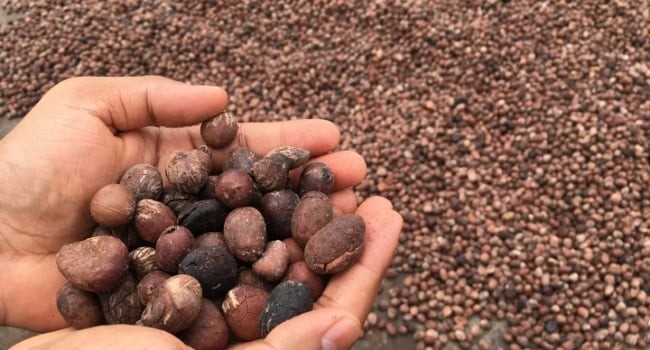
Closing the door on raw material exports, as Adesina advised, only leads to the highway of wealth if the domestic infrastructure exists to process what stays behind. In Nigeria’s shea sector, that infrastructure is still largely under construction.
Global Buyers Are Not Waiting
Beyond Nigeria’s borders, the export ban has set off a quiet reshaping of the global shea supply chain.
The Global Shea Alliance (GSA), which represents 849 members across 36 countries, confirmed that its members have begun diversifying sourcing to other countries, increasing procurement costs and, in some cases, exploring alternative raw materials altogether.
Kontagora raised a more alarming possibility, that AAK, a major Swedish processing company with about 20,000 tonnes of shea nuts currently stuck in Nigeria, is exploring mango seed butter as an alternative.
“What will happen to the shea industry in Nigeria if they continue along that line?” he asked. The concern is that, buyer relationships, once broken, are not easily restored, and the longer the ban runs, the more entrenched alternative sourcing arrangements become.
The ban has also driven an estimated 200,000 metric tonnes of shea nuts across Nigeria’s porous borders through smuggling, according to NASPAN, an ironic outcome for a policy designed to keep supply inside the country.
President Tinubu’s decision to extend the ban includes new directives such as an export framework through the Nigerian Commodity Exchange, a dedicated finance window for processors, and coordination between trade and industry ministries.
These additions signal that the government recognises the original announcement lacked both preparation and infrastructure.
Adesina was right that Africa is tired of being poor. But the shea nut experience suggests that the path from raw material dependence to value-added wealth requires more than a ban; it requires the factories, the financing, and the patience to build an industry that can actually carry the weight of that ambition.
FURTHER READING
Whether those corrections arrive in time to prevent lasting damage to Nigeria’s shea trade relationships and to the livelihoods of women pickers who remain the silent majority in this debate is the question that the next twelve months will answer.
Philip Ibitoye is a Special Correspondent with EKO HOT BLOG. Click here to find daily analysis and critical insight on trending issues in Lagos and other parts of Nigeria.
Click to watch the video of the week below: