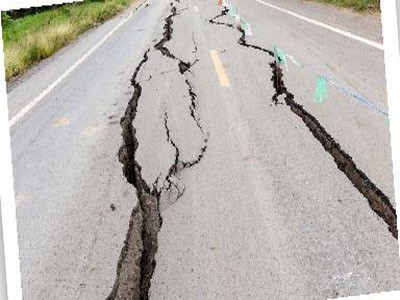
Parts of the Abuja were rattled on August 4 when a tremor, less than one kilometre deep, shook the federal capital for about five seconds.
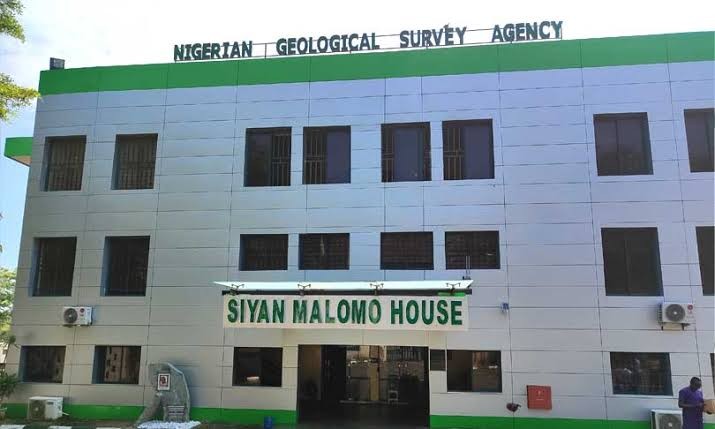
The Nigerian Geological Survey Agency (NGSA) said its Utako monitoring station picked up the tremor at 11:23am, and Minister of Solid Minerals Development, Dele Alake, ordered hourly updates on seismic activity in response.
EDITOR’S PICKS
At a briefing in Abuja on Thursday, NGSA Director-General Olusegun Ige told reporters the tremor was a “low-energy, transient micro-event” and that five days of follow-up monitoring found no continuing activity. Physical checks at the Defence Intelligence Agency facility in Asokoro, NNPC Towers, and buildings in the Central Business District found no structural damage. “There is no cause for alarm,” Ige said.
But this is not the first time Abuja, or Nigeria, has shaken. That raises a fair question: should Nigerians actually worry about earthquakes?
A country used to sit on “safe” ground
Nigeria does not sit on a major tectonic plate boundary, the zones where most of the world’s large, destructive earthquakes happen. This is why the country is generally described as low-risk. But “low-risk” is not “no-risk.”
Records show Nigeria has felt tremors as far back as 1933, when the first widely reported event struck near Warri. Since then, tremors have hit in 1939, 1964, 1984, 1990, 1994, 1997, 2000, 2006, 2009, 2016, 2018 and now 2026. The 1984 Ijebu-Ode tremor and the 1990 Ibadan tremor were among the strongest instrumentally recorded, with magnitudes reaching into the mid-4 range. A 2016 tremor in Saki, Oyo State, measured 2.5, and a September 2018 episode in Abuja’s Mpape and Maitama areas shook residents for three days.
Geologists explain these events as intraplate tremors, shaking that happens within a plate rather than at its edges. Researchers link many of them to old fracture zones running underground, including the Ifewara-Zungeru, Yola-Dambata, Akka-Jushi, and Warri-Ijebu Remo fault systems, remnants of ancient geological stress buried beneath Nigeria’s basement rock. Stress can build up slowly along these buried faults and release suddenly, producing a tremor.
Why Abuja keeps shaking
A 2021 study in the journal Frontiers in Earth Science, examining the 2018 Abuja tremors, found that the areas where shaking was felt sit within a small sedimentary basin, a geological setting that can amplify ground movement even from a fairly minor event. This may help explain why Abuja, despite being far from any plate boundary, keeps recording tremors that alarm residents.
The same NGSA has previously said the risk of a serious earthquake in Nigeria cannot be entirely ruled out, and other researchers have gone further, suggesting a measurable probability of a significant quake in the region within the next few years. That is a minority, unofficial projection, not a prediction from Nigeria’s own geological agency, but it underlines why scientists want more monitoring, not less.
The honest answer is: not panic, but do not dismiss it either. Every tremor Nigeria has recorded, including the August 4 one, has been low-magnitude and non-destructive. There is no credible evidence Nigeria is heading toward a major earthquake soon. But the country’s tremor history — now stretching to 13 recorded episodes across nine decades — shows Nigeria is not the seismically silent country it’s often assumed to be.
What matters most, experts say, is preparation rather than fear: more seismic monitoring stations (Nigeria currently has only a handful), stricter building codes especially in basin-prone areas like Abuja, and public education so tremors are met with calm, informed responses rather than panic. The NGSA itself has called for exactly this: expanded monitoring, better funding, and seismic considerations built into how Nigeria plans dams, bridges, and buildings.
FURTHER READING
For now, the science says Abuja’s tremor was minor and the ground has settled. But the pattern behind it is worth Nigeria’s attention long after the panic fades.
Philip Ibitoye is a Special Correspondent with EKO HOT BLOG. Click here to find daily analysis and critical insight on trending issues in Lagos and other parts of Nigeria.
Click to watch the video of the week below: