At the heart of this shift is Oriyomi Hamzat, whose radio slogan “E gbẹ́nu sí mic” has evolved from a simple invitation to speak into a platform with real political power.
EDITOR’S PICK
- Pune Murder: Nigerians Held for Beating Friend to Death Over Romantic Dispute
- Opposition’s Outrage Over US Lobbying “Orchestrated and Misguided” – APC
- PHOTOSTORY: Family and Friends Pay Tribute to Erelu Aminat Titilo
Through his microphone, Oriyomi has created a space where private frustrations intersect with public accountability. Listeners speak openly about family crises, betrayal, social injustice, and economic hardship. These conversations, though personal, inevitably touch on governance and leadership, nurturing a politically conscious audience without overt mobilisation.
Over time, what began as a media programme has become a subtle but formidable instrument for shaping civic awareness and public opinion.
Oriyomi’s influence is inseparable from the Ibadan temperament. The city respects bold speech, values authenticity, and rewards those who articulate collective frustration without fear. His command of Yoruba, cultural nuance, and emotional intelligence allow him to speak across social and generational divides. He sounds neither rehearsed nor distant; he sounds like one of the people, familiar with both the streets and the homes of Ibadan.
Beyond personal style, Oriyomi draws strength from legacy. Frequently invoking his father’s values, he anchors his voice in continuity and principle. In a political culture where credibility is often borrowed or constructed, this sense of inherited integrity reinforces public trust. For many listeners, his presence feels less like the rise of an individual and more like the extension of an established moral compass.

“E gbẹ́nu sí mic” remains the centrepiece of this influence. It is not theatre; it is permission, an invitation for citizens to voice their lived realities without shame.
The platform functions like a communal square where stories are validated and opinions amplified. By consistently allowing these voices to surface, Oriyomi has quietly transformed the microphone into a political instrument capable of shaping perceptions and stirring discourse.
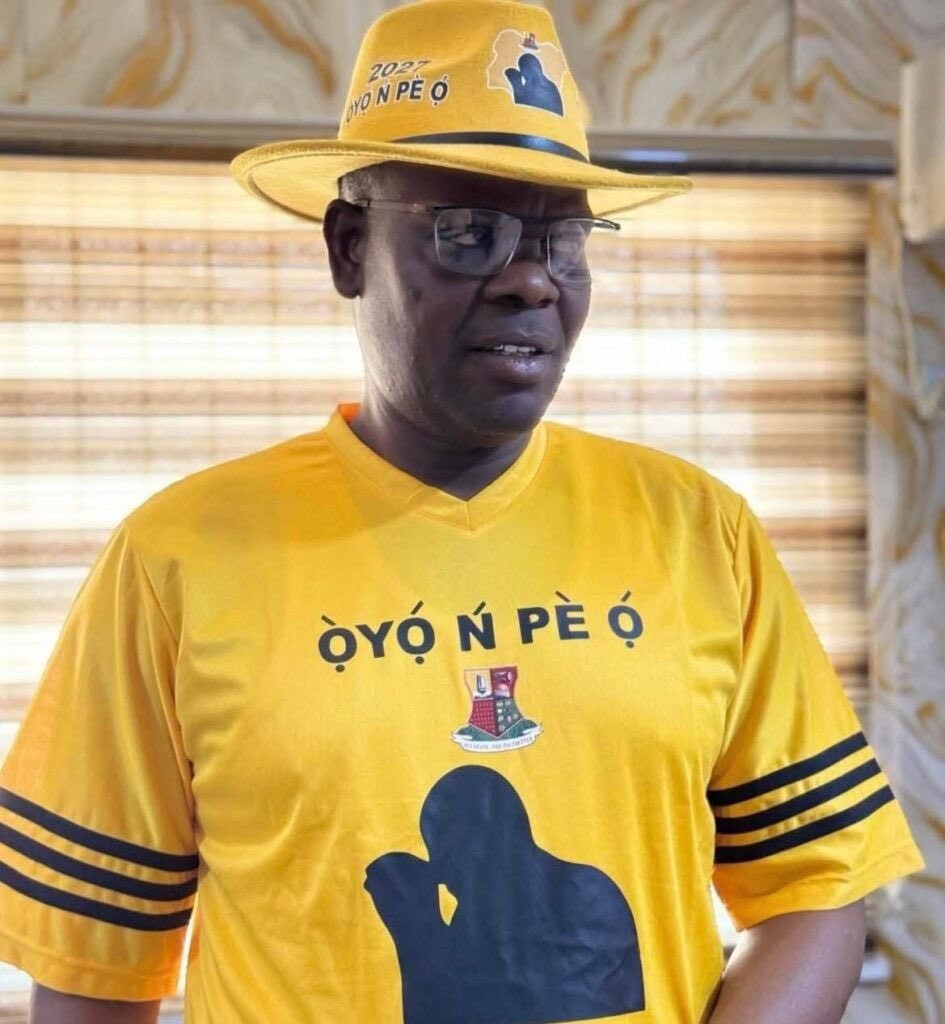
This influence was made visible over the weekend when supporters at his declaration ground wore T-shirts emblazoned with the phrase “Oyo nǹpẹ̀ o.” No longer just a slogan, it had become a political symbol alerting politicians and observers alike that the people were watching and that a new voice was entering the Oyo political arena.

It was within this context that Oriyomi Hamzat announced his intention to contest for the Oyo State governorship under the Accord Party. By emphasising that he was not campaigning for anyone but himself, he positioned his political identity as independent, signalling that he would not serve as a proxy for entrenched interests or party godfathers.
Whether this move represents genuine ambition or strategic negotiation is still being debated. Some analysts see it as a calculated effort to convert media influence into bargaining power. Others interpret it as a sincere bid rooted in years of grassroots engagement, especially at a time when many voters feel disconnected from conventional politicians.
What is undeniable is that the declaration was deliberate. It tested public reaction, gauged elite response, and confirmed Oriyomi’s relevance beyond the studio. In Oyo State’s evolving political landscape, he has shown that the microphone is no longer just a journalistic tool, it is a strategic asset capable of shaping power even before office is sought.
FURTHER READING
- Malami’s Lawyers Return to Court Over Fresh Concerns Over Bail Surety
- BBNaija Star Liquorose Mourns Father’s Death
- South Korean Ex-President Yoon Jailed Over Martial Law Plot
Click here to watch video of the week