- The Minister of Solid Minerals Development, Dr. Dele Alake, has asserted that the sweeping fiscal and monetary overhauls introduced by President Bola Ahmed Tinubu successfully intercepted a catastrophic national economic collapse.
- Speaking at a joint revenue sensitization forum in Abuja, Alake stated that if the administration had failed to dismantle the highly controversial fuel subsidy framework in mid-2023, the entire state economy would have imploded by September of that year.
- The minister revealed that prior to the current administration, the country had entered a dangerous downward spiral, continually borrowing massive international funds and printing over ₦20 trillion locally just to pay recurrent civil service salaries.
The federal government has offered a stout defense of its aggressive economic restructuring, framing the ongoing policy transitions as an emergency rescue mission for a failing state.
Eko Hot Blog reports that speaking in Abuja on Thursday, May 21, 2026, at a joint stakeholder sensitization event for the North Central zone, the Minister of Solid Minerals Development, Dr. Dele Alake, detailed the severe fiscal decay inherited by the current administration.
EDITOR’S PICK
- Fresh Details Emerge on Death of Odomola Monarch, Oba Adebowale Adeshina
- Sanwo-Olu Applauds LASU’s Academic Excellence After JAMB Ranking
- NRC Moves 176,820 Tonnes Of Cargo Through Lagos Ports In Q1
Alake argued that the structural vulnerabilities of the national economy were decades in the making, tracing the current currency crisis to a historic shift in the late 1980s when the country abandoned local production in favor of a heavy reliance on foreign imports.
To illustrate the depth of the currency’s historical decline, the minister shared a personal recollection of the early 1980s, noting that he had personally purchased $1 for 80 kobo in the parallel market at a time when the official central bank exchange rate stood at 52 kobo.
Alake sharply criticized past political leaderships for lacking the necessary courage to reset the national mindset, pointing out that Nigeria was wastefully exporting precious foreign exchange by spending up to $600 million annually on importing items as trivial as wigs and toothpicks, all while depending dangerously on external credit lines to fund non-capital expenditures.
The minister disclosed that when international borrowing agencies grew increasingly skeptical of Nigeria’s crashing credit ratings, the previous administrative structures resorted to highly inflationary internal monetary mechanisms, printing over ₦20 trillion via Ways and Means advances.
Alake noted that borrowing or printing money simply to cover operational overhead and salaries represents an absolute dead end for national development.
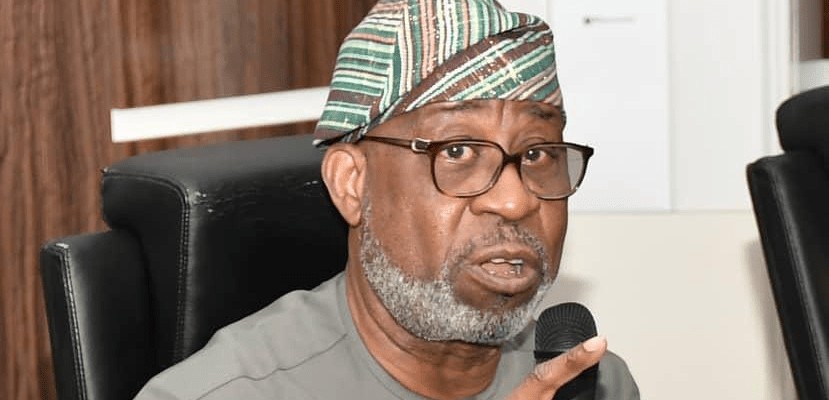
He likened the Tinubu administration’s immediate policy actions to a rule of basic survival: the very first priority upon finding oneself in a deep financial abyss is to “stop digging” before sustainable capital structures can be built.
As part of the structural pivot away from a mono-product oil economy, the Permanent Secretary of the Ministry, Engr. Faruk Yusuf Yabo, emphasized that the solid minerals sector is being redesigned to serve as a primary engine for job creation and revenue diversification.
Yabo stressed that strictly aligning all local mining operations with the 2025 Tax Reform Act is paramount to plugging historic revenue leakages and ensuring the state derives real value from its mineral wealth.
The ministry concluded the sensitization forum by calling on mining operators and industry regulators to fully adopt the government’s newly strengthened Royalty Framework to optimize state revenues.