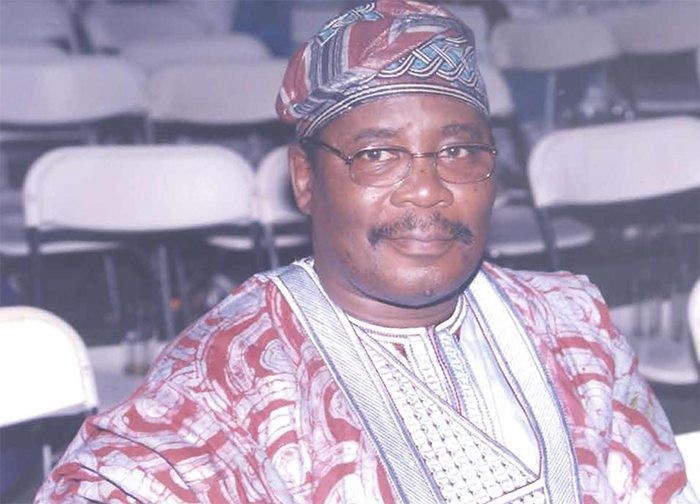
My plea to the entire Majekodunmi family is that the gravity of our mourning should be mitigated and the depth of our collective sense of irreparable loss should also be assuaged by a peep into history.
Some years ago when I was researching the history of the Egbas, of which the Majekodunmi family is a formidable pillar, I came across the following:
“Based on Egba oral history and the book: “The Egba and Their Neighbours 1842-1872”, the Majekodunmi family of Abeokuta descends from Ogundele, a son of Ogundipe. After a tragedy involving the death of a child, Ogundele took the name “Majekodunmi”- Ma je ki odun mi (“Let my year not be spoiled/ let sorrow not ruin my year.)
That is why you’ll see both “Ogundele” and “Majekodunmi” in 19th century Egba records referring to the same lineage. Ogundele, son of Ogundipe, later called Majekodunmi after the death of his child, is ancestor of the Majekodunmi house. ‘Majekodunmi” is the oruko amutorunwa/oruko isele- a name taken after an event, not the birth name.”
EDITOR’S PICK
- Hamzat Appoints Obanikoro as Campaign DG Ahead of 2027 Lagos Governorship Race
- Tinubu’s State Police Plan Gains Momentum as Amendment Looms
- Residents Raise Alarm After Two Bodies Found in Lagos Waterway
The event to which reference is being made involved either Femi’s grandfather (J.B Majekodunmi) or his grandfather who had hired someone to teach his favourite son how to ride a horse. Unfortunately, the child fell off the horse and died. The whole of Abeokuta trooped to the house of the bereaved father. To their astonishment, the father bore his grief with calm dignity and promptly resumed his business with fierce determination. He bluntly refused to succumb to pathos or despair. Thereafter, “Majekodunmi” became both his sobriquet and name.
Also, in 1955 when Chief J.B Majekodunmi (Femi’s grandfather) died, my Dad (Chief J.K Randle), my cousin Adeyinka Majekodunmi and I drove from Lagos to Abeokuta to attend the funeral. It was Femi’s Dad, Chief (Dr) Moses Adekoyejo Majekodunmi who invited my Dad. It was a really grand affair. At the end of the funeral, Chief (Dr) Majekodunmi summoned the family members to the inner sanctum of the family house at Ikereku. That was seventy-one years ago when tape recorders had just surfaced in Nigeria. Anyway, Dr. Majekodunmi had persuaded his father to record a message on his deathbed to be released after his death.
Without any prior warning, Dr. Majekodunmi pressed the button and what followed was the authentic voice (in thick Egba dialect) of the departed patriarch of the family. He pleaded for peace and unity amongst all his children. There must be no litigation or squabbles over his vast estate. Technology had berthed on our shores and landed in Abeokuta.
The audience took to their heels and fled in various directions. The whole of Abeokuta was in panic. It was pandemonium everywhere.
Word quickly spread that the departed Chief J.B Majekodunmi has risen from the dead and had spoken to his family.
Something else I recall from the funeral was a photograph of Chief (Dr) Moses Adekoyejo Majekodunmi resplendent in his “Aso Ebi” in the midst of his closest friends- Chief Obafemi Awolowo; Chief F.R.A Williams and Chief J.K Randle. Those who are familiar with Nigeria’s turbulent history would no doubt appreciate the irony and significance of that poignant photograph. Following the turmoil in the Western Region of Nigeria, Chief (Dr) Moses Adekoyejo Majekodunmi was appointed by the Prime Minister Alhaji (Sir) Abubakar Tafawa Balewa as the Sole Administrator of the Western Region. His first task on resuming in Ibadan was to sign the detention order which confined Chief Obafemi Awolow, the erstwhile Premier of the Western Region to the then remote (and mosquito infested0 Lekki Peninsula- and later to Calabar. Chief F.R.A Williams resigned as the Minister of Justice and Attorney-General of the Western Region to set up his law chambers in Lagos. Chief J.K Randle had died in 1956 at the age of 47 years.
Last year, I handed over a photograph of Chief (Dr) Moses Adekoyejo Majekodunmi, Sole Administrator of the Western Region worshipping at a Church in Oke Padre, Ibadan. Standing at attention was Captain Murtala Muhammed who was the Aide-de-Camp to the Sole Administrator.
You do not need to be a historian to remember that Murtala Muhammed rose to the rank of General and became the Head of State of Nigeria on July 29, 1975. He was assassinated on Friday 13th February 1976.
At the risk of telling you what most, if not all of you know already- what Femi wanted most was for his father who was a titan in the medical profession to be proud of him. It is self-evident that Femi has not only met his father’s expectations. He surpassed them by miles.
Here is the testimonial to these superlative achievements:
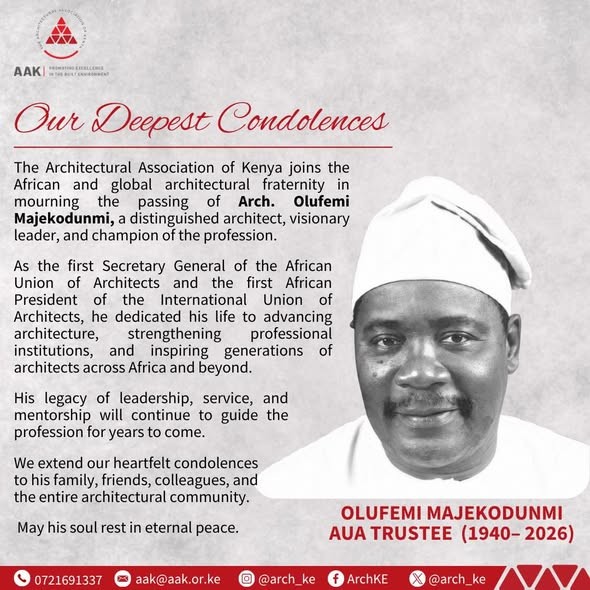
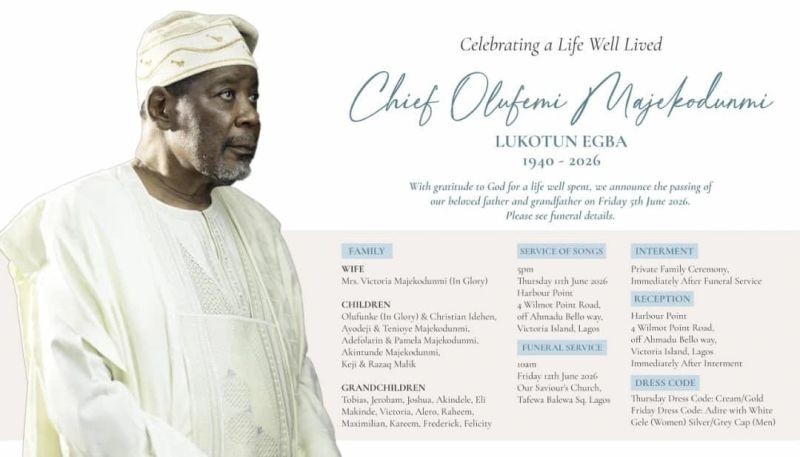
Arc (Chief) Olufemi Adetokunbo Majekodunmi, FNIA; ARIBA (1940-2026)
- Personal Background
Olufemi was born in London, England, on 1st May 1940, to Moses Majekodunmi and Tomi Agbebi. He grew up in Nigeria and attended St Gregory’s College, Lagos. He later returned to the United Kingdom to study architecture at the Glasgow School of Art, Kingston College of Art (now Kingston University) and graduated in 1966.
Majekodunmi was married to Victoria Majekodunmi. They had four children. He died on 5 June 2025, at the age of 86.
- Architectural Career
Arc (Chief) Olufemi Majekodunmi was a pioneering British-Nigerian architect whose career fundamentally shaped the African architectural landscape. He was the first African President of the International Union of Architects (UIA) and founder of one of the continent’s most prominent architectural firms.
After graduation, Femi worked for some years with firms in Washington D.C. Afterwards, he returned to Nigeria and worked with Godwin and Hopwood Architects, Lagos before establishing his architectural firm, then Femi Majekodunmi Associates, now FMA Architects Ltd, in Nigeria in 1973. The firm has grown to a large practice, with branch locations in Botswana and South Africa. He worked with various architectural organizations to advance the practice of architecture in countries across Africa. He was closely associated with many architectural organizations. He was the first president of the Nigerian Institute of Architects and a past president f the International Union of Architects from 1990 to 1993.
Majekodunmi was a Fellow of the Nigerian Institute of British Architects and a member of the Royal Institute of British Architects. He was a juror for several competitions including WAN Awards for World Architecture. He was an Associate Professor of Architecture at the University of Lagos.
- Notable buildings/ Projects
Botswana Police College; St. Nicholas Hospital, Lagos; Sterling Tower, Lagos; NAL Office Buildings, Standard Chartered Bank Building, Lagos; South African High Commission, Abuja; Total Head Office, Lagos.
- Professional Leadership
Arch. (Chief) Olufemi Adetokunbo Majekodunmi was a pioneering force in African architecture. As the first African President of the International Union of Architects (AUA), he championed African perspectives globally and shaped architectural governance across the continent.
A distinguished architect and committed leader, Olufemi Majekodunmi made a lasting contribution to the profession at both regional and international levels. He served as the first Secretary General of the African Union of Architects (AUA) from 1981 to 1984, helping to lay the foundations of its governance across the continent.
From 1990 to 1993, he served as the first African President of the UIA, marking an important moment in the Union’s history. During his presidency, he helped bring African perspectives more prominently to the international stage and championed a more inclusive vision of architectural leadership and professional dialogue.
Throughout his career, Olufemi Majekodunmi was widely respected for his vision, his commitment to service, and his support for future generations of architects. His work strengthened professional institutions and contributed to broader reflections on ethics, collaboration, and the role of architecture in society.
His passing is a great loss to the architectural community. The UIA pays tribute to his remarkable legacy and extends its sincere condolences to his family, colleagues, and friends, as well as to the architectural community in Nigeria, across Africa, and throughout the world.
- Other roles and Honours
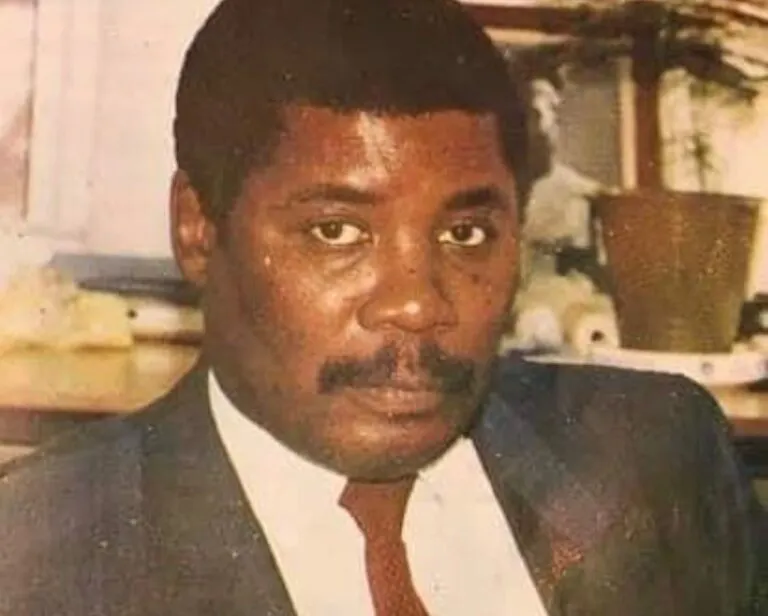
The late Chief Architect Olufemi Adetokunbo Majekodunmi was a globally acclaimed British-Nigerian architect known for defining modern African architecture. He received prestigious academic and professional honours, including the Albert Einstein Bronze Medal, and the American Biographical Institute Medal of Honours.
- Legacy
Arch (Chief) Olufemi Majekodunmi was a pioneering British-Nigerian architect whose legacy is defined by transforming modern African architecture, building resilient professional institutions, and advocating for African representation on the global stage.
He inherited a legacy of public service from his father, but he forged a unique path through architecture. Over more than five decades, he has mentored countless young architects and helped transform Nigeria’s skyline with modernist structures that balance innovation and cultural identity.
Femi has firmly established himself amongst the patheon of outstanding Nigerian professionals with global footprints. His most enduring architectural masterpiece is St. Saviour’s Cathedral Church, Tafawa Balewa Square, Lagos with its iconic huge (and ever dazzling) hanging cross which is reputed to possess amazing healing powers. The funeral service for Femi will hold at the very same church he designed.
Femi was very much a family man and the centre piece was his adorable wife- Victoria who sadly passed on 6th March 2023. They were blessed with four children; Olufunke, Ayodeji, Akintunde, and Olufolarin.
It must have been heartbreaking for Femi to cope with the loss of his beloved daughter Olufunke two months ago.
For much of his childhood and adulthood, Femi was in awe of his father. Dr. Majekodunmi had been a brilliant student at St. Gregory’s College before proceeding to Trinity College, Dublin where he truly excelled. On his return to Nigeria, he joined the Civil service and was posted to Oshogbo where he became both neighbor and friend to Engineer Adeniyi Williams. Both of them ended up back in Lagos.
Femi followed his father’s footsteps and entered St. Gregory’s College but it was a shaky beginning. He eventually got into his stride. In spite of his athletic frame, he did not participate aggressively in sports.
When it came to choosing a career after leaving St. Gregory’s College, it was his step-mother Mrs. Nora Majekodunmi who steered him towards architecture. He was sent off to Britain and he enrolled at Glasgow School of Art, Kingston College of Art (now Kingston University), Kingston, Surrey and graduated in 1966.
At that time, the British Council ran a hostel at 58-61 Hans Crescent, Knightsbridge, London (just a stone throw from Harrods, the luxury store). Femi was a frequent lodger and guest during vacation.
He was very hip (hipster). He had found freedom and liberation in London, away from parental supervision.
He even acquired a guitar which he carried all over London and beyond. Perhaps it was inevitable that he would make friends with other Nigerian students who were not entirely saintly- all night gambling at St. Stephens Gardens, Ladbroke Grove with Peter as the Chief Host; noisy parties at the residence of Western Nigeria’s Agent-General at the super exclusive Kensington Place Gardens, and dodgy escapades too many to mention. Femi quickly acquired a reputation which was captured in his nick name “NB”. This is not the appropriate occasion for full disclosure. If you know, you know!!
FURTHER READING
- Seyi Makinde Restricts Motorcycle Operations Over Rising Insecurity in Oyo
- Lagos Launches Digital Planning Permit System to Boost Urban Development
- Ogun Police Arrest Seven Suspects in Multi-Location Crime Crackdown
I must resist the temptation to spill the beans about Peter. He had rented a basement flat which he converted into a den. It was a magnet for errant students from various universities- University of London; Imperial College; Queen Mary’s; Oxford; Cambridge, etc, as well as the drop outs. They mostly had rich Nigerian parents or were on scholarships from the Nigerian Federal Government. Aside from gambling, booze was available all day and all night. Plenty of girls were at their beck and call. Romance was brief and sex was casual. Pregnancies were not part of the deal. Hence, abortions were the ultimate consequences. Peter insisted that none of these human frailties were his concern. His business was marathon games of poker. On one occasion, a guy gambled away the car which his father had given him as a present to celebrate his graduation from Oxford University where he obtained a degree in PPE (politics, philosophy and economics) from Brasenose College.
Peter’s den was always smoked-filled. He would boldly attest that the old boys of Kings College, Lagos only smoked cigarettes. However, he remained sworn to secrecy regarding what the old boys of St. Gregory’s College, Obalende were smoking!!
Regardless, Femi remained focused and he completed his studies. This was followed by success in acquiring the requisite professional qualifications to practise as an architect. When he returned to Niegria, he was still single and he joined the architectural firm of a British couple- John Godwin and Gill Hopwood (Godwin and Hopwood). That was when he vigorously courted Victoria Afe who was then a student at the University of Lagos. They got married on 12th August 1972.
Femi set up his own firm, Femi Majekodunmi and Associates on the 10th Floor, St. Nicholas House, Catholic Mission Street, Lagos in January 1973.
For many years, Femi and his wife lived in a flat in a block owned by his father at 52, Odunlami Street, Lagos. It was right on the edge of Campos Square. Hence, Femi could lay claim to being an “Area Boy”.
It would be a great injustice not to acknowledge Femi’s professional accomplishments beyond the confines of Nigeria. Having successfully captured Nigeria, he found the environment too restrictive to accommodate his vast talents. That was what propelled him to venture to South Africa; Botswana and numerous other countries where his professionalism was rewarded with generous amounts of Dollars. I believe those offices are still in very good hands, especially with his son Ayodeji (who is also an architect) now at the helm of affairs.
At the pinnacle of his career, Arc (Chief) Olufemi Majekodunmi made his time and talents available to the next generation of architects. He became an Associate Professor of Architecture at the University of Lagos.
Femi was very much what the English would succinctly describe as ‘Clubable”. Hence, he was in his element at the Lagos Luncheon Club. I think he eventually became the Chairman. He was also a long-standing member of the Lagos Motor Boat Club. I am not at liberty to disclose what he got up to on his yatch (or super yatch). Whatever happens at sea, stays at sea.
Perhaps I should add that this tribute is at the behest of The Metropolitan Club of Lagos, Victoria Island. Chief (Dr) Moses Adekoyejo Majekodunmi was the President of the Club from June 1983 to June 1988. Femi was a member of the Club for forty-eight years and of Table 4 where old boys of King’s College, Lagos are equal in number to the old boys of St. Gregory’s College, Obalende.
Let us draw the curtain by adopting the stoicism of the Majekodunmi Family. We shall absorb the pain and sorrow over the loss of Arc (Chief) Olufemi Majekodunmi (and all other tribulations) without flinching.
HENCEFORTH, NO NEGATIVITY. JUST POSITIVE VIBES