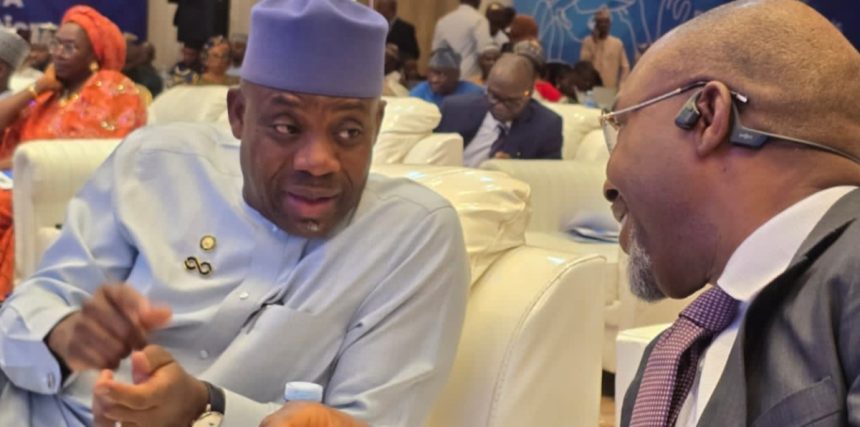
- Chidoka says JAMB data showing a backlog of repeat candidates convinced him Alausa’s admission reforms are justified.
- A federal education data portal revealed alarming dropout rates between primary and secondary school.
- The ex-minister warns that unlike roads or airports, education delays cannot be reversed.
A former minister and current contributor to Nigeria’s education infrastructure drive, Osita Chidoka, has backed Education Minister Tunji Alausa’s push to ease restrictions on school admissions, saying data from a federal government platform has convinced him the policy is not just defensible, it is necessary.
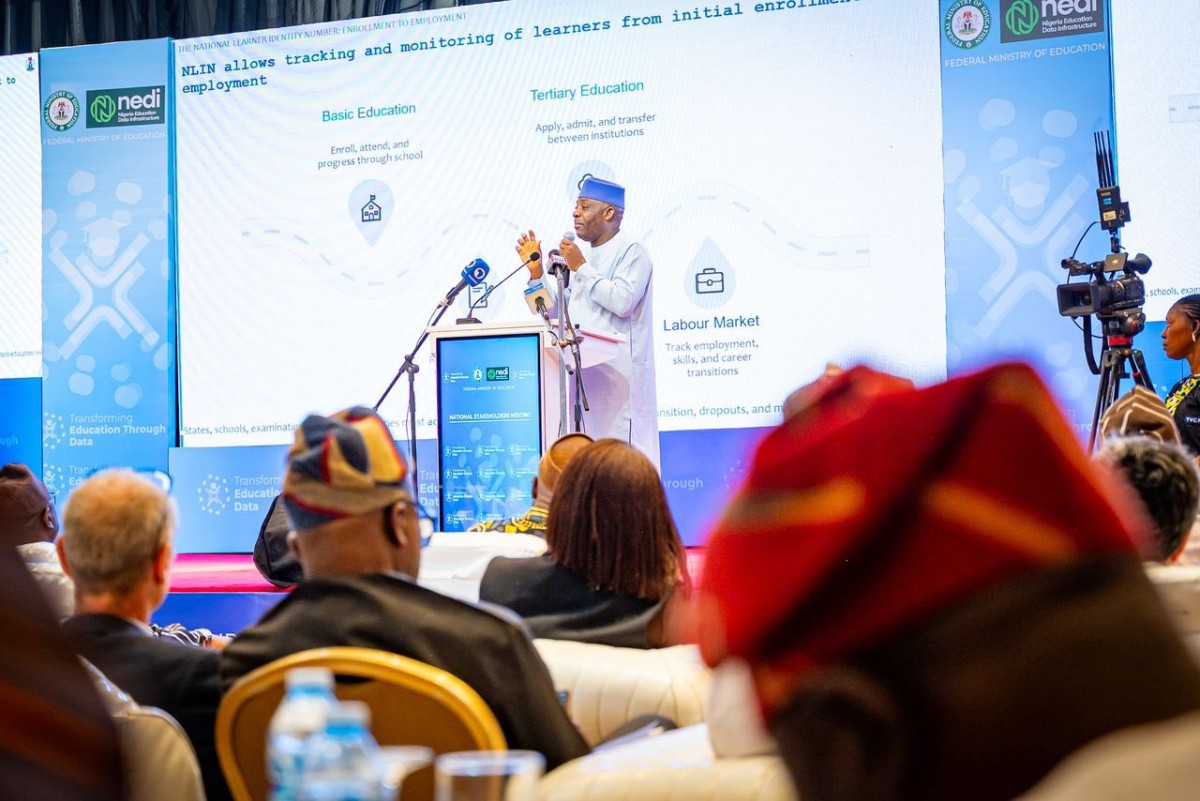
EKO HOT BLOG reports that Chidoka, who served as Minister of Aviation under former President Goodluck Jonathan and now contributes to the Nigeria Research and Education Network (NgREN), made the declaration after attending last Thursday’s National Stakeholders Meeting on the National Education Data Infrastructure (NEDI) in Abuja.
EDITOR’S PICKS
“The Minister’s policy direction on easing admission bottlenecks, which I had instinctively questioned, began to make sense to me,” Chidoka wrote in a statement.
His change of position came after he reviewed figures from the Nigeria Education Management Information System (NEMIS), a data portal designed by Ernst & Young — the same firm that built a comparable system in India — which aggregates school enrollment figures, physical infrastructure data, and student-teacher ratios from all 36 states.
Two sets of numbers shook him.
The first was the sharp drop in enrollment between primary school and junior secondary school. The gap between the number of pupils completing Primary Six and those entering JSS One was wide enough to raise alarm. “What happened to those children?” Chidoka asked. “A generation appears to thin out between those two rungs, and we owe ourselves an honest answer.”
The second was a breakdown of JAMB candidates by category — fresh applicants versus those retaking the exam. The data showed that a large proportion of candidates sitting the university entrance examination are repeat candidates, young Nigerians who have passed but are still waiting for admission.
“Too many qualified young Nigerians are queuing behind the same narrow gate, year after year,” he said.
It is that second figure that lends direct weight to Alausa’s admission reform drive. If the backlog of qualified but unadmitted candidates is as deep as the data suggests, then widening the gate is not a lowering of standards — it is a correction of a structural injustice.
Chidoka was unambiguous about what the data exercise revealed. “That is the power of credible, real-time data,” he wrote. “It does not merely inform policy; it humbles assumptions.”
His broader argument is rooted in urgency. Unlike roads or airports, he said, education cannot be deferred without permanent consequence. “The child pushed out of school by policy failure is often lost forever,” he warned. “When reforms eventually come, they benefit a different cohort — not the child already left behind.”
Through NgREN, Chidoka said his organisation has committed to providing connectivity and digital services to tertiary institutions before the end of 2026, with plans to extend similar infrastructure to secondary schools in 2027.
The NEMIS portal, he said, represents a quiet but significant shift in how Nigeria approaches education governance. “Evidence is beginning to replace assertion. Data is starting to shape decisions,” he wrote.
He closed with a pointed question directed at the wider government. “If evidence can transform education governance, when will the rest of the government follow?”
FURTHER READING
The National Stakeholders Meeting, chaired by Minister Alausa, was held on May 14, bringing together education officials and stakeholders from across the country to review the data infrastructure and align on policy direction.
Click to watch the video of the week below: