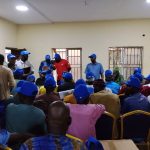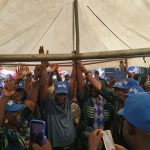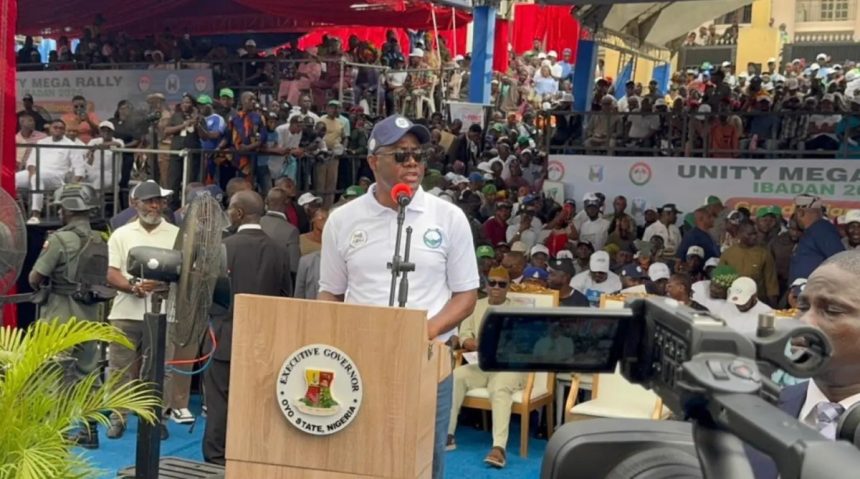
Oyo State Governor, Seyi Makinde, formally declared his presidential ambition on Thursday, announcing his candidacy at a mega rally at Mapo Hall, Ibadan, under the platform of the Allied Peoples Movement (APM).
He branded the move the “Reset Nigeria Movement,” positioning it as a platform to address the country’s pressing socioeconomic and political challenges and prevent what he described as a plot to impose a one-party system on Nigeria.
EDITOR’S PICKS
The declaration, coming just weeks after Makinde convened a major opposition summit, immediately reshaped the calculus of the 2027 presidential contest.
EKO HOT BLOG explores the various dynamics at play with the Oyo governor’s entry into the race.
From Convener to Contestant
The timing raised immediate questions.
Less than a month ago, Makinde hosted an opposition summit in Ibadan that brought together figures including Atiku Abubakar, Peter Obi, Rotimi Amaechi, Raufu Aregbesola and Rabiu Kwankwaso, where the gathering pledged to field a single presidential candidate against President Bola Tinubu. That commitment appears to be unravelling faster than it was made.
Makinde is not the only one moving. Obi and Kwankwaso have moved to the NDC, pulling away from the ADC-centred coalition project.
The original coalition talks involving Obi, Kwankwaso and Atiku generated expectations of a formidable alliance capable of unseating the APC, but the inability to agree on a single presidential structure has exposed long-standing ambition clashes, zoning disputes and disagreements over who should lead the ticket.
With Makinde now declaring independently, the opposition faces the prospect of heading into 2027 as three or more competing blocs rather than one.
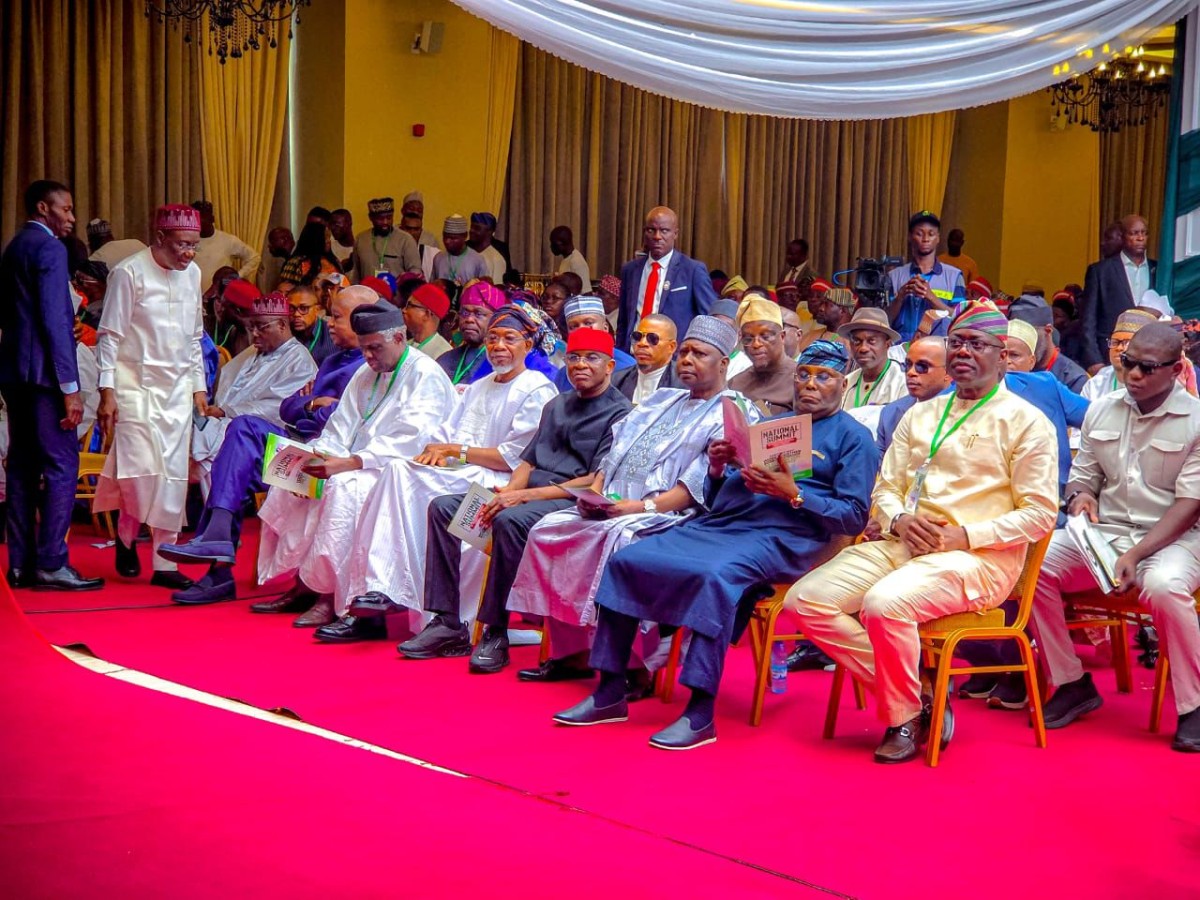
Analysts warn that fragmented voting patterns could once again favour the APC unless a broader coalition eventually re-emerges before the election season intensifies.
What the PDP Crisis Means for His Platform
Makinde’s move to the APM is not entirely a choice, it is also a consequence. The Supreme Court nullified the PDP convention held in Ibadan last November that produced Kabiru Turaki as national chairman, leaving Makinde’s camp without a recognised party platform.
With the Wike-aligned leadership now controlling the official PDP structure, the APM becomes a legal vehicle for his faction’s candidates across all levels.
Wike, for his part, dismissed the whole enterprise. He told journalists the declaration was “dead on arrival” and that Makinde “cannot fly the flag of PDP.” He also signalled that the Wike-aligned PDP would be submitting its own presidential candidate to INEC, saying: “Watch out to see the name of the candidate who will be submitted to INEC.”
Whether Makinde’s PDP-APM alliance framing survives INEC scrutiny remains to be seen.
The Spoiler Question in Tinubu’s Backyard
The more politically loaded question may be what Makinde’s candidacy does to President Tinubu’s support in the South West, specifically in Oyo State, which Tinubu won in the 2023 presidential election. Tinubu won Oyo with 55.6 per cent of the presidential vote in 2023, while Atiku polled 22.6 per cent and Obi 12.2 per cent.
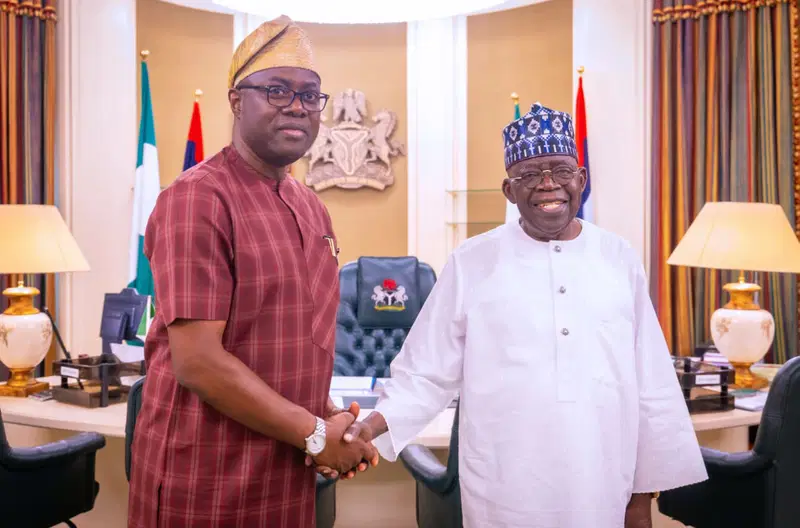
However, those results sat alongside a gubernatorial election where Makinde scored 563,756 votes against the APC’s Teslim Folarin’s 256,685, winning 31 of the state’s 33 local government areas.
The divergence in those two results — Tinubu winning the state at the presidential level while Makinde dominated at the governorship level — indicates that Oyo voters split their tickets in 2023.
Whether Makinde can convert his gubernatorial dominance into presidential-level support in his home state, and whether doing so siphons votes that might otherwise go to Tinubu, are questions that observers will likely be tracking closely as the campaigns develop.
But if the Oyo governor ends up siphoning votes that may otherwise been won by the president, he could give an advantage to the opposition to catch up, in which case he would be their saviour, not saboteur.
The Zoning Dimension
Makinde’s entry also thickens an already complicated zoning debate.
With Tinubu, Makinde and Obi all from the South, Atiku, who has consistently opposed zoning, is the only major northern presidential figure remaining, but he is losing southern support precisely because of that position.
The opposition’s traditional strategy of pairing a northern presidential candidate with a southern running mate to build cross-regional appeal becomes harder to execute when the South’s opposition vote is itself divided among multiple contenders.
FURTHER READING
How these dynamics resolve, or whether they resolve at all, before INEC’s critical deadlines will define whether 2027 becomes a competitive contest or a foregone conclusion.
Philip Ibitoye is a Special Correspondent with EKO HOT BLOG. Click here to find daily analysis and critical insight on trending issues in Lagos and other parts of Nigeria.
Click to watch the video of the week below: