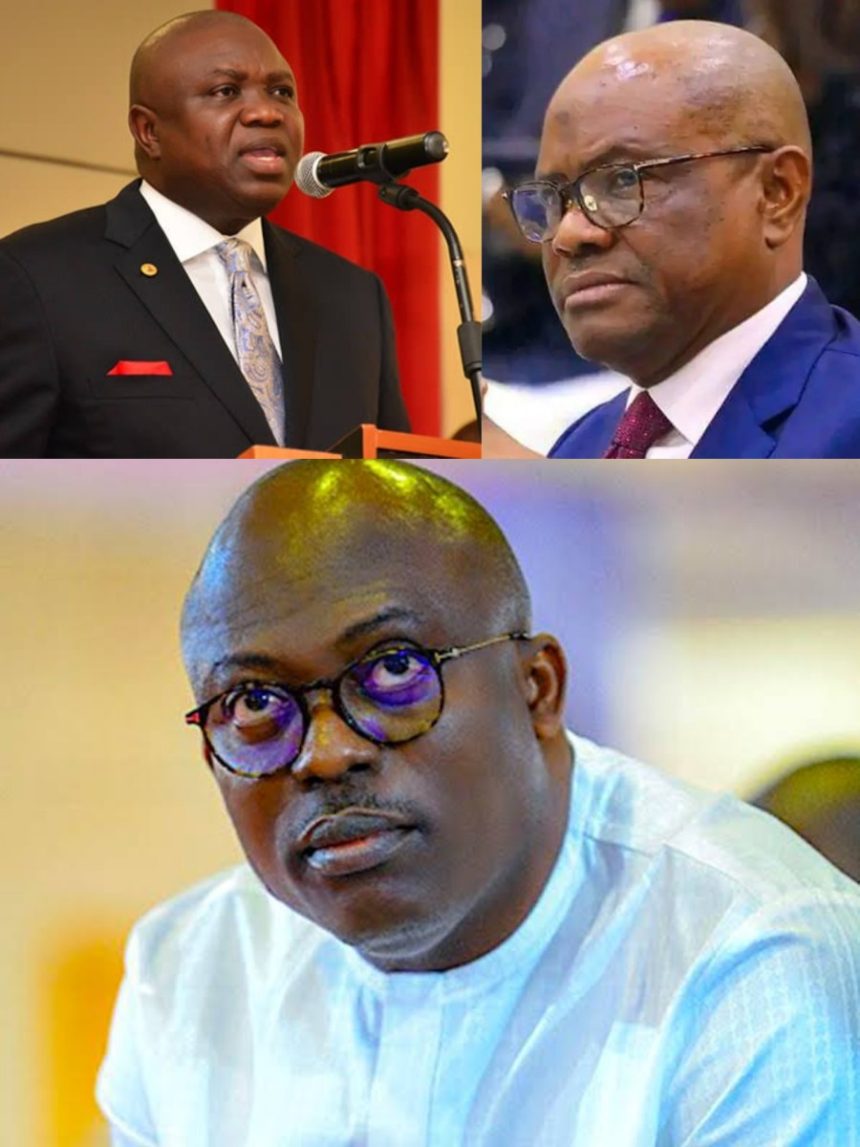
For months, Rivers State has remained at the center of political tension following the breakdown of the relationship between Fubara and his political benefactor, Nyesom Wike.
EDITOR’S PICK
- Lagos Breaks Revenue Record, Hits ₦2.6 Trillion in 2025
- Tinubu to Launch AU Maritime Task Force Against Terrorism, Piracy
- Tipper Truck Crushes Two Fruit Sellers to Death in Akure
What initially appeared to be an ordinary disagreement between a governor and his predecessor quickly developed into a full-scale political war involving the Rivers State House of Assembly, party loyalists, state structures, and the control of political power itself.
But beyond the headlines, the crisis has exposed a deeper issue that continues to shape African democracy: the complicated role of political godfatherism.
Across Africa, godfatherism is publicly condemned as anti-democratic and dangerous. Yet behind closed doors, nearly every successful politician understands one painful reality, without political structure, survival becomes almost impossible.
Fubara’s situation perfectly captures that reality.
When Wike completed his tenure as Rivers governor, he was widely regarded as the architect of Fubara’s emergence.
From party structure to grassroots mobilization and political negotiations, Wike’s influence played a major role in installing Fubara into power.
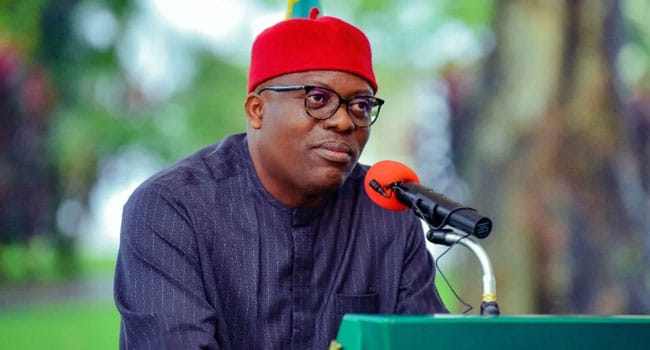
However, shortly after assuming office, signs emerged that Fubara wanted independence from Wike’s overwhelming political influence.
That decision triggered a political earthquake.
The Rivers House of Assembly crisis, impeachment threats, suspension controversies, division within the PDP, and open confrontation between loyalists of both camps revealed that governance in Nigeria is often secondary to the control of political structure.
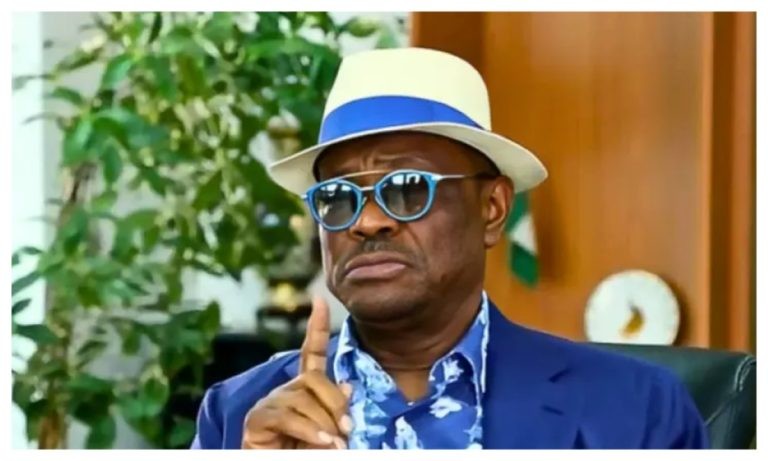
Fubara soon discovered a harsh political truth: occupying Government House does not automatically mean controlling power.
Despite being governor, much of the PDP structure in Rivers reportedly remained loyal to Wike. Key political figures, lawmakers, party stakeholders, and grassroots coordinators still identified with the former governor’s camp.
Unable to fully dominate the PDP machinery, Fubara dump PDP for the APC, hoping federal backing and a new political platform would free him from Wike’s grip.
At first, there were signs that some APC leaders sympathized with him. But politics in Nigeria is not controlled by sympathy or public emotions. It is controlled by structure, loyalty, negotiation, and influence.
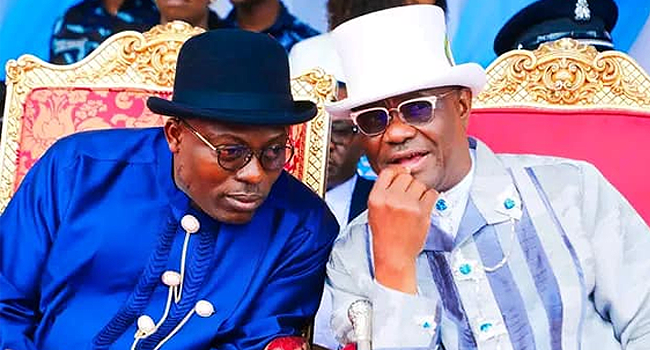
The recent APC primaries reportedly exposed how politically vulnerable Fubara had become. He withdraw his aspiration at the primaries few hours and several politicians believed to be loyal to him were politically wounded and failed to secure tickets for assembly, House of Representatives, and senatorial positions.
More significantly, the outcome reinforced the perception that Fubara lacked an independent political structure strong enough to confront the machine that produced him.
Even with the advantage of incumbency, his camp reportedly struggled to impose itself politically.
That development carries a dangerous implication for the governor’s future. If the current political reality remains unchanged and he fails to build an alternative structure or seek another viable political platform, Fubara risks becoming another one-term governor in Nigerian politics.
That possibility immediately brings back memories of Akinwunmi Ambode.
Like Fubara, Ambode entered office with public goodwill and visible achievements. But despite his popularity among many Lagos residents, he reportedly lost the support of the dominant political structure controlling the state.
The result was historic and humiliating, an incumbent governor denied a second-term ticket by his own party.
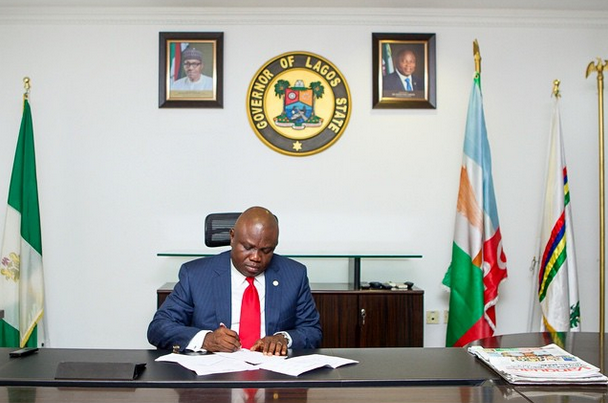
The Ambode experience and the current Fubara crisis reveal the same political lesson: in African politics, popularity without structure is weakness.
Yet, while godfatherism has damaged democracy in many ways, Africa still appears unable to function politically without it.
The reason is simple.
Political institutions across much of Africa remain weak. Political parties are controlled more by influential individuals than by ideology. Elections are expensive, loyalty is transactional, and political survival often depends on who controls delegates, lawmakers, party executives, and grassroots networks.
In such a system, political godfathers become unavoidable power centers.
This does not excuse the dangers of godfatherism. It has weakened institutions, encouraged political intimidation, fueled loyalty battles, and shifted accountability away from the people. In many cases, elected leaders spend more time fighting political wars than governing.
However, the Fubara situation also shows that political structure remains essential for survival in Africa’s political environment.
The real issue, therefore, may not be the existence of godfatherism itself, but the absence of strong democratic institutions capable of reducing dependence on political patrons.
Until African political parties become truly democratic and institutions become stronger than individuals, political godfathers will continue to decide who rises, who survives, and who falls.
FURTHER READING
- Lagos Records Improved WASSCE Performance as 61.52% Pass Key Subjects
- Tinubu Salutes NDLEA Over Multi-Million Dollar Drug Bust
- Lagos Expands Infrastructure at Agbowa Timberville Project in Epe
Click here to watch video of the week