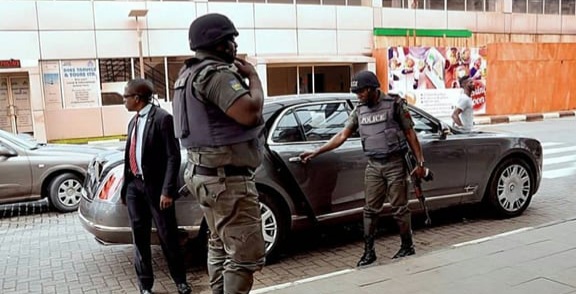
Senator Abdul Ningi’s protest on Wednesday over the withdrawal of his police orderly has reignited scrutiny of the federal government’s directive mandating the removal of police officers from VIP security duties.
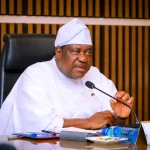
Raising the matter during plenary, the Bauchi Central senator said he found it troubling that while his own protection detail had been withdrawn, ministers, business executives, children of top officials, and even entertainers continued to move around with full police complements.
EDITOR’S PICKS
According to him, the enforcement of the directive appeared selective, contrary to the Legislative Houses (Powers and Privileges) Act 2008 and the long-standing practice that security directives must apply uniformly.
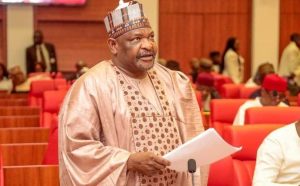
“You cannot just put the National Assembly as a scapegoat and others enjoy the privileges of security control,” he warned, urging Senate President Godswill Akpabio to direct the police affairs committee to investigate the disparities.
Background
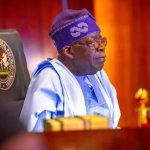
The controversy stems from President Bola Tinubu’s sweeping order of November 23 directing the inspector-general of police (IGP) to immediately withdraw police officers attached to VIPs nationwide.
The instruction, issued during a high-level security briefing with service chiefs and intelligence heads, was aimed at redirecting police manpower to underserved communities grappling with attacks, kidnapping and banditry.
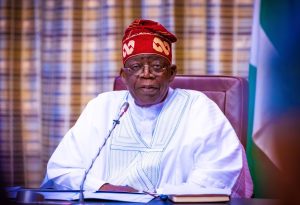
The president argued that police personnel were trained primarily for public safety, not private protection, and that the current structure, in which a significant portion of the police workforce is tied down guarding individuals, undermines internal security.
To execute the transition, Tinubu directed Interior Minister Olubunmi Tunji-Ojo on Wednesday to arrange replacement guards from the Nigeria Security and Civil Defence Corps (NSCDC), which is already equipped and trained for VIP protection.
Unequal withdrawal
Despite the clarity of the presidential directive, lawmakers like Ningi insist that the on-ground implementation has been uneven.
He pointed out that while senators were stripped of even minimal protection, other political office holders were still moving with sizeable squads of police personnel, an indication, in his view, that the order was being flouted.
Senate Deputy President Barau Jibrin acknowledged the concerns, confirming that the leadership had raised the issue on Tuesday and was expecting a formal report on why the directive was not being consistently enforced. “The directive of Mr. President has been flouted,” Barau said. “It was made in good faith to strengthen our police force to deal with our internal security issues.”
‘No going back on withdrawal order’
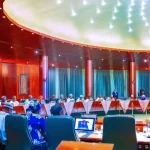
Tinubu himself reinforced that message at the federal executive council (FEC) meeting on Wednesday, warning that he would not tolerate non-compliance. He stressed that the exceptions would be extremely limited and that any official who believed they required police protection must obtain clearance directly through the IGP.
“The National Security and Civil Defence Corps are trained for VIP protection, and they are armed too,” the president said, adding that Nigeria could no longer afford to divert police resources to the comfort of a privileged minority while citizens in remote communities remained exposed to attacks. The country, he noted, faces kidnapping, banditry and terrorism, and “we need all forces utilised.”
Need for uniform withdrawal
The core argument for uniform withdrawal is anchored on fairness and accountability. A directive that applies to some but not all VIPs risks reinforcing perceptions of double standards in government.
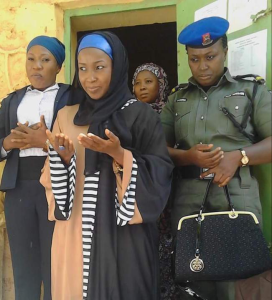
Moreover, selective compliance dilutes the security gains the policy seeks to achieve. If police personnel remain tied to influential individuals or connected businessmen, some without any official status, the manpower relief intended for communities under threat will not materialise. That contradiction not only weakens the reform but also fuels political resentment, as highlighted by Ningi’s complaint that legislators were being singled out while other elites continued business as usual.
FURTHER READING
Uniform enforcement is also essential to protect the credibility of the presidency. Any deviation signals to the public that directives from the highest office can be negotiated or ignored depending on influence. For security agencies, it creates confusion and opens channels for abuse, favour-seeking or quiet exemptions, all of which erode discipline within the police force.
Philip Ibitoye is a Special Correspondent with EKO HOT BLOG. Click here to find daily analysis and critical insight on trending issues in Lagos and other parts of Nigeria.
Click here to watch the video of the week below: