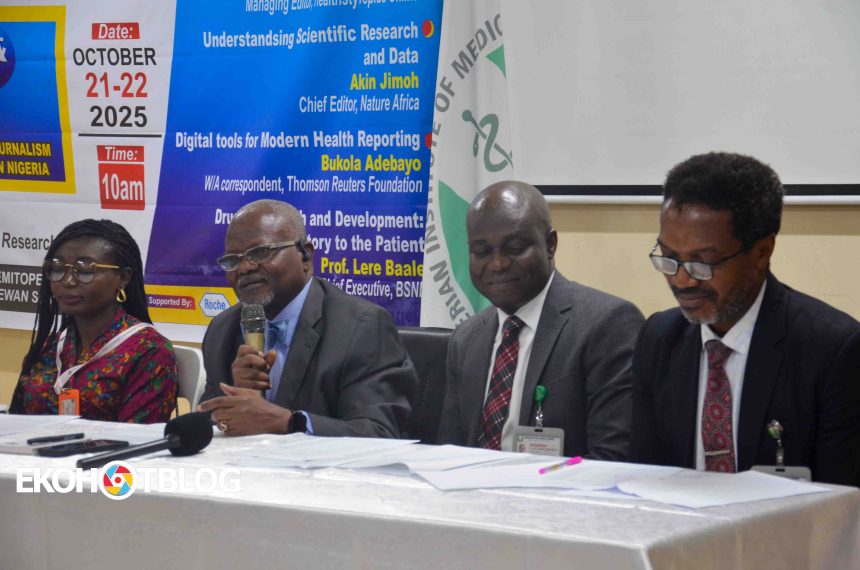
- The Nigerian Institute of Medical Research Host October Media Chat
- Tagged Randomized Clinical Trials As The Cornerstone of Translational Research
- NIMR Collaborate With Universities in The US For Medical Innovation
The Nigerian Institute of Medical Research, Yaba, Lagos, hosted a media chat for the October Edition, on the theme “Randomized Clinical Trials: A Cornerstone of Translational Research”, bringing together researchers, medical professionals, health writers, and health stakeholders to discuss the significance of clinical trials in improving healthcare outcomes and public understanding, underscoring the importance of ethical and evidence-based medical studies in national health.
Ekohotblog reports that Dr. David Oladele offered a comprehensive overview of the phases of clinical trials, Phase I to IV which covers both infectious and non-communicable diseases, building on Prof. Lere Baale’s lecture on “Drug Research and Development”. He explained how research moves from laboratory testing to real-world application, disclosing that NIMR is taking major steps toward establishing a national clinical-trial network that will connect universities, teaching hospitals, and private-sector partners across the country.
EDITOR’S PICKS
- Federal Judge Blocks Trump Administration Layoffs During Shutdown
- What Another Drop in Monthly Inflation Rate Signals for Nigerians
- ‘PDP Defections to APC Prove I Was Right About Tinubu’ – Wike
Afterwards, he highlighted NIMR’s strides and achievements in clinical research, noting that the institute has trained skilled Data Scientists who understands the essence of precise and accurate data, an effort aimed at strengthening the capacity of clinical researchers. Furthermore, he praised the trained clinical researchers and health writers, emphasizing that improved research literacy is vital for boosting public participation and trust in clinical trials.
“We all know that data is the currency of research”. He stressed.
In addition, Dr. Oladele identified the challenges such as limited funding and low research literacy, but affirmed that NIMR’s initiatives align with the President Tinubu’ program: The Presidential Initiative for Unlocking the Healthcare Value Chain (PVAC), a strategic effort established by President Bola Ahmed Tinubu in October 2023 which is aimed at transforming Nigeria’s healthcare system by attracting new investment.
”Nigeria must invest strategically in research infrastructure and partnerships to ensure sustainability and local ownership of clinical trials,” he said.
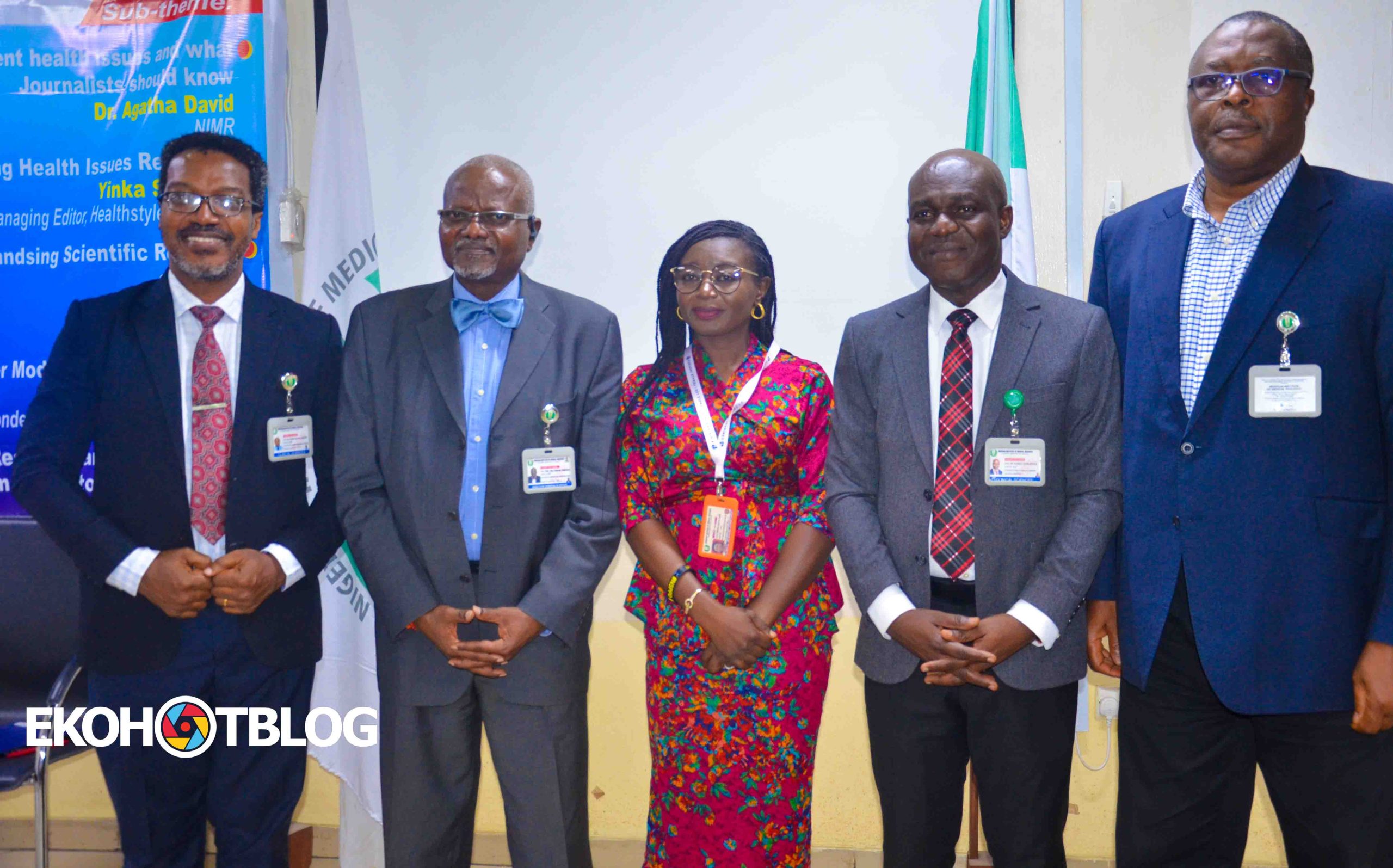
Dr. Pascal Ezeobi, in his presentation, titled ”Predictors of Antiretroviral Immune-Reconstitution Bone Loss Study (IRBL)”, traced the history of NIMR’s HIV research center, which has served over 26,000 patients since its inception in 2002. He shared insights from ongoing studies on Antiretroviral Therapy (ART), noting its positive impact on patient survival while cautioning about potential effects on bone health.
He, however highlighted the institute collaboration with Emory University, USA, funded by the U.S. National Institutes of Health (NIH), with the aim to discover what contributes to bone weakness in HIV patients with a five-year clinical study involving 150 newly diagnosed adults currently underway.
Next, Dr. Agatha Wapmuk presented on HPV (Human Papillomavirus) and cervical cancer prevention project which supports vaccination for girls from age 9 to 14 and women from age 30 to 65. With Nigeria ranking 4th country with commonest cancer amongst women with 12000 cases of cervical cancer and 8000 death rates, she stressed that early immunization and screening remain key to reducing cervical cancer in Nigeria.

She also detailed the institute’s partnership with Washington University and other U.S. institutions to eliminate cervical cancer in Nigeria by 2030. She described innovative strategies such as crowdsourcing ideas through the “Mother to Daughter” approach, which collected over 600 submissions from Nigeria’s six geopolitical zones. These were narrowed down to seven actionable strategies involving faith-based, community, school, health, and market-driven approaches, as well as participatory learning and localized research goals.
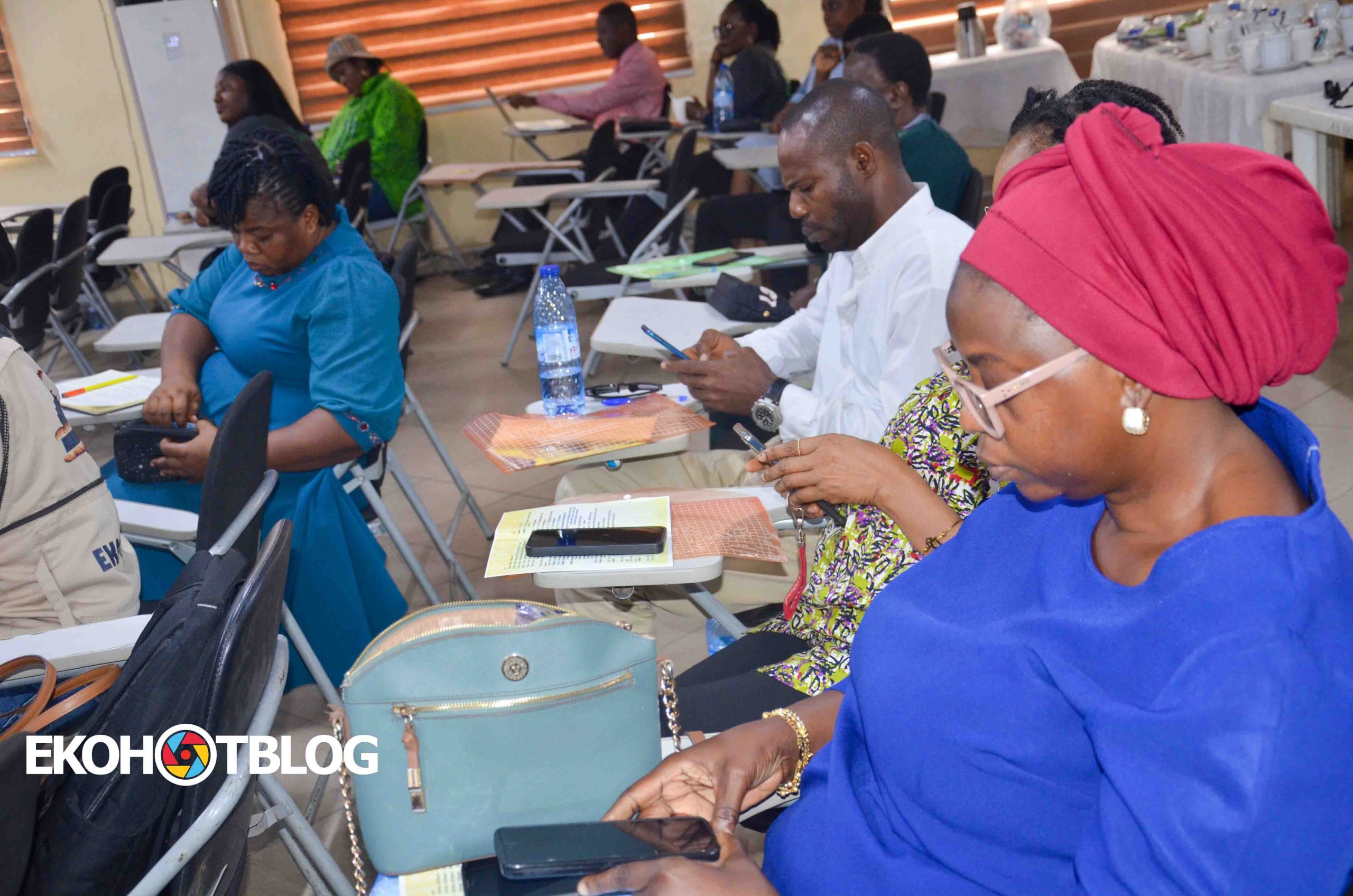
In his closing remark, Prof. Obafunwa expressed gratitude to all attendees and commended the media role in shaping public awareness, urging consistent collaboration between health reporters and researchers, reaffirming NIMR:s commitment to driving translational research that bridges laboratory discoveries with real life health solutions.