- he would be considered to have forfeited his right to do so
- there was no valid charge against him under Nigerian law
- The judge then adjourned the case to November 5
A Federal High Court in Abuja has warned that it will close the case of detained IPOB leader, Nnamdi Kanu, if he fails to open his defence in his ongoing terrorism trial.
Eko Hot Blog gathered that Justice James Omotosho issued the warning on Tuesday after Kanu, for the fourth consecutive time, refused to enter his defence despite the court’s directive.
EDITOR’S PICK
- PHOTO STORY: Epe Divisional Headquarters Unveiled in Honor of late AIG
- Dollar to Naira Exchange Rate Today, 4th November 2025
- Christian Genocide: How Buhari Ignored U.S. Offer To Fight Terrorism
The judge stated that if Kanu fails to present his defence by November 5, he would be considered to have forfeited his right to do so.
The court had earlier adjourned on October 27 for Kanu to either submit his final written address or begin his defence.
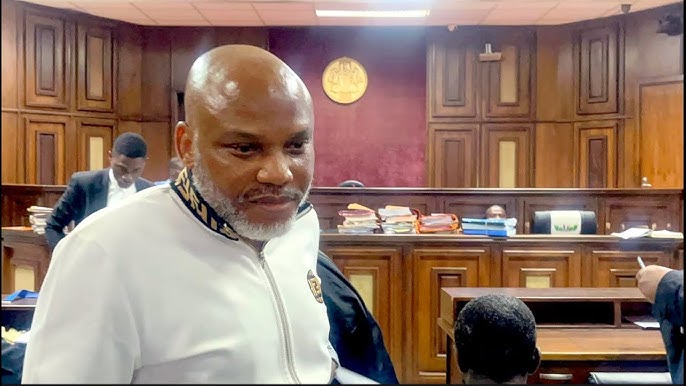
However, at the resumed hearing on Tuesday, Kanu, who has been representing himself, informed the court that he had not filed any final address but instead submitted a motion with a supporting affidavit.
Kanu maintained that he would not open any defence, insisting that there was no valid charge against him under Nigerian law. He demanded his immediate release, declaring that he should not continue to be detained over what he described as an “invalid case.”
In response, prosecution counsel Adegboyega Awomolo (SAN) objected to Kanu’s new filings, arguing that they were improperly filed and amounted to a delay tactic. He urged the court to treat Kanu’s latest filings as his final address and proceed to judgment.
Justice Omotosho, however, ruled that Kanu’s documents would be considered during judgment, noting that since Kanu is not a lawyer, he should be allowed time to seek legal assistance.
The judge then adjourned the case to November 5, warning that failure to begin defence on that date would result in the case being closed against the defendant.
FURTHER READING