- the Abuja court restrained the PDP from conducting its convention
- They alleged that the judge’s action undermined judicial hierarchy
- They called on the NJC to demonstrate impartiality and discipline
The National Judicial Council (NJC) has come under pressure to investigate and sanction Justice A.L. Akintola of the Oyo State High Court for allegedly approving the conduct of the Peoples Democratic Party (PDP) National Convention scheduled for November 15 and 16, 2025, in Ibadan.
Eko Hot Blog gathered that the call followed a petition accusing Justice Akintola of issuing an ex parte order permitting the PDP to proceed with its convention despite an earlier ruling by a Federal High Court in Abuja halting the exercise.
EDITOR’S PICK
- Lagos APC Lauds Tinubu’s Commitment to Democracy Amid Anambra Election
- Aminat Alabi Becomes First Lagosian To Win Lagos Women Run Open Category
- ‘Nigeria Is Safe, Security Improving’ – FG Replies UK Over Travel Advisory
The petitioners Hon. Austine Nwachukwu, Hon. Amah Abraham Nnanna, and Turnah Alabh George alleged that the judge’s action undermined judicial hierarchy and amounted to sitting on appeal over the decision of a court of coordinate jurisdiction.

They noted that the Abuja court, in Suit No. FHC/ABJ/CS/2120/2025, had restrained the PDP from conducting its convention pending further hearing.
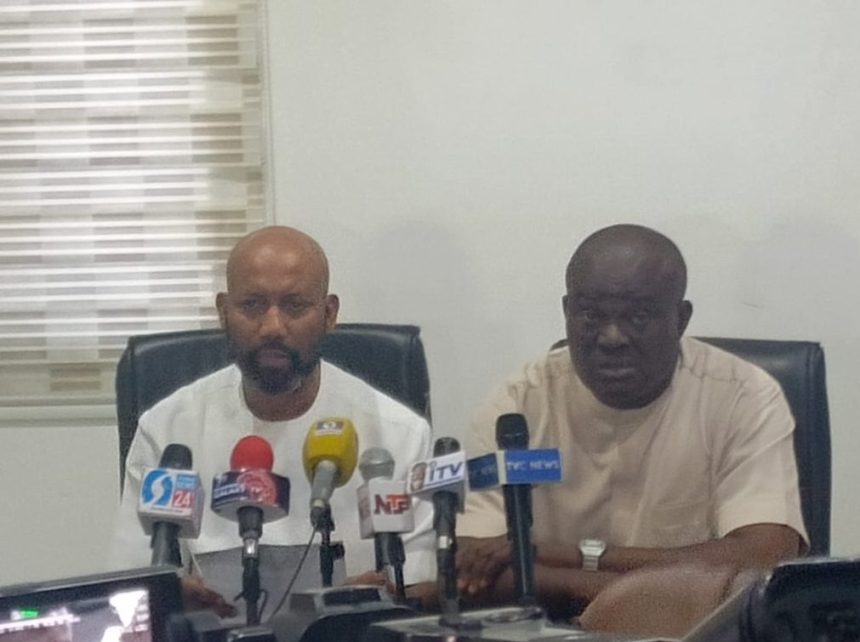
Addressing journalists on Monday, Nwachukwu described Justice Akintola’s decision as “judicial recklessness and impunity,” stressing that it violated established legal processes. He urged the NJC to “act swiftly and decisively” to uphold public confidence in the judiciary.
“The petition before the Chief Justice of Nigeria and Chairman of the NJC, dated November 5 and received November 6, 2025, raises serious concerns about acts that threaten the sanctity of the rule of law,” Nwachukwu said.
The petitioners argued that allowing such a ruling to stand would set a dangerous precedent and erode trust in the courts.
They called on the NJC to demonstrate impartiality and discipline, just as it had in previous cases involving judicial misconduct in other states.
They concluded that the judiciary must remain the last hope of the common man and not an instrument for political manipulation.
FURTHER READING